Carrying On The Tradition of Hare & Hound Desert Racing
Story by Trevor Hunter, Photos by Photos Project 395,
In Southern California, you can find a race to compete in nearly every single weekend of the year, and approximately 30 of those weekends per year, you can find a local AMA District 37 off-road race taking place. Whether it’s hosting some of the largest attended races of the year that are a part of the AMA National Grand Prix and AMA National Hare and Hound Championships, or just local points paying dual european scrambles and sprint enduros, District 37 has a race for anyone and everyone on the calendar. With so many races to choose from, it can be difficult to race EVERY race on the calendar. However, there are a few select events I try to race every year, be it because I enjoy the race and appreciate the effort that the hosting club puts in, or because there is some prestige and accomplishment tied to the race. And in some cases, I have nothing else going on that weekend and testing a bike or part in a race scenario teaches you a lot and can be a fun way to do it.
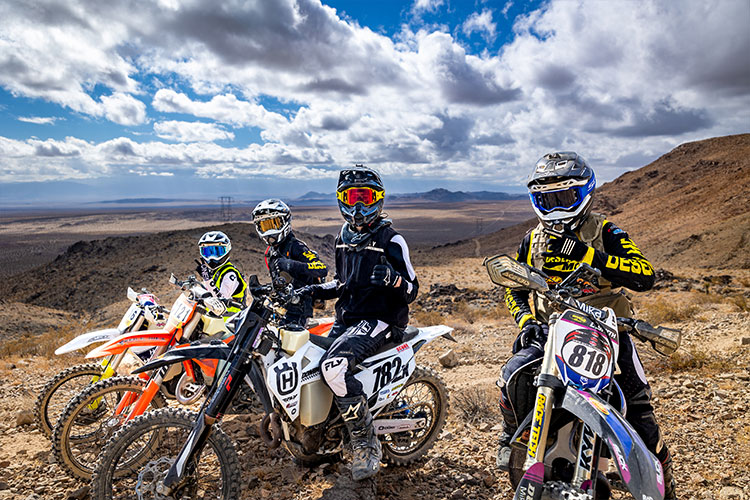
Two District 37 desert races I mark on my calendar yearly are the Checkers MC Check Chase World Championship Hare & Hound and the Desert MC Winter Classic National Hare and Hound. Since racing my first Check Chase Hare and Hound in 2021, I’ve made a point to race it every year since. The club prides itself on scouting fun and fresh terrain that makes up their 80+ mile races and racing a “good” desert race in Southern California is rare these days. I’ve also attended and raced almost every Desert MC National Hare & Hound every year since 2021 as well and the challenge of racing against the best desert racers in America is appealing and rewarding. As some might expect, these clubs, as well as several others, made up of competitive racers and minds alike strive to put on the best race possible and all believe they have done just that. But is there a clear winner in who puts on the better race? Is there a future in Hare and Hound racing that will keep the old school desert racing spirit alive? We’re going to reflect on the 2025 editions of the race, as well as look at some trends over the years, to give you some insight on two of the biggest desert races on the District 37 calendar.
What Is A Hare & Hound?
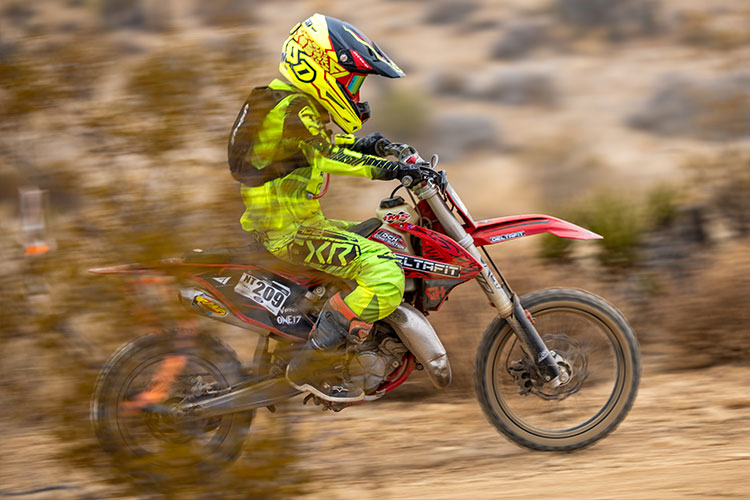
A Hare & Hound is a long distance desert race typically spanning 65+ miles with mass starts in open country. The name itself originated from a paper chase game where “hares” would lay a trail for “hounds” to follow. In off-road desert racing, one of the oldest traditions is a “hare” that takes off a few minutes before the start of the first row and the “hounds” (racers) vie to be the first to catch the hare. Racers can only walk or ride the “bomb run” (typically 1-2 miles long) prior to the start of the race, and the remaining miles are all unknown to every racer with no practice or pre-running allowed. The finish is often unspectacular in every way, but very rewarding for the racers on hand and impressive to those who know what it takes to reach the finish line.
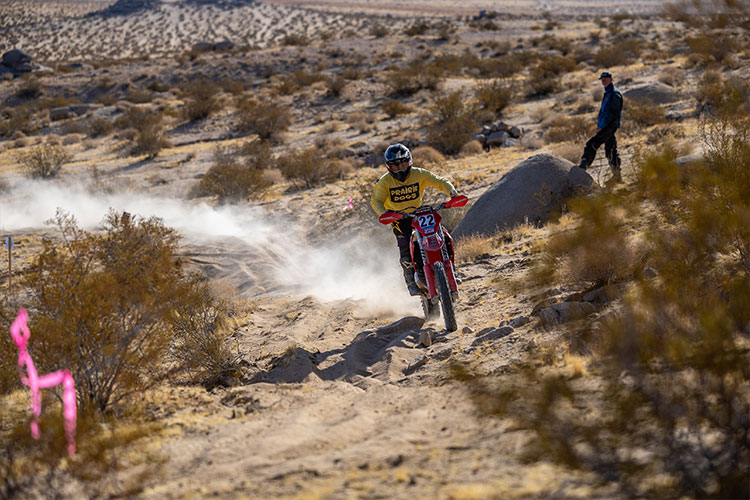
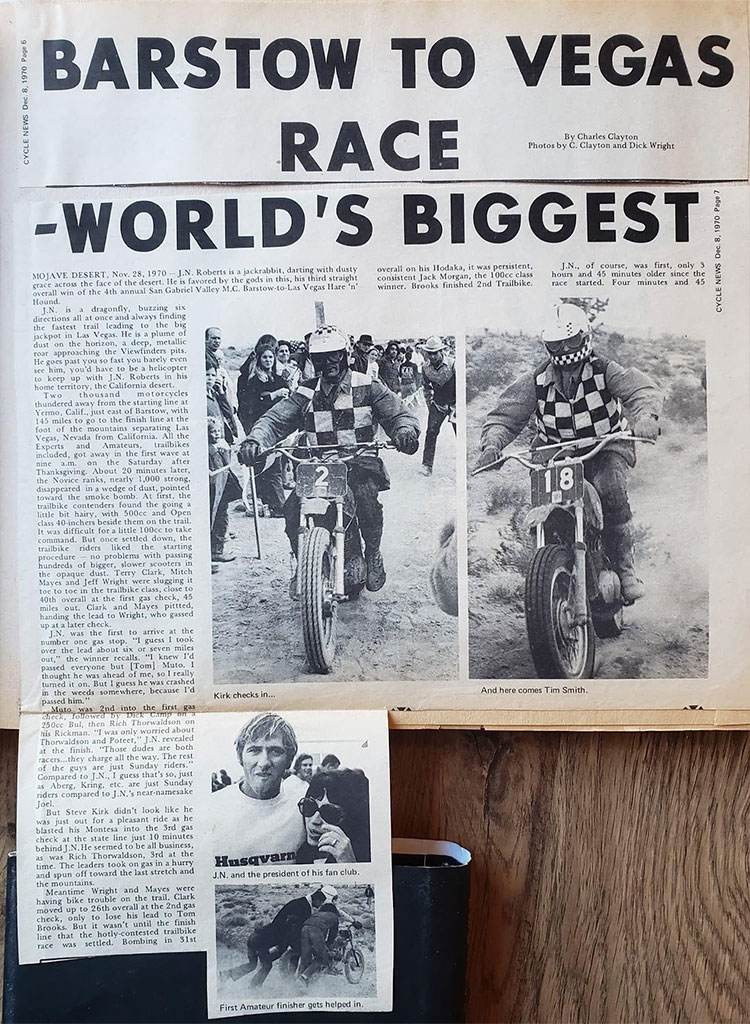
These days, they are most often 2-3 loop races, though you’ll occasionally see a point-to-point race pop up outside of the California desert. Racers have to hit checkpoints along the way to ensure they stay on course, and checks mark racer’s “fender cards” as a way of noting if all the checks have been passed through. Some of the most historic H&H’s are the famed Barstow to Vegas, the Big Bear Run, Whiskey Pete’s World Championship Hare and Hound, among others that have gone by the wayside. It’s still carried on to this day, being the most attended style of desert races on the west coast. The days of thousands of riders lining up for any desert race is a thing of the past, but 300-400 racers lining up on a bomb run is a good day in the desert.
Checkers MC – The Return of the Golden Era
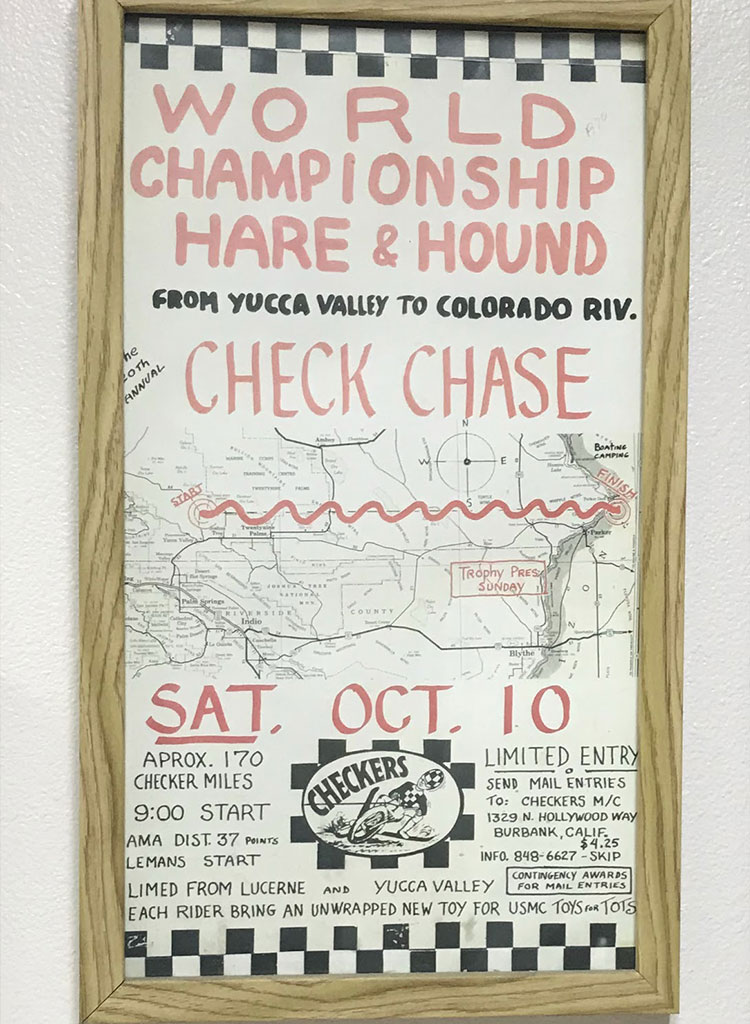
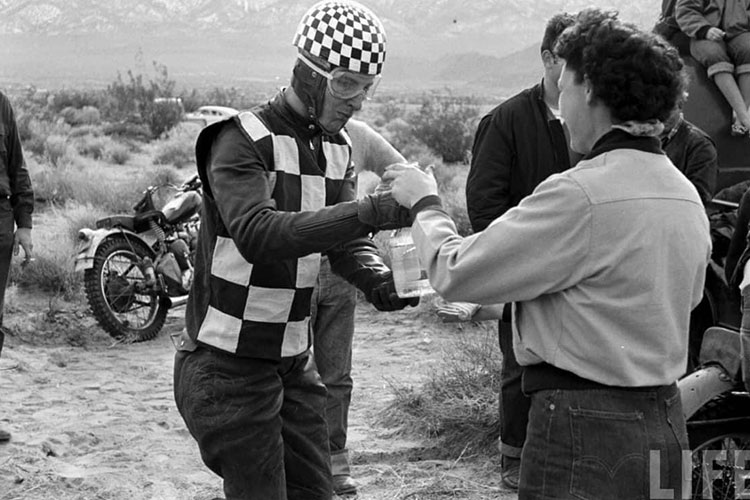
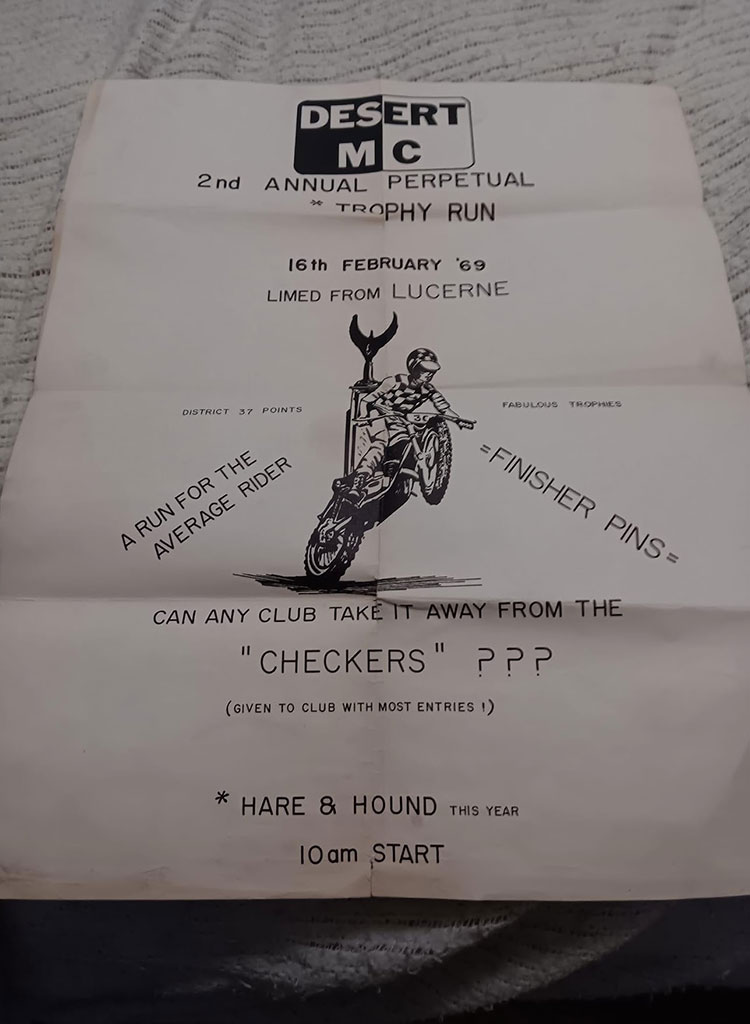
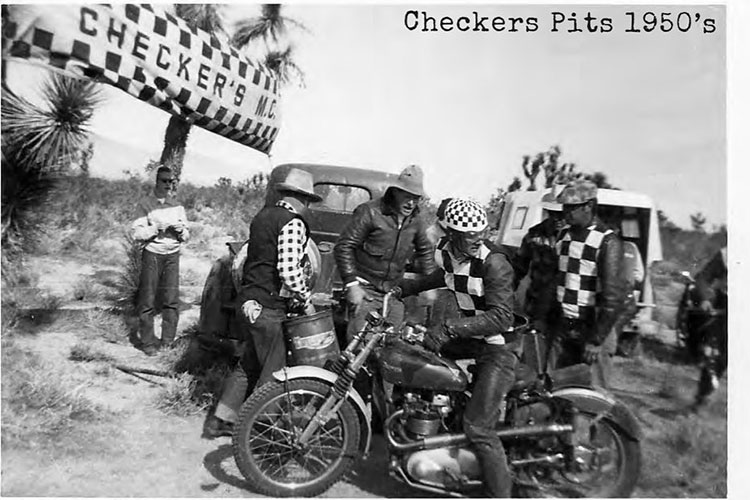
Going back decades, the term “Checker Miles” has a special place in many hearts of D37 racers. When talking about what to expect at a Checkers race, there’s a storied quote dictating “The novices will hate it; the amateurs will have their eyes yanked wide open, and the experts will love it.” The origin of the “Checker Miles” stems from Bill Saltzman who was once working a check and an exhausted rider pulled up and asked, ‘How far to the finish line?’ Bill responded, ‘About five miles.’ The guy roared off, refreshed. Thereby the legend of “five Checker miles” was created. The actual distance left was 48.5 miles. Thus, five Checker miles is equal “to 48.5 real miles.”
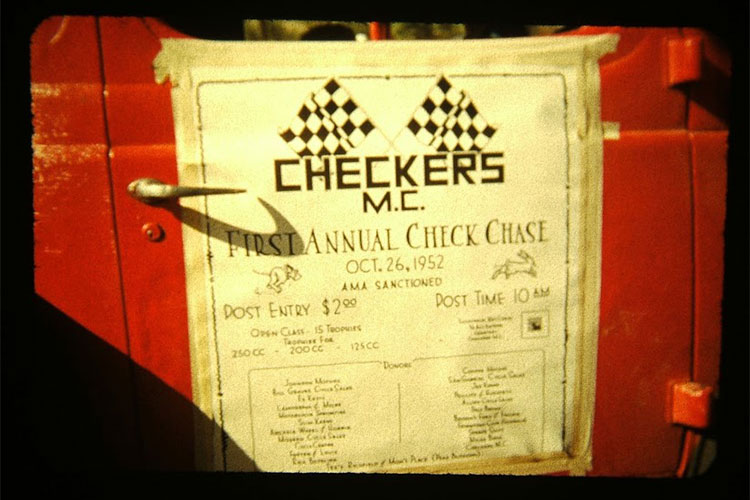
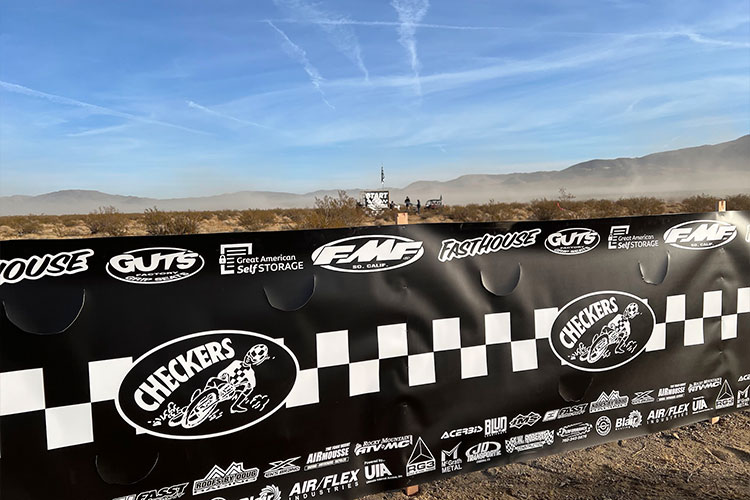
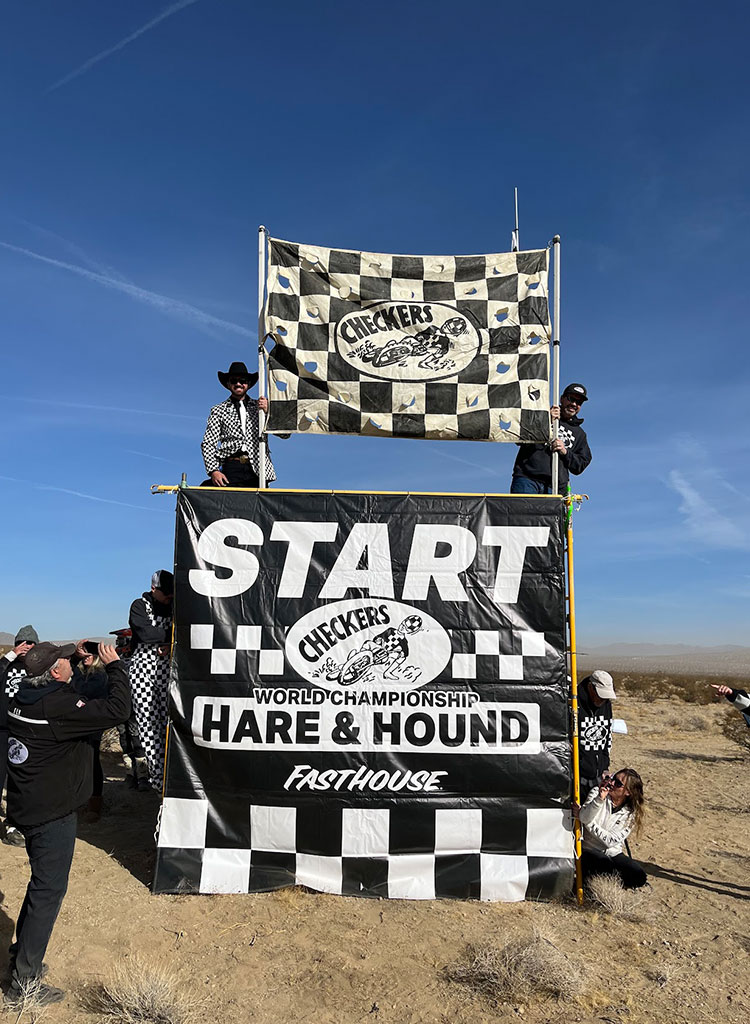
Over the years, the Checkers have evolved in the style of race they put on. Previously, they strived to put on the toughest and most challenging race of the year — maybe to feed the ego of being the “fastest” and “#1 club” in District 37? However, in recent years, they’ve switched their approach into putting on a quality race that the ridership wants, not necessarily what the loop captains or club in general wants. They still want to include some challenging aspects with a goal for more experienced riders to enjoy it, but doable and reasonable for the amateurs and novices on hand. Likewise, they try to bring a new standard to desert racing and continue to evolve it. They hang welcome banners at the entrance, bring scaffolding to the start line for the riders meeting and banner drop, line the start with sponsor banners, and are promoting on social media, with the help of Fasthouse, in a more modern way.
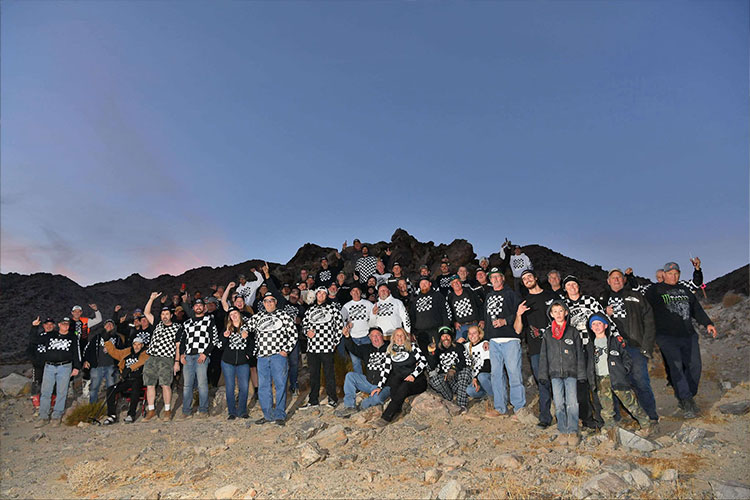
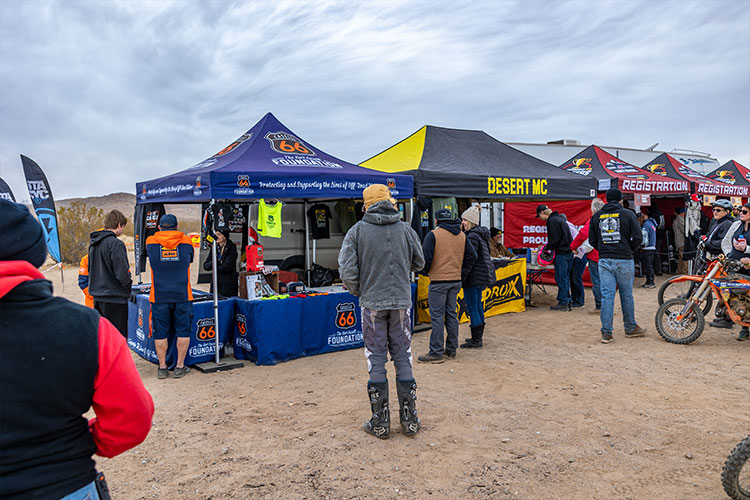
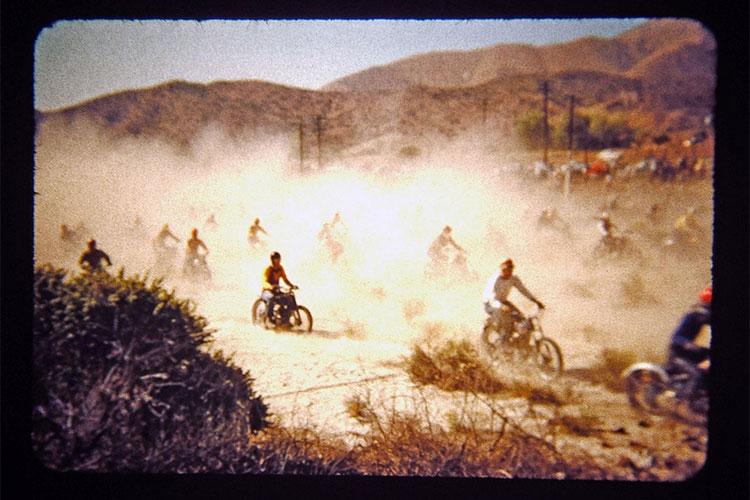
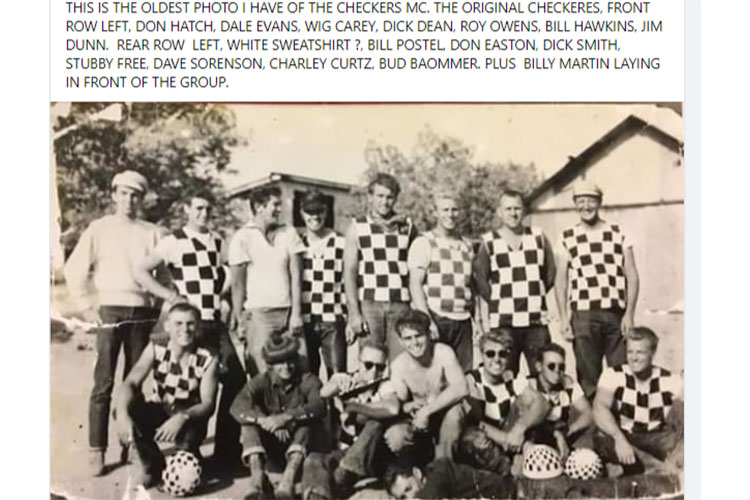
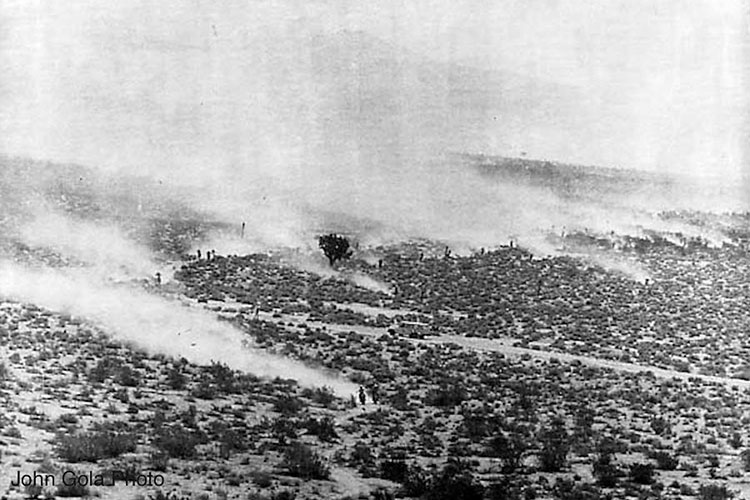
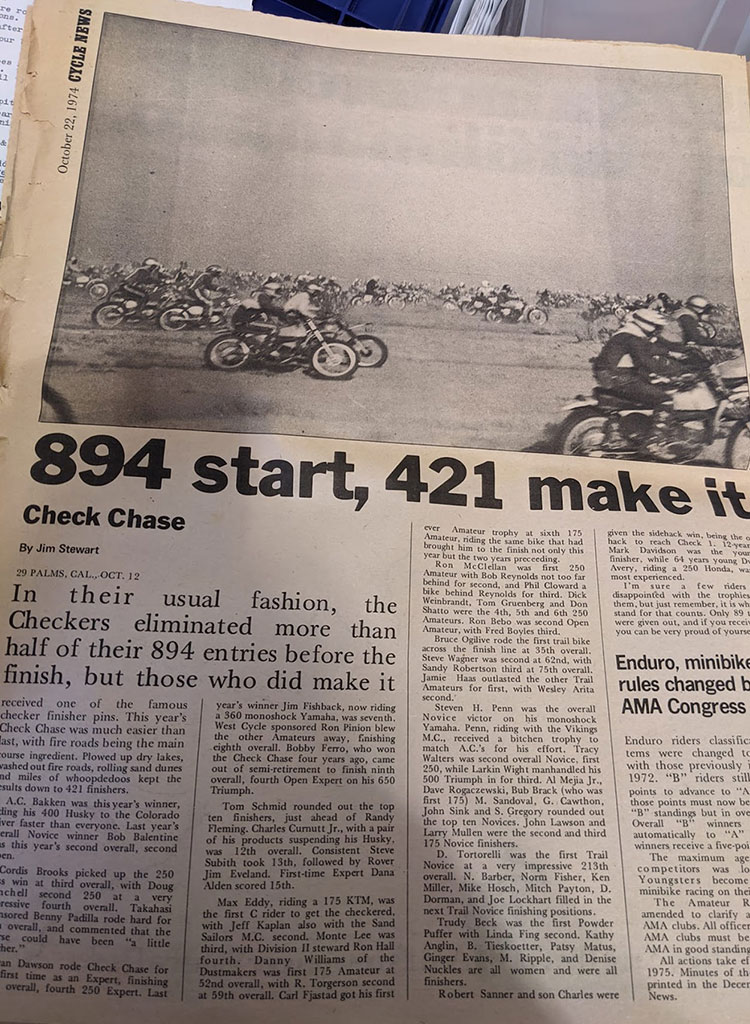
For their 75th Check Chase Hare and Hound, club president Trevor Hoffman and the Checkers Motorcycle Club, founded in 1950, wanted to revive an old school desert racing tradition and bring back a single row, mass bomb run start. Having not been done since the early 1970’s (roughly 1973-1974 ish), this was a sight to see as 299 racers were let off the line at once, racing up a 2.19 mile bomb run just outside of Hammertown at Means Dry Lake. To put it into perspective, District 37 icon Paul Krause, who has probably raced more D37 races than anyone in history in his 50+ year career, has NEVER lined up on a single row mass start. The club put in a big effort this year to make the 75th running a memorable one, and it all started at the start of the race.
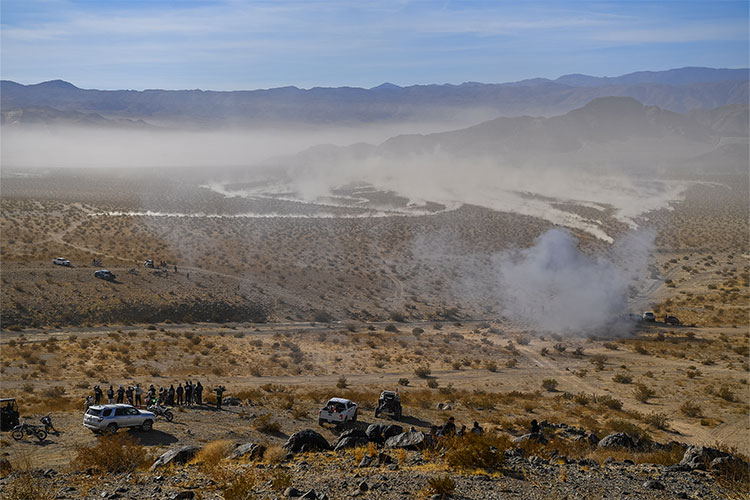
To make the single row start possible, the club centered the entire course around the start line in an effort to make what they thought was the safest bomb run possible given the size of the start, and ensured it met all requirements from a District 37 rulebook standpoint and fit within any BLM regulations.
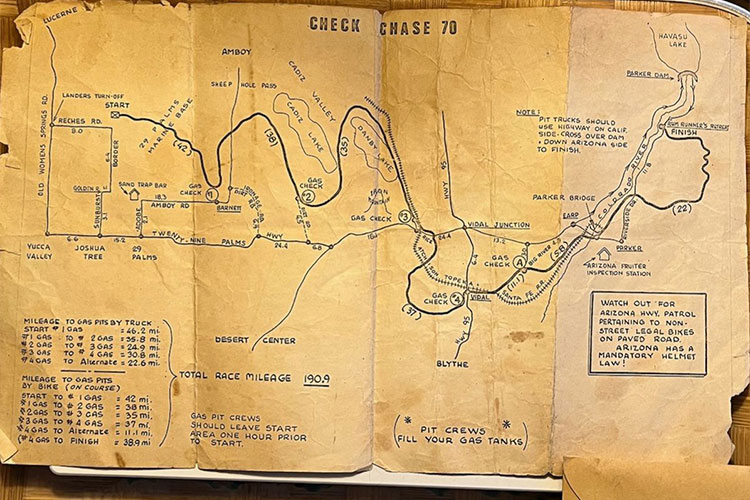
The three-loop, 100 mile race (for all Pro and 125/250/Open/Vet Expert classes) saw a hefty $10,000 purse waiting at the checkered flag, open to the first ten overall finishers no matter what class, another perk of the single row mass start. Besides those classes, the standard format followed with most Expert, Amateur, and some Novice classes completing the two loops in 80 miles and select classes only required to complete one 40 mile loop. Using this formula, the Checkers were able to incorporate more challenging trails in the final 20 miles of the race, which they did to give the racers more “bang for their buck” and challenge those wanting to compete for the pay day at the end. In addition, the longer 100 mile race paid homage to their famed Check Chase River Run that started as a 170 mile race from Giant Rock in Landers, CA and finished in Parker, AZ in 1970. Most years, the race started somewhere in Lucerne Valley, CA and traversed ~200 miles to Parker, AZ, with the final River Run taking place in 1986 with a total of 230 miles.
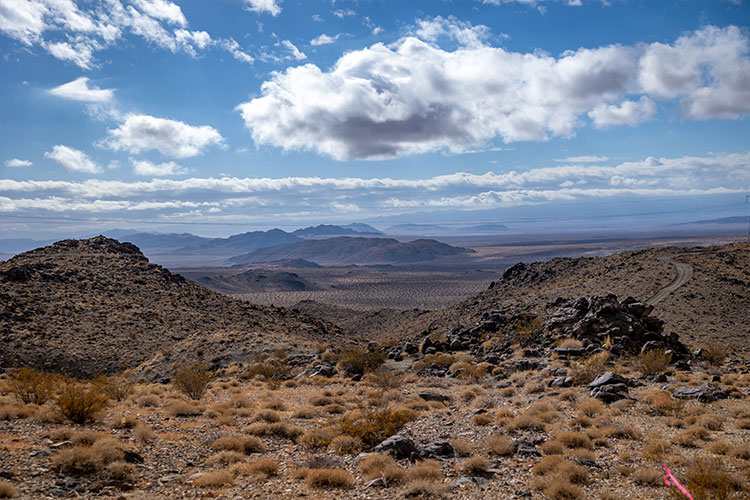
This year’s course ventured through a variety of terrain, most of it being fresh and well thought out with some creative aspects mixed in. The first loop featured a rather virgin uphill and downhill in the middle of it that challenged some of the back markers and less experienced riders. This led to a bit of a cluster for some further back in the field, but otherwise flowed well and ran across some of the smoothest terrain Johnson Valley has to offer in a race format. Some of the more creative designs came around the dry-lake areas where instead of pinning it flat out across the valley, the loop winded through some sand moguls and bushes in a slowed but flowing route.
The goal of the second loop, laid out by loop captain Trevor Hoffman, was to explore an area that was new to him and that isn’t raced on much in D37 due to its proximity and where most races are staged out of in Johnson Valley (typically North Anderson, Anderson Dry Lake, and Cougar Buttes). Staging off of Boone Road, they were able to skirt the limits of the OHV boundaries and ran through “scenic and tough trails that led to a destination with a view and for riders to feel accomplished.” The second loop had its fair share of technical trails through the rocks, but was separated by fast flowing sand washes, a dry lake bed, and some open terrain to give riders a break in between hard sections.
Moving onto the third loop, loop captain Tucker Hopkins worked through all of the King of the Hammers and King of the Motos areas and tried to utilize roads and existing trails effectively without being a bike breaker and minimal common course. The third loop featured a lot of virgin, rocky terrain, and while it was difficult, it wasn’t overly tough on equipment. However, several racers noted that it didn’t flow all that well together. The natural flow of the terrain or where your mind thought you should go wasn’t always where the race course led you. Many of the three loop finishers would have been happy with finishing after the first 80 miles (including myself), but the final loop was expected to be difficult with the few classes that were designated to take on the challenging final 20 Checker miles.
In true Checker fashion, there was no shortage of Checker Miles at their 75th edition, and even some of the top Pro riders felt it was the hardest Hare & Hound they’ve ridden to date. That says a lot about the terrain covered that brisk day in early January, and even more for everyone who finished any number of Checker miles.
In my experience with 3 ⅛ Check Chase’s started (I only made it a few miles past the bomb run in 2023…), the Checkers put on a quality race with minimal whoops, chop, and cross grain and it’s obvious they put the effort in and usually execute with the effort. They have one of, if not the biggest rider turnouts year after year, despite not being a National event, and that says a lot about the event that they put on.
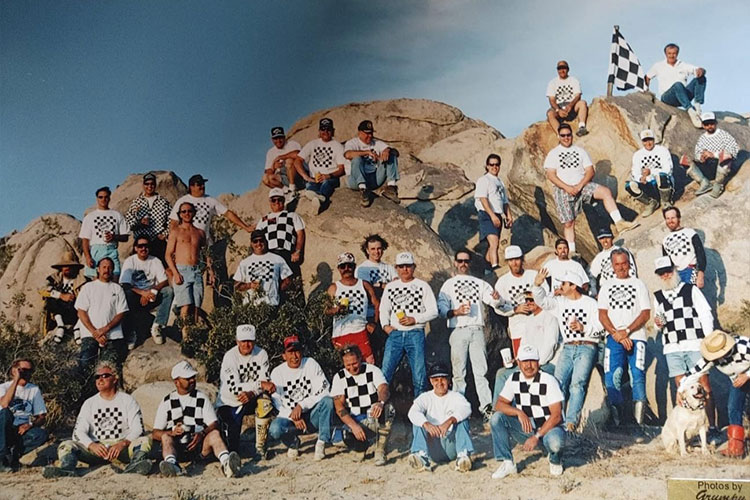
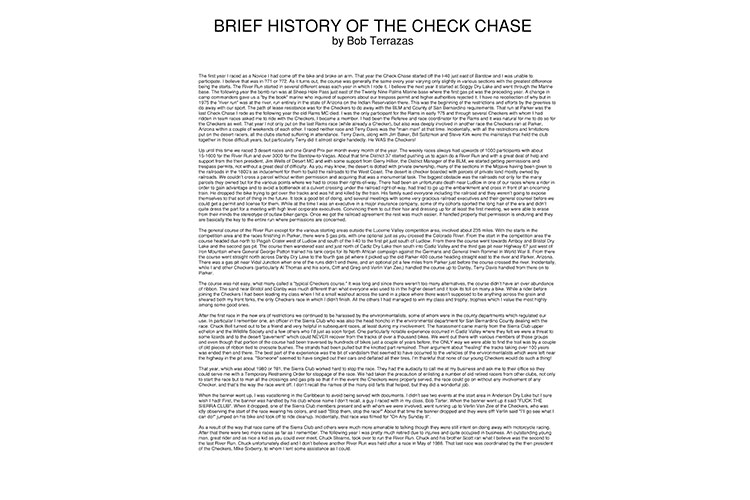
For more history on the Checkers Motorcycle Club, click HERE to read and view stories on the history of the historic club and how they’ve evolved from 1950 to today.
Desert MC – The Test of Endurance
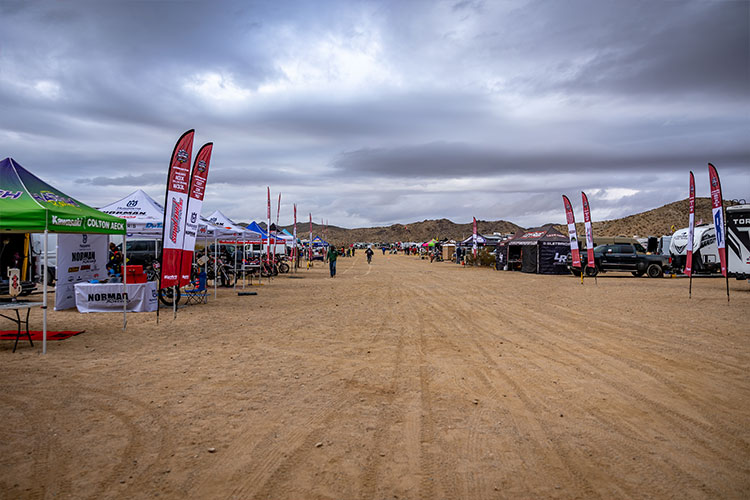
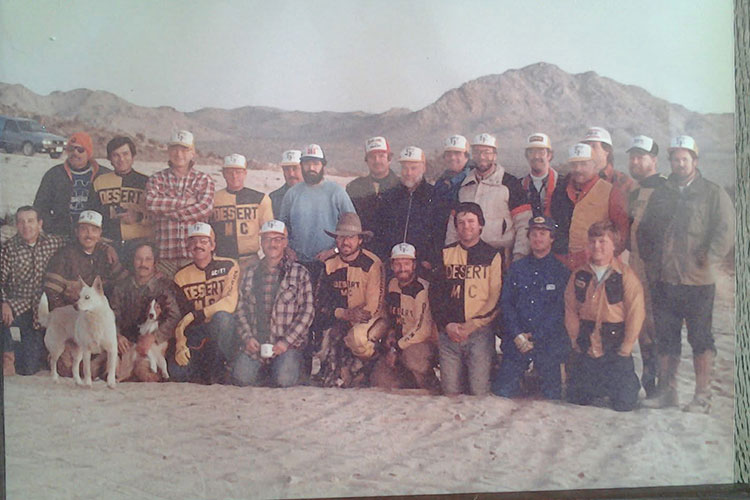
2025 marks the 58th annual Winter Classic Hare and Hound for Desert MC, and as tradition has been for decades, they are the first round of the AMA National Hare and Hound Championship. Historically speaking, DMC is known to put on one of, if not THE toughest hare and hound of the year and this year’s race didn’t disappoint. The 90 mile race started and finished at the popular North Anderson staging area in Johnson Valley, CA. With this reputation, it’s hit or miss on whether racers like it. Some love the challenge, others don’t care for it. But that’s up for the racer to decide, and everyone knows going in that they’ll get their money’s worth at a Desert MC National.
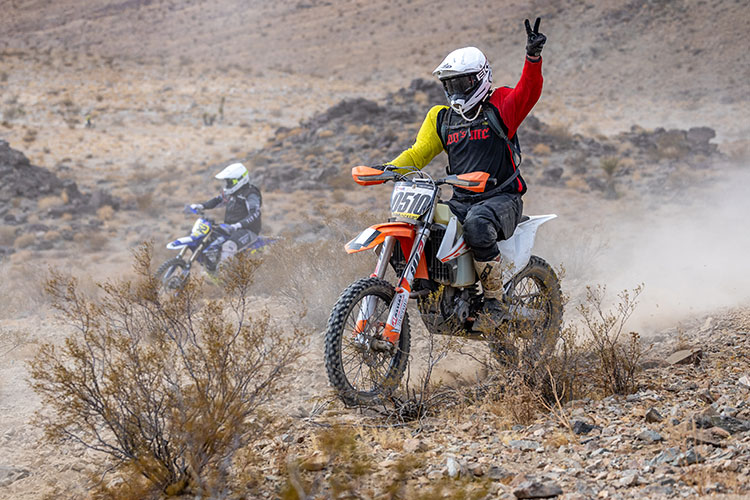
This year’s race admittedly got off to a rocky start. While this isn’t the norm per say, the bomb run wasn’t the best one they’ve put together. A large road crossing right at the end was a little dangerous for racers to be going into in blinding dust. And right past the bomb, the trail led into virgin, rocky hills and across awkward crevasses that wreaked havoc on anyone that wasn’t at the front of their line once past the bomb. I was fortunate enough to get a good start, inside the top 3 overall, and not have to suffer in much dust right away, but anyone who didn’t get a decent start was forced to pick their way through a sea of stuck bikes laid out across the hillsides.
Once past the start, the first ~15 miles took racers through a lot of cross grain and rocky terrain that led to a few crashes throughout the day, and frankly wasn’t all that fun to many racers. In the middle section of the first loop, the club was able to get into an area of land that had been closed for years due to the military occupying it, but now reopened, and it was a cool and fresh area to race through and had some slower but flowing terrain for a first loop. However, the last ~15 miles of the loop was back into rougher terrain that wasn’t super well received. Kudos to the club for trying something new and venturing into an area that hasn’t seen much activity in recent years.
Moving onto the second loop, similar to Checkers, there were top riders that felt this was one of the more difficult loops they’ve ridden. The relentless rocks with little breaks in between the harder sections proved difficult for many in all skill levels. Possibly the “hardest” part of the loop was coming back just a few yards away from the main pits at mile 80 and having to continue on for another 10 miles of tough terrain. Several racers, either mentally or physically, had nothing left and pulled out of the race at this point despite being “so close” to the finish.
When asked what the goal was when laying out the 50 mile second loop, loop captain and club president Maverick Shuey stated “Myself and our race referee, Ryan Smith, had our hands on creating the 2nd loop for this year’s event. If I was asked what my goal was, my response would be this — I personally always aim to create a loop that is a reflection of myself and my club. I want to create a loop that takes riders to places that they didn’t otherwise think they would make it to before. When I race, I always love getting to see new trails, new ridgelines, new washes, etc. So I put myself in that perspective when creating a course. I also really enjoy building fresh, brand new, never before raced on trails. And sometimes that means trucking out a sledge hammer and chisel to break apart some rocks so I have a smooth trail to provide. I always want to provide a loop that is “rideable” but also float on the line of providing riders with a challenge. I grew up racing in the Hare and Hound era of 2011-2015. Those were relentless! But, if I wasn’t forced to race that stuff, I wouldn’t be near the rider that I am today. I know some of those courses were a touch extreme, and severely pushed me to a limit every time, but I thank them for it. And I hold that mentality with me today. Not that I want to send riders on a “death march” but I do want to push them. I want them to know that they CAN ride some challenging stuff and come out of it being extremely proud of themselves. They might hate me at the finish line, but once they come down from their adrenaline high, I hope they realize what they accomplished. I think Desert MC achieves just that. Yes it’s tough, yes it will challenge you, but year after year we see that people keep coming back.”
Compared to the recent editions of the Desert MC National, the second loop seemed to be smoother than most with less whoops and cross grain, but that came with a toll of more rocks than usual. As a pro level rider, I lean on having the former rather than it being easier and pounding whoops for more miles. However, you can’t just think about the Pros and there is certainly a fine line to walk — some feel they did it just right while others felt they were over the top. With that being said, I and several others feel like the extra 10 miles on the end, similar to Checkers’ third loop but even more so in this case, wasn’t needed after the beatdown they gave the riders in the 40 miles leading up to that.
When asked about course layout and design and if they “try” to put on the hardest race of the year, Maverick Shuey stated “No, Desert MC does not set out a goal of making typically the hardest race of the year. What DMC sets out to create is a fun course that will challenge and test our ridership making that trophy and that finisher pin that much sweeter. I feel DMC has an overall higher average club skill level, and so when you come to race a DMC event, you’re getting a touch higher than average skill level trails put together into what we call a racecourse.
We did also add an additional 10 mile section to the end of our second loop this year. That was due to the 1st loop going out to the north. This allowed our second loop to head south and wrap all the way around getting to use stuff that is typically a 1st loop area so it was a little different. But with this layout, it opened up a ton of JV to us. We just had to add a bonus loop. Some were saying our bonus loop was too much. But in reality, can you really have enough? JK. I think in hindsight we should have requested to cut classes off of the bonus 10 mile section and created it as a separate ‘Loop 3’. Noted for next year.”
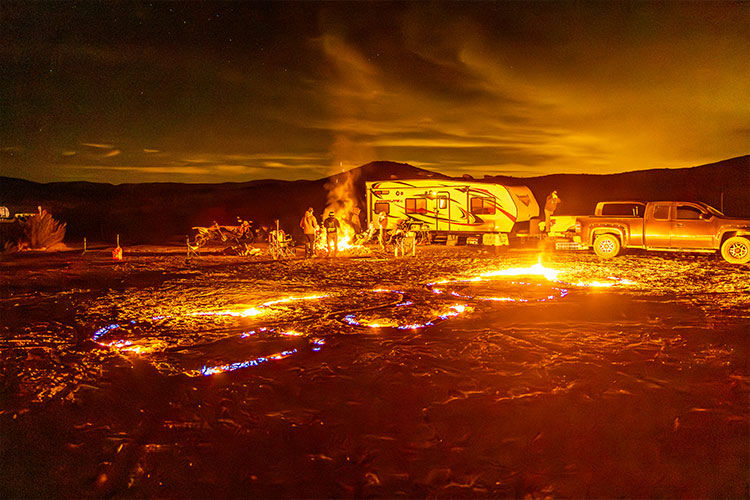
DMC has long had a Saturday night campfire tradition to keep the spirit of desert racing alive and build camaraderie amongst the racers, and that included their “2nd annual ‘Moto Limbo’ which was an absolute blast. It has been such a fun charitable event to host and I hope we get to continue to do that.”
Crossing The Checkers
At Checkers, the top Overall finisher was Factory Husqvarna ace, 3x NHHA Open Pro Champion, and Checkers MC club member Dalton Shirey who finished in just under 3 hours, 5 minutes followed closely by JCR Honda’s Preston Campbell just 30 seconds back and DC Racing Kawasaki’s Chance Fullerton roughly 8 minutes behind them in 3rd Overall. The last two loop finisher was Sterling Foxcraft, a Vet HWT Novice finishing in 5:48:10. And the last three loop finisher was 68 year old John Kearney on a Husqvarna 150 two-stroke finishing in 5:54:43!
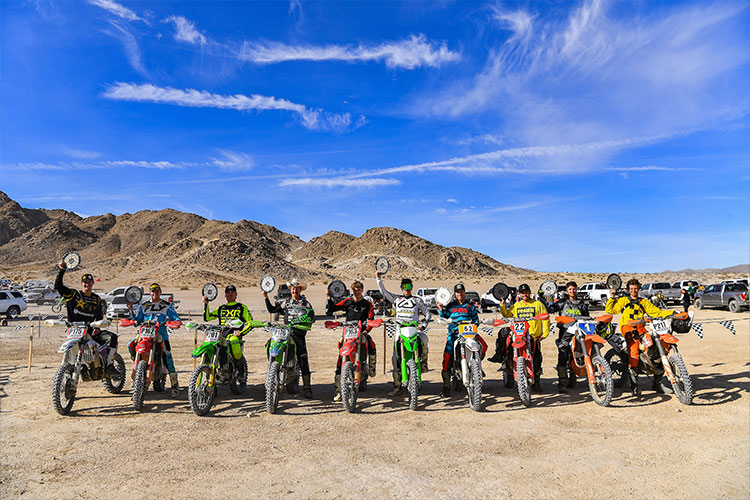
At DMC, Factory Beta’s Zane Roberts completed the 90 mile race in 2:54:29, followed by 6x NGPC champion and Factory KTM’s Dante Oliveira in 3:02:39. First 250 and 3rd O/A went to Husqvarna support rider and 2024-2025 NHHA Pro 250 Champion Sam Pretscherer in 3:04:49.
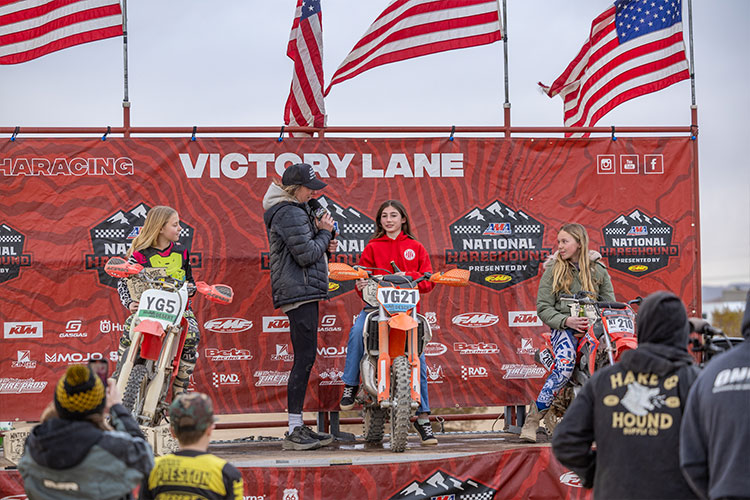
Another notable finish at DMC was the oldest two-loop finisher, again John Kearney, who finished in 5:15:27 and right behind him was perhaps the youngest two-loop finisher — 13 year old teenage girl Brynlie Reed. Another 14 year old girl, Leimomi Jensen, finished two loops on a 85cc minibike in 8:05:02, an impressive feat for such a young rider on a small bike.
Lacey Betancur was the final two-loop finisher with a total time of 8:05:40. Determined to reach the finish line of her first ever race, Lacey stuck it out with several sweep riders finishing well into the night on her headlight equipped Husqvarna TE. Lacey posted a very cool video talking about her experience which can be viewed below.
https://www.instagram.com/p/DFbpRTjABcY/
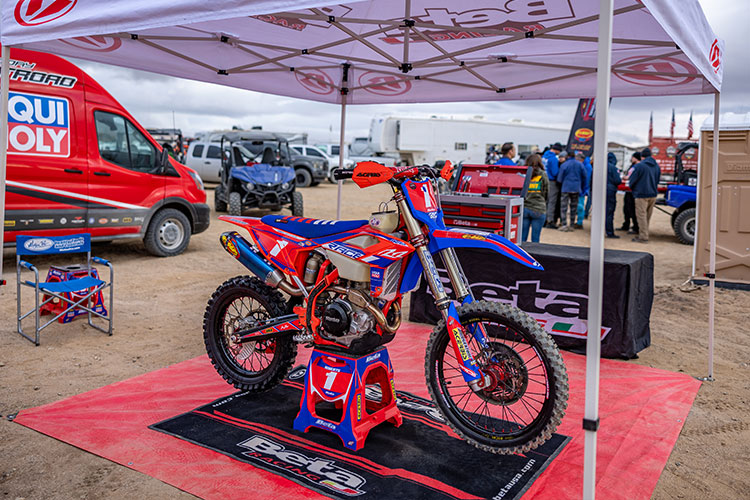
National vs Non-National
Some things to note about one event being a District 37 only race and one being a National race. The Checkers, as well as the other non-National clubs, charge a lower entry fee than what DMC charged at this year’s race. Amateur racers are charged $58, Pro’s are charged $100 (with a $10K purse at this specific race), and Youth are charged $40. At the National, amateurs are charged $80, Pros are $150 (with 50% payback), and Youth are $40. Up until this year, the National entry fees have been standardized with the local fees but DMC saw a drastic increase just this year.
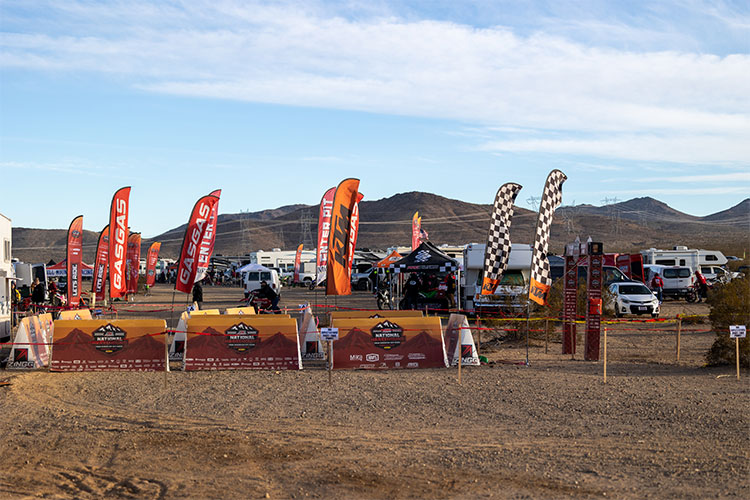
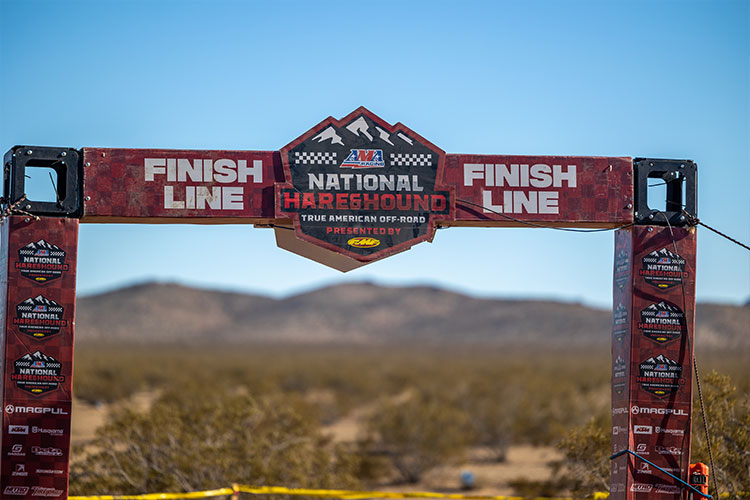
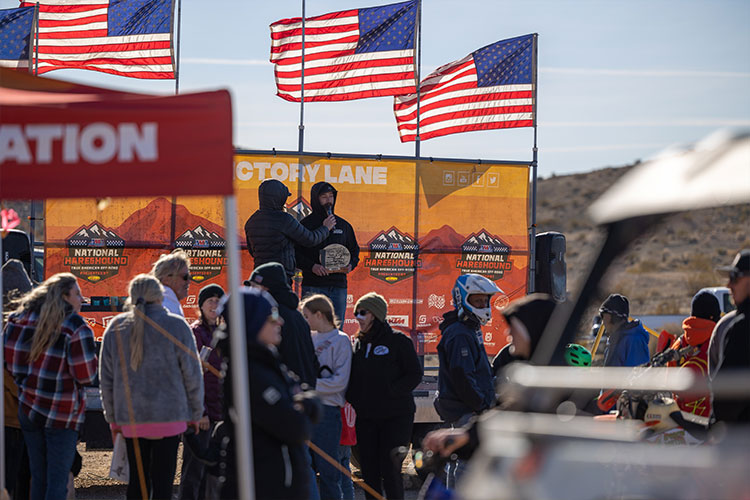
Additionally, the prestige that comes with being a National event attracts nearly all of the fastest Pro riders and most of the fastest amateur riders in each class. NHHA does a good job of giving every class a podium, a trophy, and an interview at the end of the day for the top three in each class. Furthermore, the media coverage is typically higher with magazine articles and web coverage, recap videos, more social media coverage, etc at a NHHA event.
While the idea of racing a national event with the prestige, the fastest racers in every class, etc all sounds good, is that really better? Some like that challenge and want to prove themselves against the best. Others are simply looking for an easy trophy or like the more relaxed feel of a local race, although any race in the desert really does feel like a local race at the end of the day. The camaraderie is very much the same amongst the riders and a lot of the club members and does bring that old school racing feel back to a time today where that is few and far between.
Which Is Better?
So, you might have spent as much time reading this as it took to reach the finish of one of these Hare and Hounds and you’re asking yourself “which is better?” The Checkers’ Check Chase Hare & Hound, while it isn’t a part of the National series, it’s still thought of and is one of the “majors” on the District 37 calendar each year and holds a lot of water with both the newest generation and the old timers. Desert MC’s Winter Classic, being a part of the NHHA series and with how long they’ve been putting on a Hare & Hound of this magnitude, is tried-and-true in being one of the toughest and most rugged races of the year and simply finishing the event is an accomplishment in itself, let alone standing on the podium after the checkers fly.
Much like our bike tests and comparisons, we’re going to let you decide which is best. At the end of the day, each race has its own flavor and each of you has your own flavor preference.
Future of Desert Racing
After all of this, where is the future of hare and hounds and desert racing going? Aside from land use issues and fighting legal battles, the hardest aspect of modern day desert racing is keeping the customer (racers) entertained and wanting to come back for more. Former AMA Off-Road Racing Manager Erek Kudla, who had helped jumpstart the Youth side of AMA National Hare and Hound Championship in its inception and is a promoter and club member in his own right, offered a valuable take on what can make a successful long-term event.
With some data to back it up, he states “Personally DMC and its difficulty was always fun for me… but series wide it was never beneficial as a 50% DNF rate turns into riders not following the series, hurting round two on (as evident with the steep rider count drop that occurs every year). In multiple year end rider questionnaires, they ALWAYS selected one of the easiest races as their favorites of the season. Ultimately, if you want numbers to increase you would/should emulate those events that people love. It’s a chicken or the egg situation… It SHOULD be hard [because it’s a National] (granted there is no rule anywhere that says this), but not as many people want it that way so the numbers will reflect that… Again, PERSONALLY, I always loved DMC, they do an amazing job putting together an amazing course, and knew it was going to be downhill from there for the rest of the season.. but as an A rider, that does not reflect the entire ridership that you NEED to make an event and series successfully.”
While it sounds cool to put on the toughest and the baddest race of the year with the most miles and the most rocks, it isn’t always the most beneficial and long term can hurt the club and the sport as a whole. Focusing on quality over quantity goes a long way and 70 QUALITY miles can certainly be viewed as better than 90-100 so-so or junk miles. As of late, the Check Chase H&H packs quality miles into their courses year after year and they have figured out a formula that is able to cater to riders of many skill levels. For many years, they didn’t do that and may have scared away new or less experienced riders. Every year when standing in the registration line at dawn on race day, I hear a veteran racer talking to a newer or novice level racer about the race and they warn them that it’s a Checkers race and how they “picked a good one” to make a first desert race attempt. Obviously, they haven’t shaken that from years past, and while they do have some difficult terrain, it isn’t to the level that I’d warn riders to stray away from the race.
Moreover, if you’re looking for an accomplishment, you want to race against many of the best desert racers on the west coast, or you simply enjoy technical riding, Desert MC is one of the best races to fulfill any or all of those wishes. They’ve set a standard on how they lay out their race courses and they will almost always attract most of the higher skilled riders due to being a National event. Whether you choose one, none, or both of these events, there’s no better way to experience it than watching that banner drop, clicking off one mile at a time until you see that coveted checkered flag.
Checkers H&H: Best for: Riders of all skill levels who prioritize a well-organized, fun, and challenging-but-doable race experience. Great for those seeking a taste of old-school desert racing with a modern twist.
Desert MC H&H: Best for: Experienced riders looking for a true test of endurance and skill. Ideal for those who enjoy technical terrain and want to compete against top-level racers. Be prepared for a grueling race but a sense of accomplishment at the finish.
Other Opinions On The Races:
We asked for some feedback on either or both of the racers from people who raced the events this year and this is what came back –
From Brandon Krause – “Rocks.”
From Greg Delmage – “I raced both this year. I’m a Senior Expert, and a Loop 2 captain for SoCal MC. Personally I loved the challenge and length of both races and respect the effort it takes to put loops together. That said, both loop ones were 10% – 20% too difficult for newer, less experienced/weaker riders and each race had an unnecessary novice soul crushing hill climb in it. Even the leading top 5 experts all went down on the first DMC uphill on loop one. I think loop one should be distinctly easier, faster, and flow so the whole crowd can be challenged but still have fun. Again, reduce the loop one difficulty by maybe 10% and no brutal hill climbs. Maybe one tough upper, one downer, and a bunch of medium stuff with fast easy breaks between. Loop twos were great. Lots of checker lines were being found for sure, it’s tough to keep the riders on course without laying it out next to or near a SXS track. However, in general, I liked both loop twos. Some say too many rocks, and it would be hard to argue, but a challenge is a challenge and I’ll take tough single track terrain over endless whoops any day. The third loop of checkers should have been open to senior experts. I will die on that hill and take anyone out with me that disagrees. Old is 50. Not 40. I will fight anyone who says something different lol. I ran the third loop for fun after finishing checkers and loved it. Also, the length is great. 90-100 miles is a real race that tests will power and true skill and endurance, not just energy and sprinting speed. Many quit DMC at 80 miles because they were back to camp and didn’t have the will power to continue. Those that did deserve to finish — it’s a good lesson to never quit. I was told to rest while you’re moving and the checkered flag will appear. Heck, at DMC I was third through the bomb off the expert line, charging hard making Fenstermaker work for it. A few miles into it I stopped for a downed rider who crashed super hard right in front of me, stayed for at least 7-10 minutes, lost 20 or 30 positions, and still rode a great race and managed 3rd Senior A in a national. Missed 2nd by 5 minutes and 1st by 15. The point is the courses weren’t THAT bad. They were challenging and yes perhaps too difficult for the newer and less durable. My takeaway is make loop one a tiny bit easier, and keep challenging the loop 2 guys. And bring back loop 3 for all experts under 50 dammit.”
From Todd Sizelove – “I liked them. They are rough. I definitely need mental toughness to push through and stay focused. I have ridden Johnson Valley my whole life. I guess I’d expect nothing less than rocks on rocks. I feel like since the marine base took half that desert, we are out of open space and that makes us work our way into the hills to find virgin desert to race. With that, I feel like much more technical skill is needed to finish. I did like the terrain diversity of Checkers with the sand dunes and some King of the Motos terrain dropped in. I think that is just inherent in the east side of Johnson Valley. It’s hard to get out of the rocks on the west side. I definitely like the old school one line start at checkers. I feel like it gave us average joes more excitement lining up against pros and seeing what we can do. I think Checkers was harder in sections with some of the KOM parts mixed in, but it was broken up with some sandy sections to mentally take a break. DMC was mentally hard and draining because the rocks never let up. Overall, both races were fun and definitely pushed everyone that entered. They aren’t for the faint of heart.
From Brooklyn Caudillo – “Checkers was fun, it was my 1st O/A in the Supermini class. I decided this year to race with the boys to better myself when it came to the National Sr Girls events I’ll be racing this year in 2025. I got a good start and was 3rd going up the first hill. Two of the boys made a wrong turn and I stayed on course. Logan got around me and he led the first lap. On my second lap I was able to get around Logan but Wyatt and Brody passed me. Brody crashed and Wyatt stayed with him. They told me to go send for help which I did at the home check. From that point on, I just rode at a consistent pace. I knew another Wyatt, Wyatt Wilkins was behind me not knowing how far behind my pace was fast. I had to pit twice in the 1.5 hour race since I was running a stock tank. My dad would tell me how far back he was each time. When I got the white flag I just prayed the last lap would go smoothly. Once I got the checker flag it was all smiles for me. My first O/A had a lot of people cheering for me each time coming through the pits. It was nice to hear them all. I was surprised to be interviewed by someone documenting the Checkers 75th anniversary. I hope I did ok in the interview. I had just finished 1.5 hours. The course was awesome, had some fast sections and some technical down hills which I liked. Laci said I went down it like a champ standing up the whole time taking good lines down it. I want to make sure everybody knows Wyatt Carlson stopped for Brody who crashed; he gave up his race early to make sure he was ok. Once adults and rescue got to Brody, Wyatt was on it. My dad told me he thinks I was the first girl to overall a D37 youth race since MotoTally started. I feel so pretty cool to be part of D37 youth history.
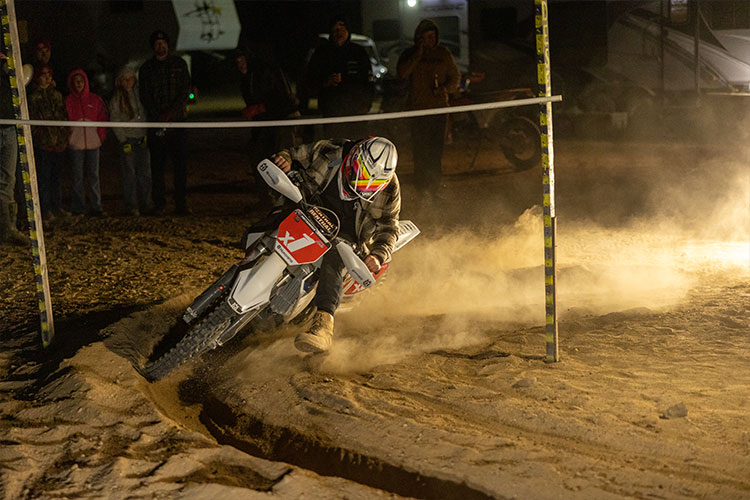
DMC National Youth Hare and Hound. This is the first year us Sr Girls get to race in the 1.5 hour race with the Superminis and all 85cc. That morning, my dad and I walked to the start early to pick a good line for the start. As soon as the 65cc and Jr Girls race took off, we were walking the start. I know getting off the line and out in front of the dust is important. We probably spent 30-40 min deciding what’s best for me. When the banner dropped, I got a great jump around all those around me. I was told at the end of the bomb I was 4th OA; a couple Superminis got around me, but I held my lines. If anybody else was to get around me, they better improvise. I battled with N199G Leimomi Jensen; her and I went back and forth on the first two laps, pushing each other to be at our best. She ended up having mechanical issues and dropped back to fourth. I was able to finish 6th OA and 1st Sr Girl. Proving us girls belong in the 1.5 race. The course was fun, nothing too crazy with some good sand washes, uphills, and downhills. It was a little technical but nothing crazy. I really liked the course. Got interviewed on the podium by Megan. Got to thank my sponsors and put SVC, BluCur, Wicked Family, Church of Dirt, BTS suspension. Team Orbit, FMF, Dunlop, Bray Goggles, Lost Coyotes, Coyote Trail Adventures, Nuetech Nitromousse, ASV levers ”
From Michael Caudillo, a parent of a D37 youth racer – “I think D37 races run well with the clubs who put on youth events. It’s easy to find the youth steward when there’s questions a new rider might have. Sign ups are a breeze, course markings are good. I believe they use all the same Kurt Caselli Foundation markings that NHHA uses — orange ribbon, blue danger, etc. Here’s my take on the difference between D37 and NHHA
NHHA promotes and highlights the youth! Before and after events. Social media is a big deal and when they highlight an upcoming event, it gets the kids excited. I see it in [my daughter] Brooklyn. After events, NHHA highlights class winners, they interview the kids top 3 at every round on the podium. Chasing the Ribbon video series is pretty cool too with the kids usually getting highlighted in the 20 min event recap video.
I have never seen D37 highlight the kids and I have never seen D37 promote the youth racer. I believe Brooklyn did something historic at Checkers. She’s the 1st girl to O/A a youth event in the premier class. Nobody in D37 social media acknowledged the accomplishment. If D37 ever wanted to bring youth riders into the series, I seriously believe social media is key. Kids love to be recognized, tagged on IG, etc for their accomplishments. I think D37 could be so much bigger with just a little push on the gram or Facebook. Have you ever looked at D37’s Youth FB page? Nothing on it but old flyers. Nobody keeps it up to date. D37 does trophy the top 3 in each class after each event, but no interviews, they call the top 3 up, take a quick pic, and on to the next class to get it over with as soon as possible. Each club is different. NHHA just has a higher standard I feel — the banners, flags, sponsors who support NHHA, etc just makes it an overall better event. It feels like a big deal to be there racing a NHHA event.”
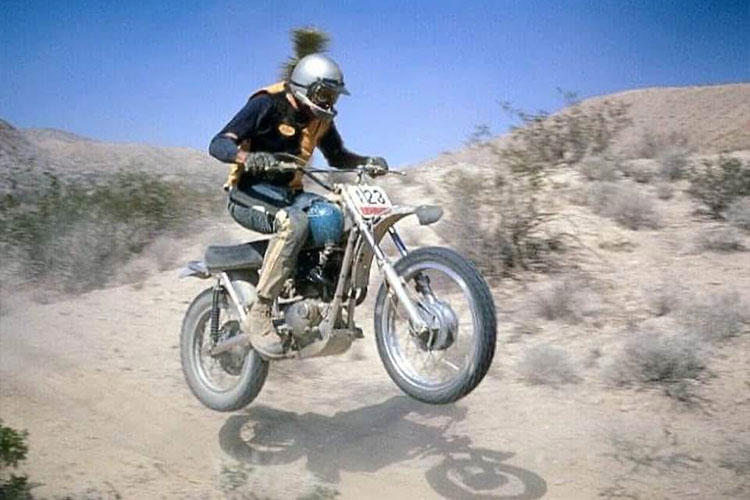
From Parker Jones – “That was my 2nd hare n hound and 4th race ever, it was tough. A lot more gnarly downhills than uphills imo. I got into trail ride mode about Mile 50 until the finish. Once it was over I realized I didn’t want it to be! It’s one of the hardest things I’ve ever done,it gave me a whole new perspective on my strengths and weaknesses. I want to get better! Respect for all my Dezert people out there 🤙🏼. Finished 6 hours, 53 minutes…”
From Erek Kudla, former AMA Off-Road Racing Manager and NHHA Youth Promoter – “Personally DMC and it’s difficulty was always fun for me… but series wide it was never beneficial as a 50% dnf rate turns into riders not following the series hurting round 2 on (as evident with the steep rider Count drop that occurs every year). In multiple year end rider questionnaires, they ALWAYS selected one of the easiest races (Idaho or Nevada) as their favorites of the season. Ultimately if you want numbers to increase you would/should emulate those events that people love. It’s a chicken or the egg situation … It SHOULD be hard (granted there is no rule anywhere that says this), but not as many people want it that way so the numbers will reflect that… Again, PERSONALLY, I always loved DMC, they do an amazing job putting together an amazing course, and knew it was going to be downhill from there for the rest of the season.. but as an A rider that does not reflect the entire ridership that you NEED to make an event and series successfully.”
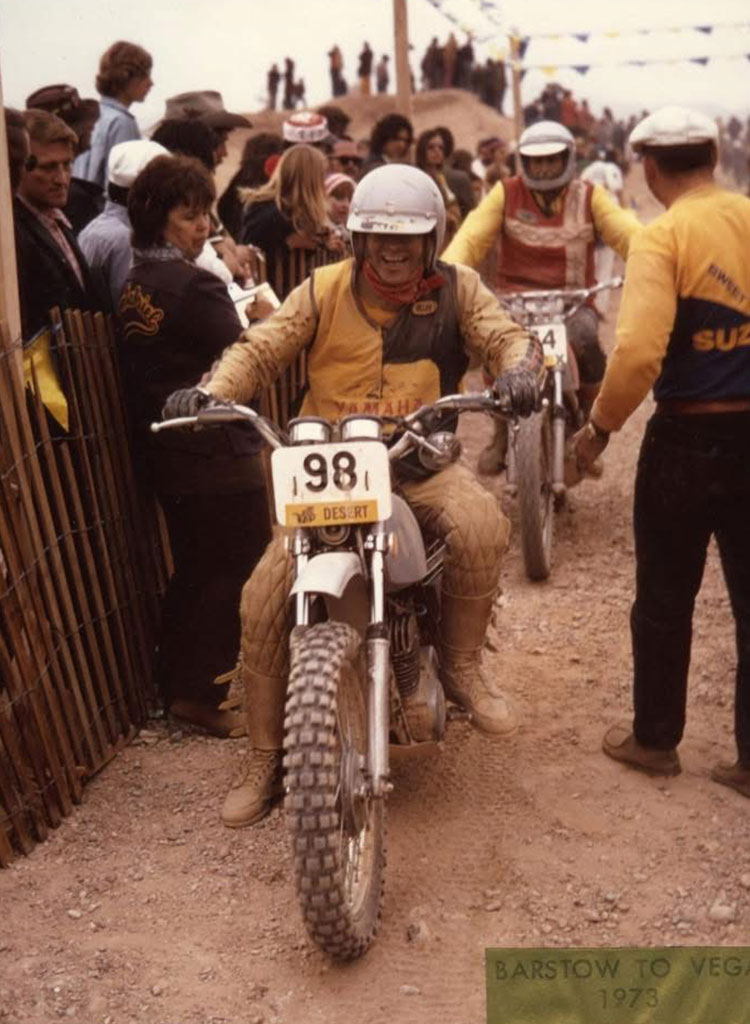
From Brian Powers regarding DMC – “The good: it was a challenge, I liked the hill climbs, the open dry lake bed and the steep downhills. The course was marked well and the event seemed to go according to schedule.
The bad: The land of ups and downs was my least favorite by far. Back breaking, not flowy, lasted forever. I felt like the entire trail aimed us at every whoop in the valley. I kept waiting for the “fast and flowy” sections they said to expect. Overall I walked away proud that I finished the challenge. Still recovering physically though from the butt whooping.
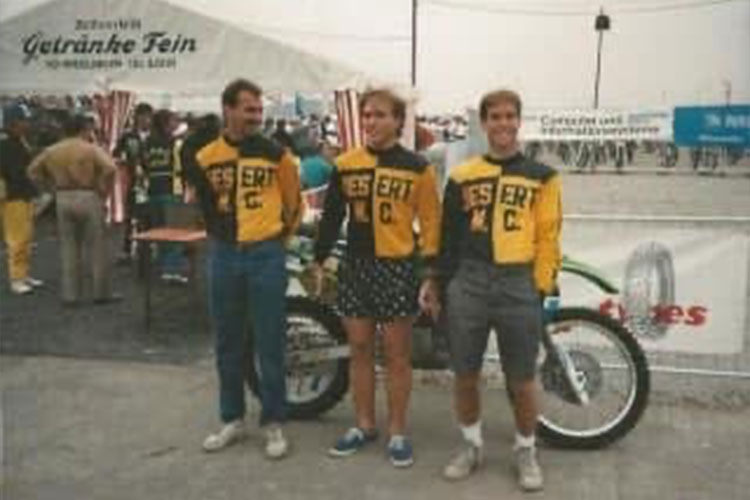
Some stories from the earlier days of desert racing! Some of this sounds like there is a common theme amongst clubs and the style of course they put on!
From James Dekoker – “1972 Check Chase I was a HWT Novice riding a ‘71 400 Husqvarna Cross. The race started in Lucerne Valley, there was a lot of us, hundreds of novices we took off going east towards Parker the river and I was doing okay as I rode along there was a big uphill downhill and if you hesitated they had a cattle prod as I remember and they would hit you with that cattle prod and made sure you kept going. What I can remember of it, it was a typical desert race back in the day — open desert went through some sandy areas — it was a long way to the first pit not sure how far but a majority of the novices were running out of gas. As I was going by, my bike started sputtering and I could see the pit so I backed off not realizing I was running out of gas. We changed out the spark plug — I thought it was fouling. I got gassed up, took off feeling good and unfortunately I went into a right hand turn too fast, slid it sideways and took out the berm, hit a chain link fence and that was the end of my race. Nine stitches in my cheek later, I still have the memory of never finishing and a DNF but I live to tell about it.
1972 Desert MC race with another mass start — open desert was fun and then it got into a rocky technical section. I believe some up hills and down hills and they like to make it challenging going up and down. I finished the race. I don’t remember how well I did but back in those days finishing a desert race was an accomplishment in itself.”
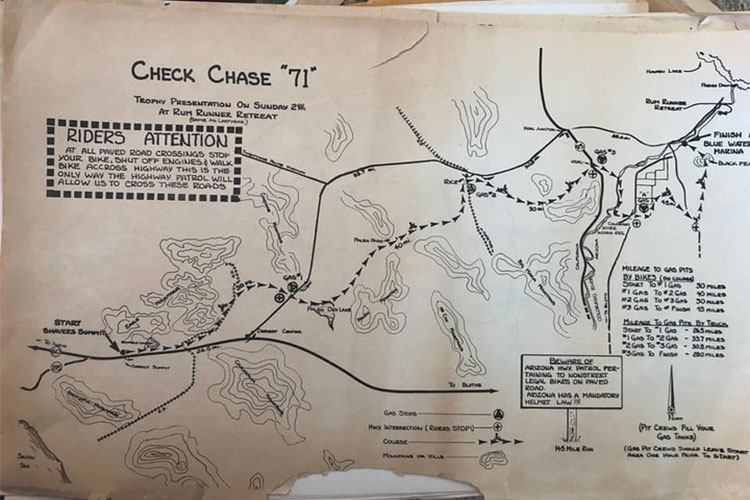
From Gene Smith Sr. – “My first Checkers M/C Hare & Hound was Oct 11, 1964. I was 15 years old and it was my 2nd desert race in my racing career. I was on my 1957 pre-unit 650cc TR6 Triumph. I finished 45th overall and 3rd Open Novice.
Finished 14th overall, 2nd Op. Am. in the ’65 Check Chase.
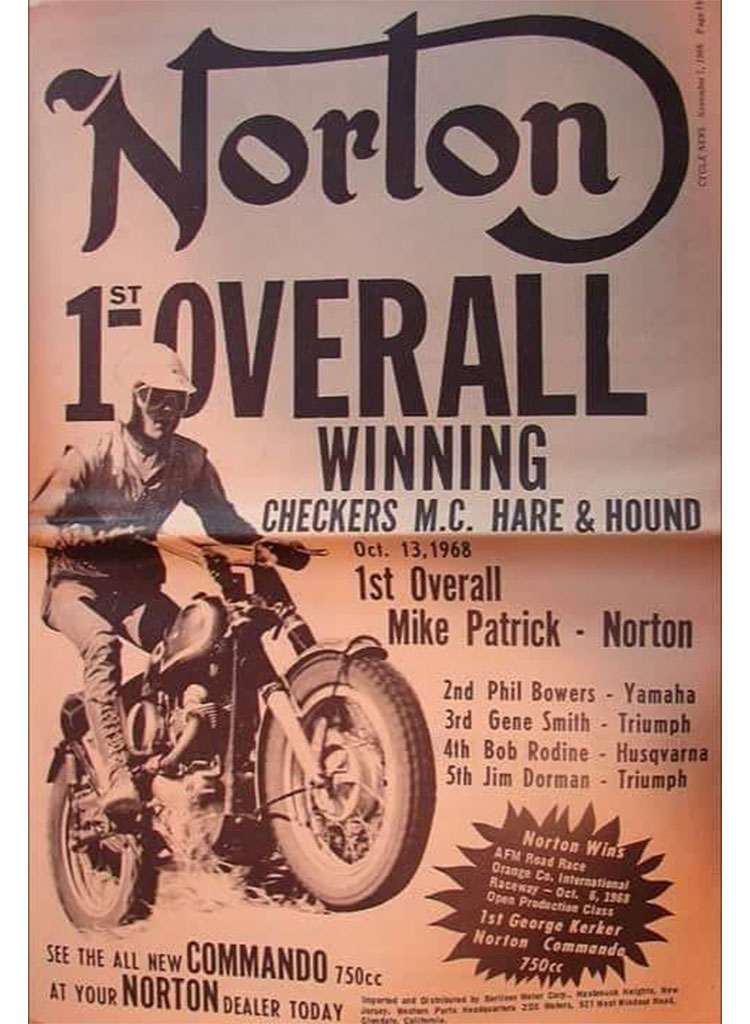
Finished 3rd overall, 2nd Op. Ex. in the ’68 Check Chase.
Finished 6th overall, 1st Op. Ex. in the ”72 Check Chase.
Every race was on a 650cc TRIUMPH, proudly wearing the SHAMROCK COLORS.
Take it from this 75 year old Shamrock, the Checkers M/C have a reputation for promoting one of the best, top notch desert races in District 37. This is when every racer who enters their event will beat every member of the Checkers M/C. Thank you to the many Checkers, past and present, for promoting a great desert race that so many of us always looked forward to each year.”
Do You Like DBT Bringing You Fresh Content? Search and Shop Through the Links Below: