TDub Keeps On Chugging
Story and Photos by Trevor Hunter
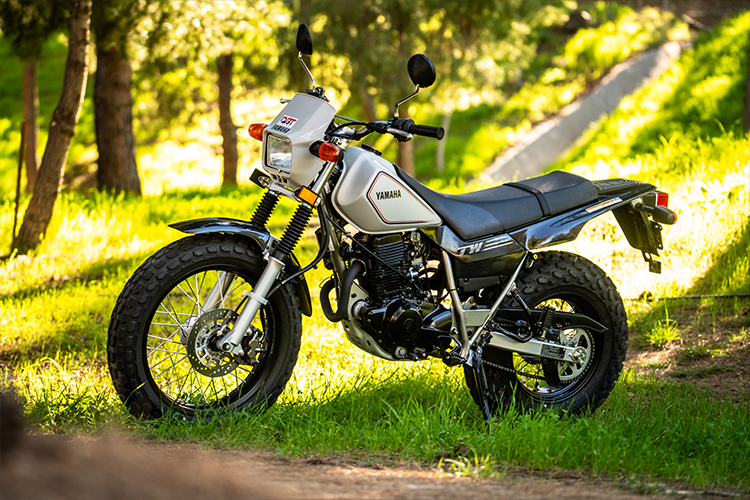
Oftentimes, reliving the “glory days” isn’t how you remember it. Everything was better when looking back with nostalgia and when you try to relive it, it often leaves you feeling disappointed and wanting more. In 2026, there aren’t many bikes that share the same build or characteristics as they did back in the golden era of motorcycles. There is; however, one motorcycle that really hasn’t changed all that much since its debut in 1987. And here, Yamaha’s TW200 enters the chat.
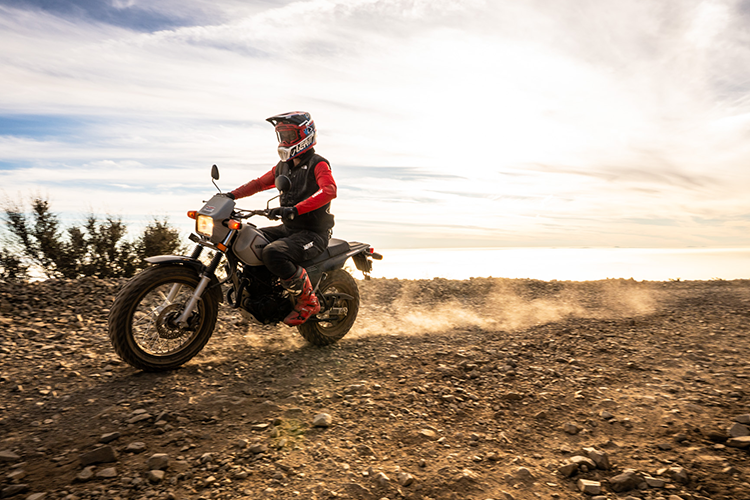
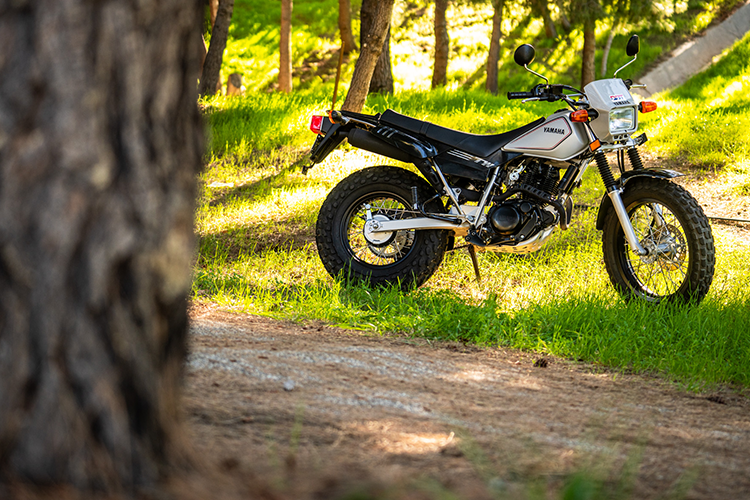
There is no motorcycle more practical than a TW200 – it’s simple, reliable, and effective. You don’t have to check radiator coolant, you will probably never have to change the oil in its lifetime, and if you keep air in the tires and gas in the fuel tank, you can go just about anywhere with this bike.
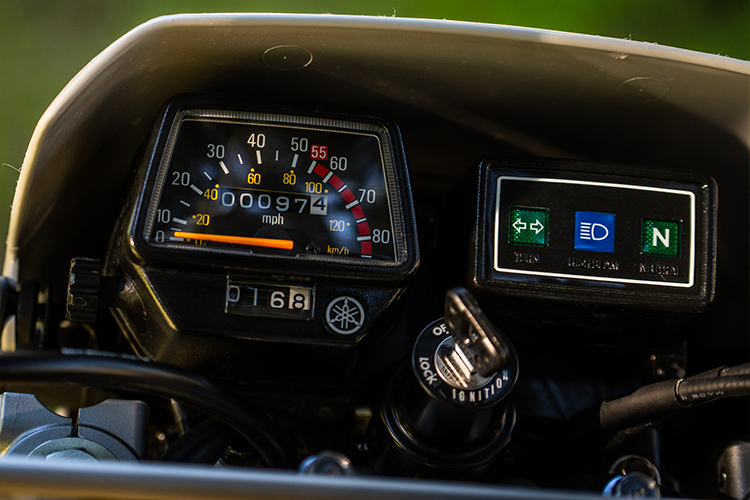
There have been very minimal changes in its time in the production cycle too. In 2001, it ditched a drum front brake for a disc brake and it removed the kickstarter to be e-start only. Other than that, it’s basically a 1980’s motorcycle still being produced in 2026. Simple things like the odometer are still mechanical – not digital – showing its age but hey, it still works just as good and it’s pretty damn easy to reset back to zero when you’re going for a ride.
We’ve taken it out for a few rides here in the Southern California mountains and roadways and have some takeaways on this old-school bike in today’s day and age. Being a 196cc air-cooled, carbureted four-stroke, this isn’t some horsepower monster that could be mistaken for a YZ450F. However, it produces just enough power to get the job done and put a smile on your face. Let the clutch out and the little TDub will lug and chug along any path you set in front of it. The power couldn’t be any less intimidating and more beginner friendly and its top speed and cruising speed is safe enough to not set the world on fire and allow riders to comfortably build into it. On the highways, we liked to keep it under 50-55 mph cruising and under 70 mph at top speed. It’s not a freeway bike, but it will cruise around town and through the canyon roads with ease.
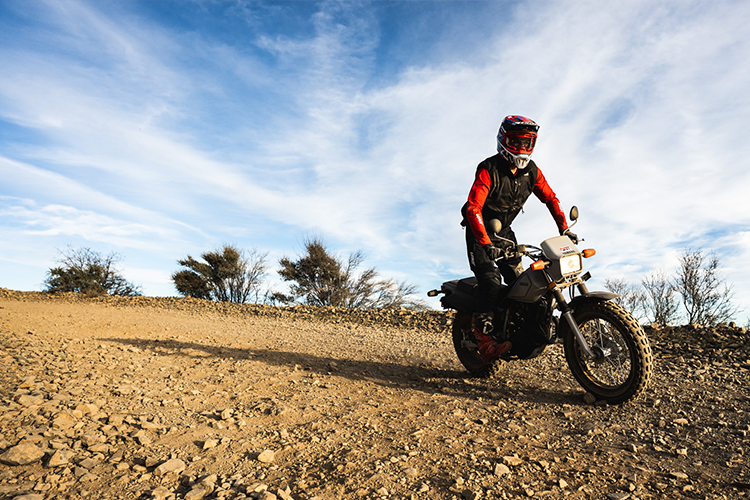
The fat tires are really what sets this bike apart and puts it in a class of its own – there really isn’t any other motorcycle on the market with fat tires like this. In most terrains, the tire profile isn’t all that bad and has decent lean angle handling and comfort. However, when taking the TW on more serious off-road riding with some singletrack rocks and ruts, the wide tires liked to find traction and grab edges unexpectedly. Get off the fire roads and farm roads and the bike becomes deflective and bounces around on the trail, but this is nothing a rider with a little bit of off-road experience can’t handle.
Quite possibly the biggest “drawback” to this bike is the carburetor and getting it dialed in in stock trim. As is the case with so many carbureted four-strokes in the early days, it’s hard to get it to run well when cold and once the engine warms up. We prefer for the bike to run well when hot, so it takes a few minutes of the bike idling with the choke on to warm up and eventually get up to operating temperature before taking off on an adventure.
The suspension is short and somewhat sweet. While you can find its limits rather quickly, it does handle small chatter and fire road chop with some performance, but you have to be on your toes and careful to not get in over your head. With the short suspension and low seat, it’s very confidence inspiring and even some of the smallest adults can feel comfortable at putting the ski’s out when things go awry. One thing that remains the same with the TW among all other entry-level dual-sport bikes is the heavy scale weight. Weighing in near 280 lbs, this bike is far from light but it does pack its weight low enough that it doesn’t overpower the rider until things really go south.
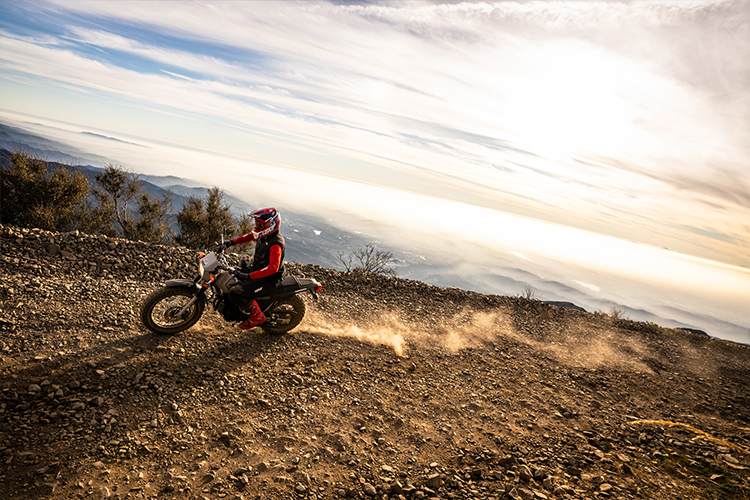
If we were to look for some simple improvements on this machine, we’d look at some different tires that hook up better in the dirt, as well as some jetting and carburetor work to get it running more consistently. In loose terrain, the tires will break traction, find traction, break traction again, then find traction again and continuously run through that cycle at times. A bigger line item to improve would be in the suspension department with springs and valving, but that can be a bit much for the intended crowd of this machine.
Because of the simplicity of this machine, we feel it really is a great motorcycle for newer riders to learn the intricacies of a dirt bike and what makes them tick. When it’s a cold start, you have to use the choke. When you start and finish the ride, you have to turn the gas on and off. The only thing it’s missing is a kickstarter, but that can be overlooked and isn’t deemed necessary. Additionally, the lack of fuel injection and all of the complicated electronics on modern motorcycles makes it much easier for inexperienced riders to tinker and wrench on the bike themselves.
In today’s day and age where teenagers are running around town with no responsibility and without a care in the world on their electric, throttle-driven bikes, something like the TW200 could be a great stepping stone for a young adult. Priced at $4,999, it’s not that much more expensive, and sometimes even cheaper, than one of those electric bikes, but it comes with responsibilities of riding on the road with a proper drivers license, insurance, and rules and regulations to follow. Not to mention, the freedom of riding a motorcycle is something that can’t be matched and the TW200 is in a class of its own.