2026 450 Off-Road Shootout
Story and Photos by Trevor Hunter
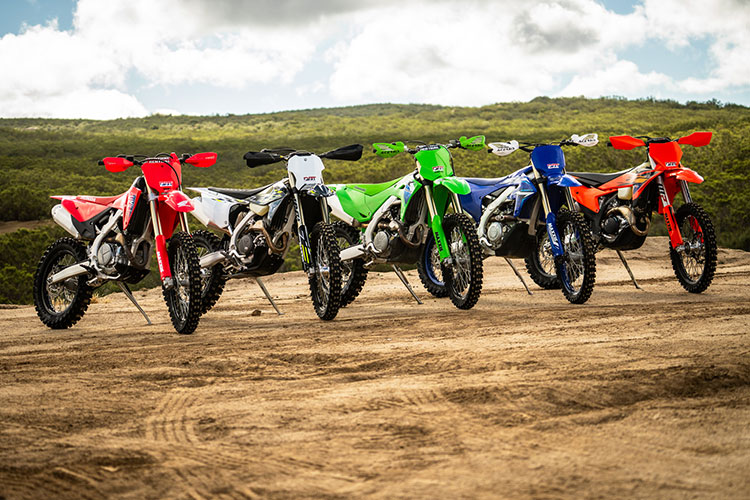
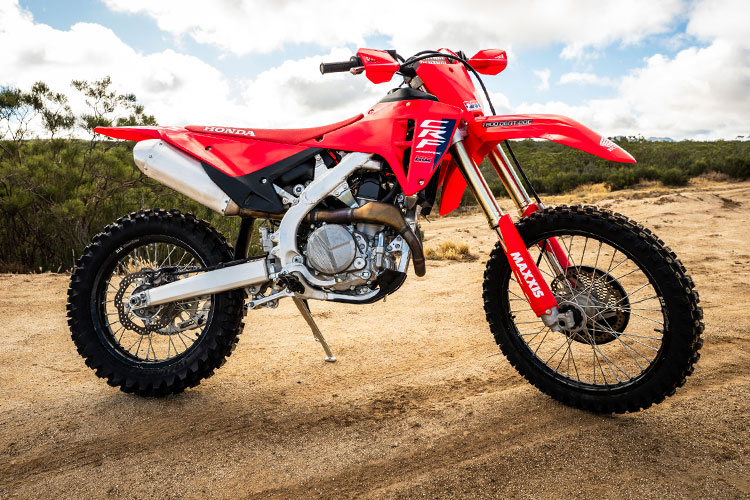
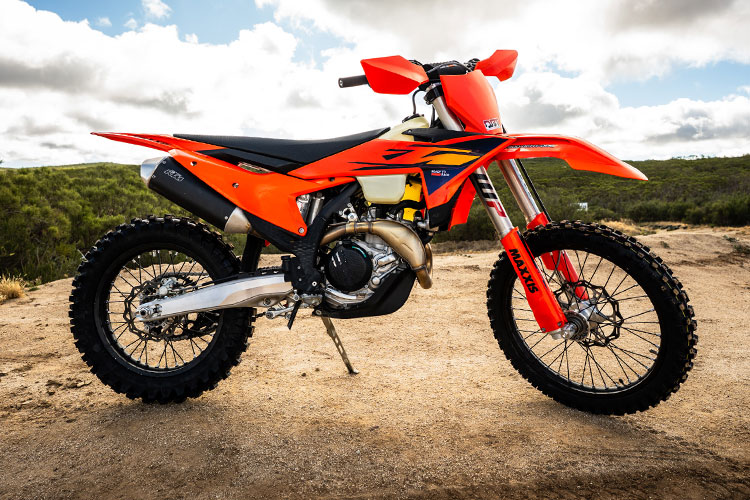
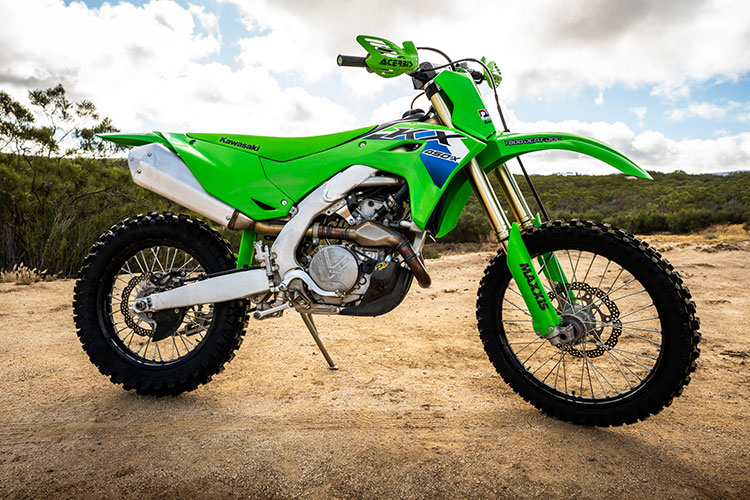
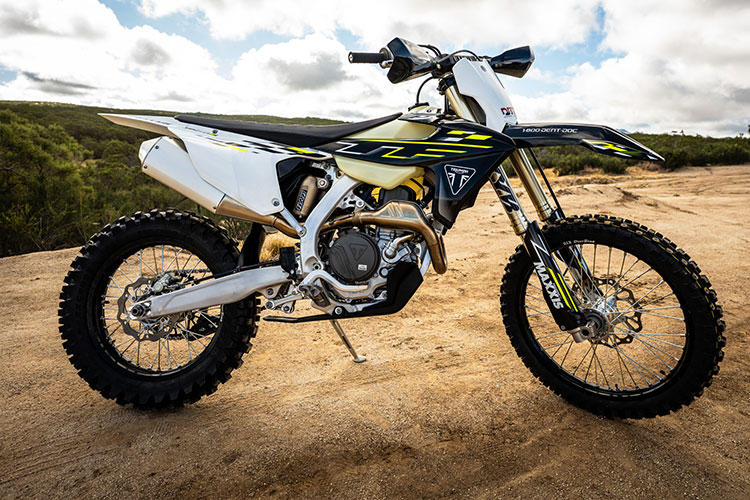
Competition off-road bikes are booming with the OEMs and the consumers at the ground level. KTM pioneered this decades ago, and now nearly every manufacturer produces their own XC racer in some shape or form. Some are closer to an MX model than others, but these are all declared as off-road race bikes from the factory, what we deem the “FX” category. Yamaha has the YZ450FX, Honda with the CRF450RX, Kawasaki brings the KX450X, KTM offers the 450 XC-F, and Triumph rounds out our comparison with the TF450-C.
To check out each bike’s First Impression, click through below:
YZ450FX | CRF450RX | KX450X | 450 XC-F
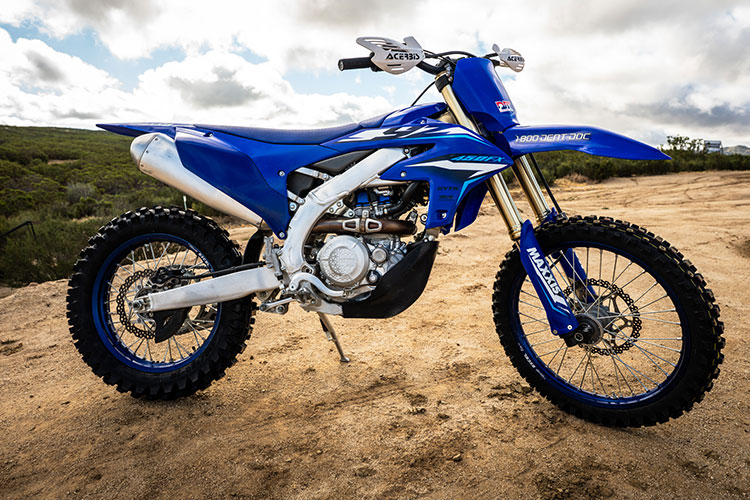
Note: We tested each bike exactly how they come off the showroom floor, excluding tires. Knowing how important a tire is and how quickly it’ll be changed, we elected to go with the same tires on every bike. Maxxis helped us out with 80/100-21 MX-IH front tires and 110/100-18 MX-SI rear tires for all bikes. These tires are regularly used/raced on by four of our testers in this shootout, and several after have switched to these tires because of their performance during the test. Tires are critical to a bike’s performance and knowing these, we felt going to a controlled tire was the best fit, especially one that we know works well for the conditions on hand.
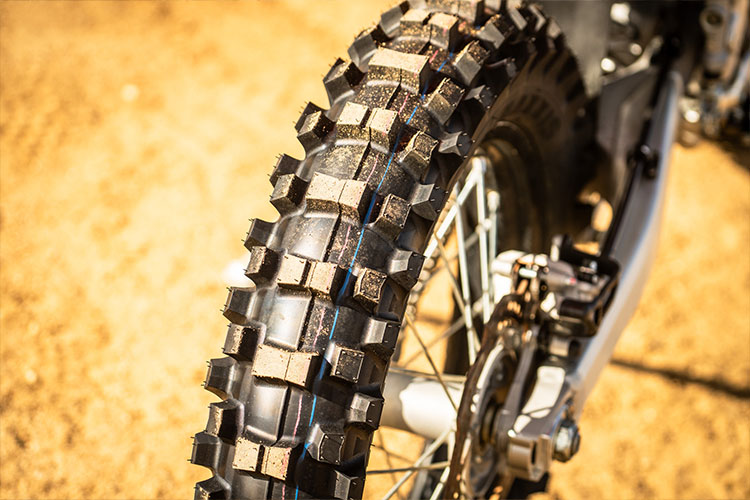
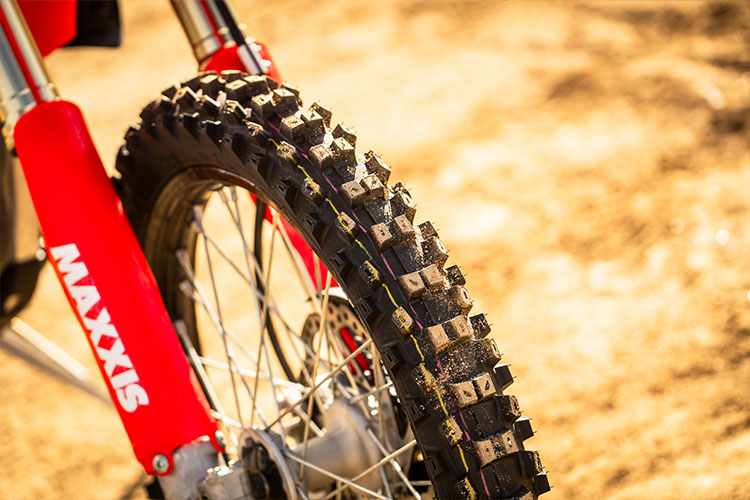
The only other changes we made were clicker and sag adjustments, fork height, ECU tuning on the Yamaha with the GYTR Power Tuner App and Kawasaki’s Rideology App, and added handguards/skid plates for some protection when necessary. This test was performed over one day at Cahuilla Creek MX using the Vet MX track and a wide variety of faster off-road and slower singletrack onsite, though a few of the riders have some individual time on the different bikes at various races and other off-road riding spots prior to this.
We feel almost every bike could easily be raced in stock trim or very close to it, and we did this. Some may require a little extra setup time to get acquainted with the bike, but all are potent race machines and just about every rider had a tough time “ranking” these bikes.
Rankings:
We really feel ranking bikes is the worst method for you to decide anything. Read, watch and learn as we describe the characteristics of each bike to see if the traits are ones that may be suited to you. There really is no bad bike, there’s just different bikes. However, everyone wants to see a winner and this is the only way we could determine how the bikes stand up when ranked by all of our riders. These are the scores that we came up with.
- Kawasaki: 1+1+1+2+3+3 = 11
- Honda: 1+1+2+2+2+4 = 12
- KTM: 2+2+3+3+3+4 = 17
- Yamaha: 1+3+4+4+4+5 = 21
- Triumph: 4+5+5+5+5+5 = 29
Power
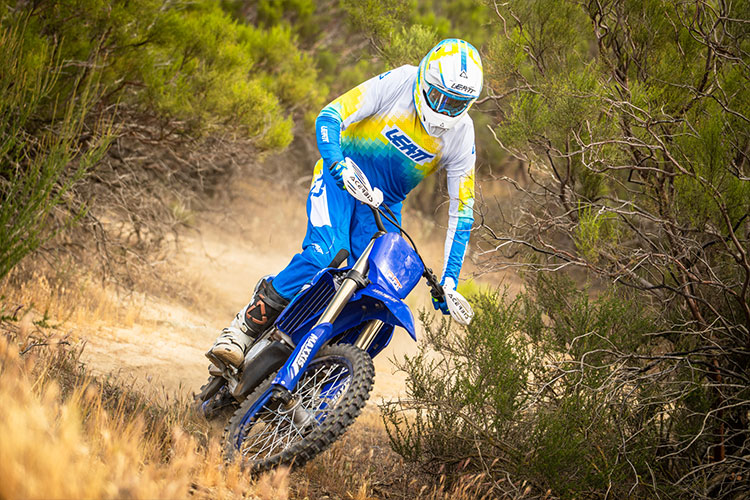
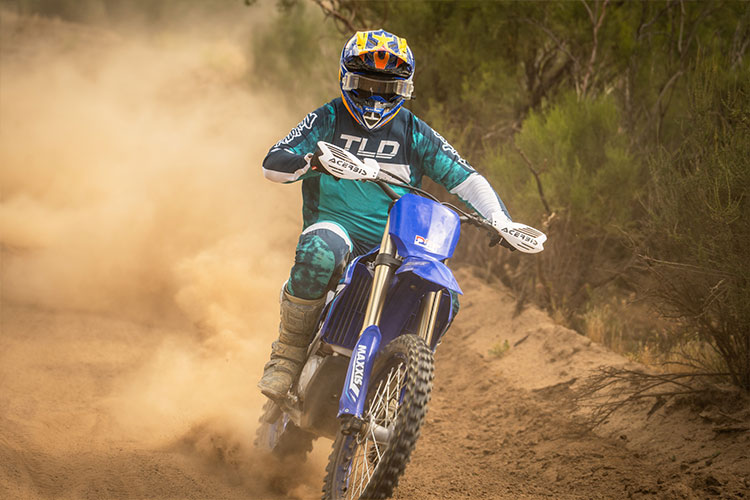
Yamaha: To no one’s surprise, the Yamaha power plant is in a league of its own being the most powerful in its class. Yamaha has had a healthy engine since reversing its cylinder head design over a decade ago. The previous generation was very healthy but a bit more refined power that was usable with an all-around spread. This newest generation that has been out since 2024 is more aggressive in every way. The biggest bonus, and it’s something that is still very handy and capable for Yamaha owners, is the GYTR Tuning App. The most beneficial aspect of this motor is the ability to completely tune it at your fingertips unlike any bike out there. You can detune or increase power drastically which really affects how the bike itself rides. It affects more than just the engine and power delivery, it affects how the bike handles and feels and is critical to suiting the bike to your needs.
The YZFX packs a strong hit and almost too crisp throttle response, so much so that it can be tough to manage for some riders. The strong bottom end carries through the mid and revs far for a 450. The quick revving motor is very lively, has torque down low if you learn to trust it, and can be changed to fit your needs all with the GYTR Power Tuner app. The on-the-fly mapping switch is the easiest to use, with a quick push and you’re in the second map that doesn’t require changing couplers, coming to a stop, etc. Most of our vet riders really struggled with the Yamaha in general due to its power character and how aggressive it is, but once we changed the maps around and they learned how to use the power, it really helped bring the entire bike around as a whole.
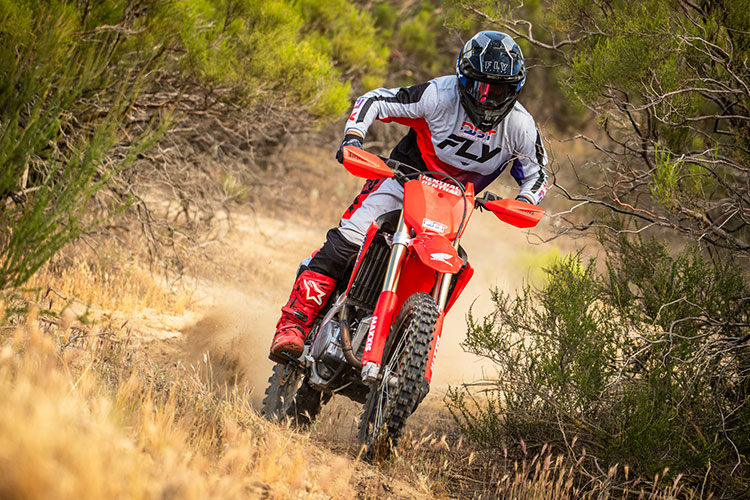
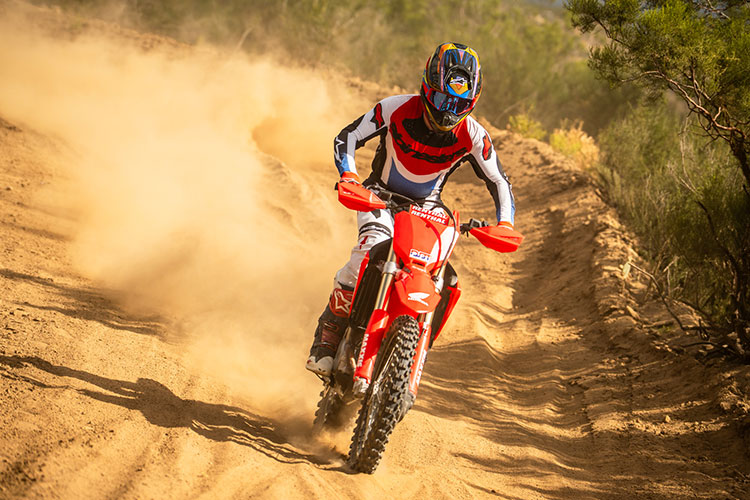
Honda: Honda’s updates for 2025-2026 see a freer revving powerband that is trending towards that of the Yamaha, though much more manageable. The engine is smooth and linear, yet powerful. The throttle feels an instant connection to the rear wheel. It pulls with authority across the board and is a tad on the aggressive side for an off-road bike, but most everyone found themselves riding taller gears and really liking the output. In more technical terrain, the bike didn’t lug quite as good as some of the others, showing its MX roots with a light flywheel effect here. Also, in higher speed terrain, the CRF revved out the quickest of all these bikes. Plain and simple, the CRF motor is aggressive and fast, yet the refined power makes it one of the most usable and a favorite amongst the testers. Interestingly, the internal gear ratios are significantly lower than any other bike in the shootout and it’s apparent when riding in any kind of fast terrain.
The Honda mapping switch could use some work. While it is “on-the-fly” adjustable, it takes a very concentrated effort to do so, and seemingly half the time we tried it without coming to a stop, we didn’t actually switch the maps at all. With that being said, the three different maps available are all different and we came to like each map in different ways. The stock Map 1 is a good all-around map that we tend to ride in 75% of the time. It does everything well and since it is harder to select different maps, we typically leave it in this one. Map 2, or the “mellow” map, is very smooth, torquey, and easy to ride. When trail riding or with novice/intermediate level riders on-board, we found this to be the map of choice. You can lug the bike, keep the rear wheel hooked up, and be smoother on the bike without a jerky power delivery that can get away from you in the tight stuff. Lastly, Map 3 or the “aggressive” map is fun to ride with a slightly harder hitting power down low. In faster, more open conditions some of our testers preferred this map as you could ride a gear taller through corners. Overall, all three maps work well and compliment each other, but Map 1 was the most favored by the majority of our testers.
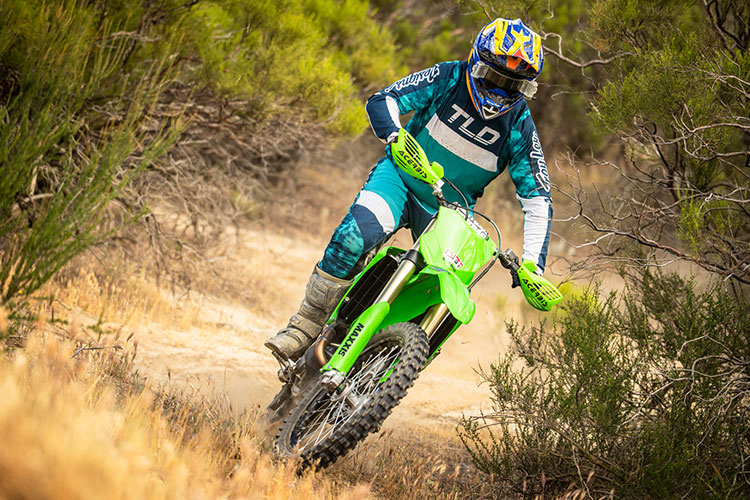
Kawasaki: The KX motor is one of the softest of the bunch, but that’s not a bad thing for the masses riding off-road. It has a smoother, bottom-mid range focused delivery that revs slower than the others, but is very manageable when the speeds slow down or the traction is at a premium. Like the CRF, it lacks some of the torque needed when riding in technical conditions, but the traditional four-stroke power builds progressively from bottom to mid before signing off early. The KX doesn’t feel the fastest, but it puts the power to the ground very effectively and on a stopwatch in true off-road conditions, isn’t going to be far behind any of the bikes. Overall, it has a very usable power that is accommodating to riders of all ages and skill levels. Like the Honda, the 5-speed close-ratio transmission makes it difficult to ride on extreme ends of the speed spectrum, but regearing the bikes can help accommodate and adapt to the terrain on hand.
The mapping options on the KX are changed through the app and a switch similar to the Honda, meaning it’s tough to truly change “on-the-fly.” Light off is a standard map that you upload to the bike and light on is a mellower version of that same map. Likewise, it features traction control, though no riders felt it was needed on this bike.
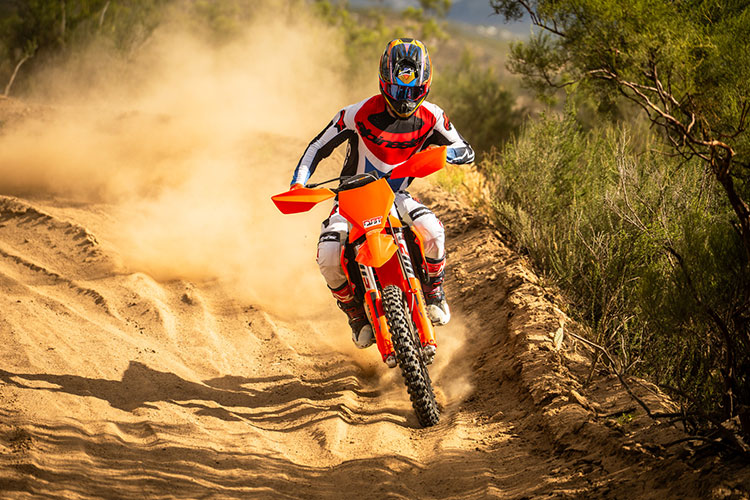
KTM: The KTM motor is very refined with an ultra smooth bottom end that spins up more slowly before it finds its legs in the mid-range and ramps up in the top end. This engine really builds power with RPMs. While motocross and faster off-road riding will showcase this trait, the amount of torque put out in tight terrain is actually quite impressive. It is a heavier flywheel weight feeling and the only bike to have classic chugging four-stroke power. It’s like a hidden gem – once you find it and trust that it will not stall as easily as some of the other bikes, you want to use it more. It still isn’t on par with the XC-W in luggability and avoiding low RPM flameouts, but it’s good for a race bike. Some of our younger and more aggressive testers were looking for a more exciting and traditional 450cc four-stroke power that revved a little quicker and easier, but the engine is so usable with such good power throughout that it’s truly hard to find a real complaint here.
The mapping switch on the KTM is easy to use with two maps, traction control, and quick shift and all are easy to change on-the-fly without any hesitation. The transmission on the KTM is great with well spaced gear ratios and a standard sixth gear that comes in handy in fast terrain and trail riding.
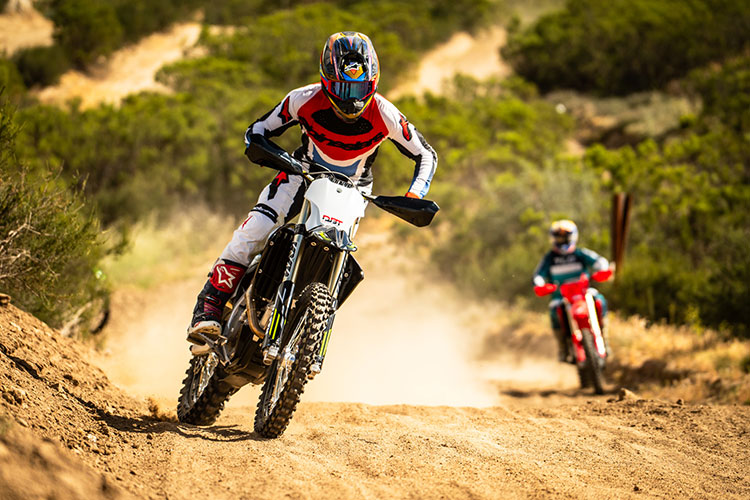
Triumph: The Triumph motor was the most difficult to adapt to for most of our riders. The engine lacked bottom end pulling power and torque and relied heavily on high RPMs to get the bike to go. In a motocross setting or fast terrain with good traction, this style of motor can be effective but in a true off-road setting, it’s not always ideal. The delivery is smooth and easy to control, but just simply not fast unless you’re nearing the rev limiter. We feel there will be some ways to improve this with mapping and possibly some hard parts, but it limited the bike in stock trim.
Where all five models differ greatly is in the transmission. The Yamaha boasts a wide-ratio, 5-speed transmission with everything from a granny first gear to a high speed fifth gear. The gaps are all pullable and the FX motor is strong enough to pull every gear without issue. The KX, CRF, and Triumph all carry over the exact transmissions from the MX models and are good for GP racing, but it doesn’t excel on the extreme ends of the spectrum like the Yamaha does. The KTM employs a six-speed transmission that is the gold standard amongst the group.
The KX, CRF, KTM, and Triumph all feature hydraulic clutches while the YZF is the only one to boast a cable clutch – depending on the rider, a different one was favored by each but the KTM and Triumph were the most favored of the hydraulic clutches.
Suspension
Off-road suspension typically is soft and mushy, heavily favoring comfort over performance. However, the recent trend with a dedicated off-road race lineup has altered how the OEMs set up their suspension. These bikes are a little more tailored to take on some light motocross style riding and GP/GNCC/desert racing with stiffer settings than old school trail bikes of the past. In general, we’d say these bikes slightly favor GNCC type riding/racing over western conditions, but they continue to get better at adapting to both sides of the states in stock trim.
If you’re coming from trail bikes, you’ll feel these bikes are stiff; however, if you’re coming from a MX/race bike, you’ll feel these bikes are soft. The tricky thing about production off-road suspension is that its intended use varies so widely and it is nearly impossible to find a good do-it-all setting for the masses.
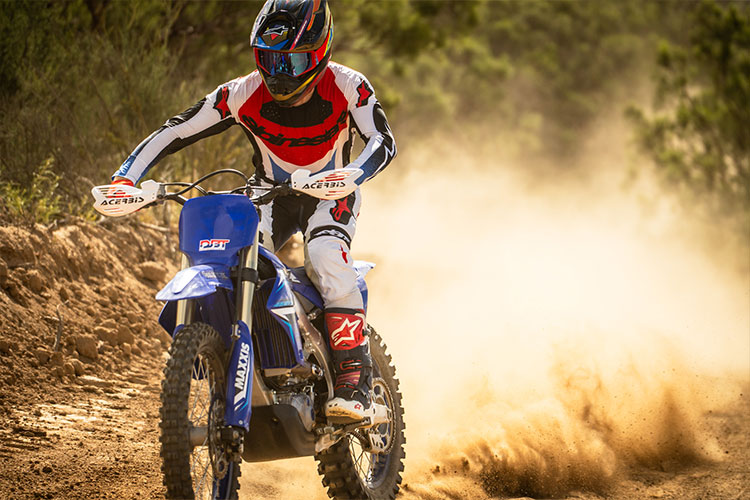
Yamaha: Yamaha has had a stranglehold on a lot of the media and customers alike raving about how well the suspension is set up stock for several years now. However, the YZ450FX wasn’t the standout best in the group across the board. Depending on the size and shape of the bump, as well as the speed of the rider, the Yamaha either worked the best or not so great. The suspension setup on the YZ is one of the most aggressive overall and, partly due to a stiffer chassis, left some of our riders wanting more compliance out of the front end in particular. The rear shock was much more manageable and matched the fork’s performance, but the stiffer setting was tough to manage with a stiffer chassis and aggressive motor for our vet testers.
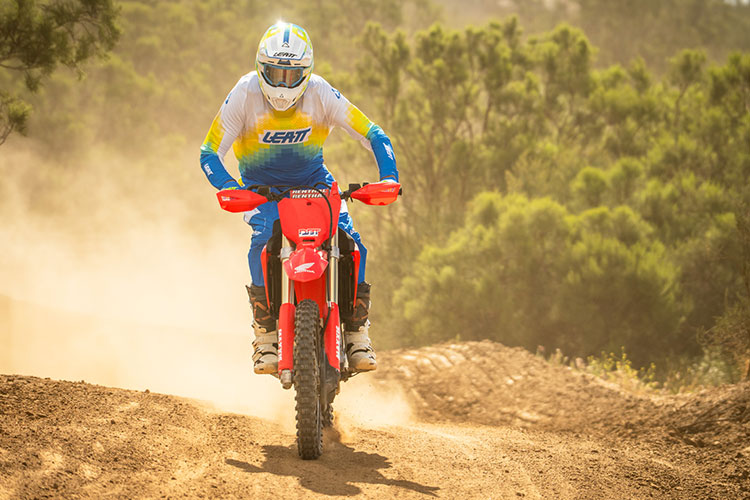
Honda: The Honda’s Showa components are some of the best out of the box in this test. They have a more rigid and heavily dampened feeling, true to Showa, but they continue to find more comfort in their settings. The CRF gravitates a bit to more motocross than true off-road, but tuning the clickers makes a noticeable difference and gives the bike a wide range to perform. Depending on the rider and terrain, we could always find a pretty good setting, and being on the West Coast, the Honda suspension was favored by a large majority of the riders when going fast. The fork is slightly softer than the shock, something most of the OEM’s do for their production off-road settings, but it was fairly well balanced and worked best with a flush fork height for increased stability and balance.
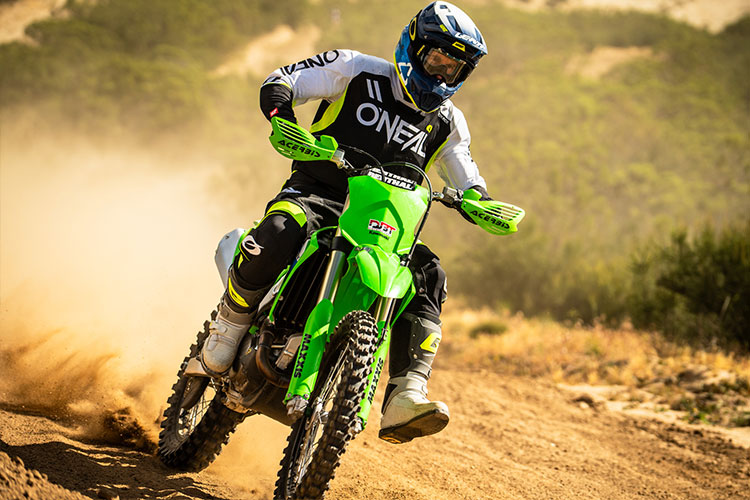
Kawasaki: The Kawasaki KX450X houses Showa spring components front and rear. Like the Honda, the KX felt well balanced for GP and light motocross without having too much front end dive under braking or in rough conditions. The comfort and plushness has increased tremendously from just a couple of years ago and the KX suspension was some of the best overall for the entire group with front end comfort and hand feel being a standout trait amongst all of the bikes.
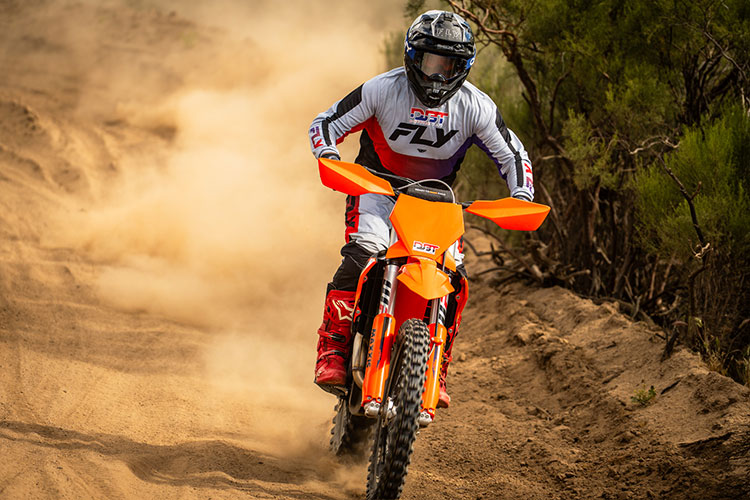
KTM: The KTM is the lone ranger in having a more traditional, softer setup with a soft front end in particular. When the speeds are down, it’s one of the best working bikes as the soft nature and weighted front end tracks well in rocks and roots and provides good front end traction at slow speeds. However, the XC-F has a tendency to be stink bug-like in fast terrain and experience front end diving and instability on decel. The suspension on the KTM held this bike back from winning the shootout as every other trait on the bike is very positive and capable of winning.
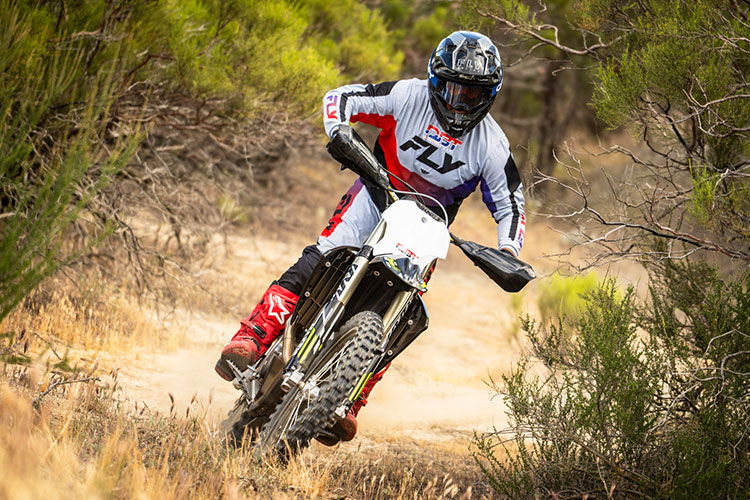
Triumph: The Triumph stood out from the rest of the bunch with a very stiff setting, particularly in the forks. The suspension was unbalanced with a stiff rear shock and an ultra stiff fork which had our riders struggling to find comfort and confidence in the front end. The vague feeling and deflection that came with the stiff forks, paired with some harshness out of the rear end in acceleration chop, had us struggling to ride the 450-C to its potential.
Handling
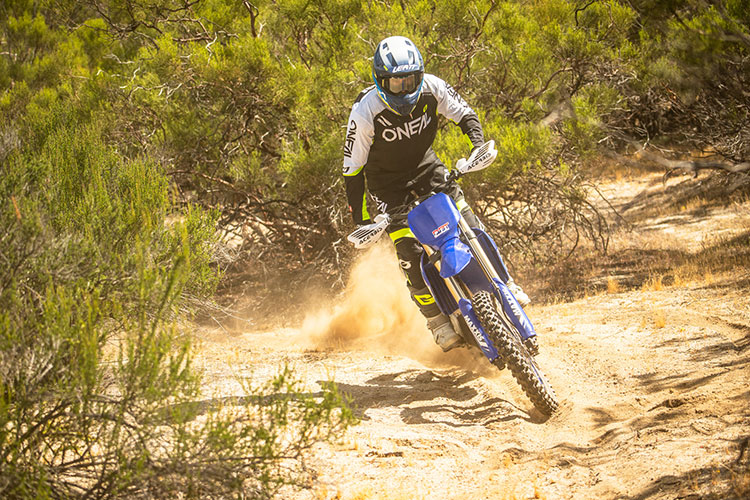
Yamaha: Most agreed the Yamaha felt to be one of, if not the lightest bike in the dirt. Its aggressive motor and center of gravity give it a light feeling that’s very easy to maneuver and put where you want it. It’s lost some of its stability and comfort with this new generation frame, but its cornering and nimbleness is much improved.
Gone are the days where the Yamaha feels like a pig – most of our riders could jump on this bike and not feel any extra width. The visual look of the tank/air box area has been greatly improved, and while the airbox noise is reduced a lot, some unfamiliar with the Yamaha still notice a small amount of noise which can be bothersome at first.
The YZ offers a lot of feedback through both the front and rear end of the chassis, especially in successive bumps. We’ve been able to tune this out greatly with engine mount modifications, but in stock trim, there is a lot of feedback and when the conditions are loose and dry, it’s amplified.
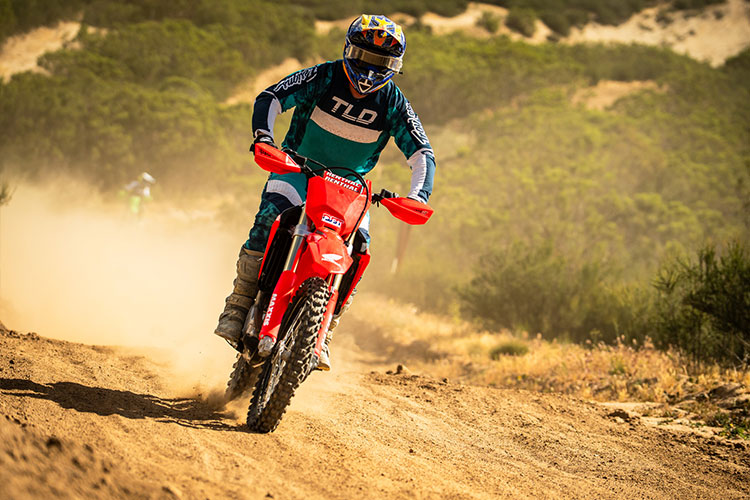
Honda: The Honda has the best cornering chassis of the group. It’s stiffer in nature but you feel less of the bumps and the ground through it as you did just a couple of years ago. We did feel it lacked slightly in the stability department compared to the best in class but simple things like running a little more sag (107-108mm) and dropping the forks in the clamps helped tremendously without giving up much cornering. As it sits, its top three in stability and one of, if not the best cornering bike.
The stock 2.2gal fuel tank on the CRF is the worst of the bunch, and most riders felt it hindered the bikes performance. It’s very top heavy and on the wider side, and several riders felt it when jumping on the Honda. IMS and Red Moto Racing all appear to have better gas tanks for this bike that could help the Honda a lot.
Of all the bikes, the Honda chassis has a nice blend to it that offers both agility and stability. It’s precise, you can easily put the bike where you want it, and you feel a lot of what’s underneath you. However, the Honda was noted as being one of the heaviest feeling bikes and the large gas tank doesn’t help this feeling. But overall, the Honda chassis is very good and well liked by all the riders.
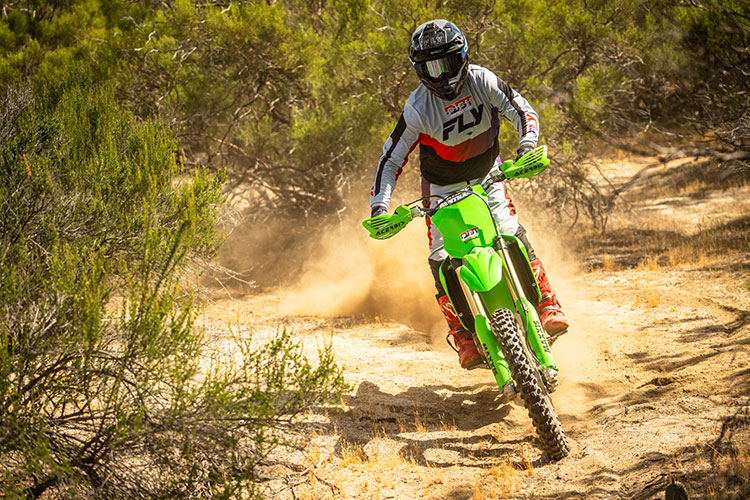
Kawasaki: The Kawasaki chassis is one of its highlights in how well it handles everything and appeals to a wide variety of riders. It now has more weight on the front end to help improve cornering, but it doesn’t cut down like the Honda does. It isn’t quite as stable as the KTM, though it’s close, but the chassis is forgiving and soaks up bumps better than almost any bike.
In stock trim, the already thin chassis of the KX paired with a stock moto tank made the bike feel slim and it feels like it’s one of the lightest on the track. One thing to note is the KX lacks a big tank, a skid plate, and hand guards severely hindering its “off-road readiness” off the showroom floor.
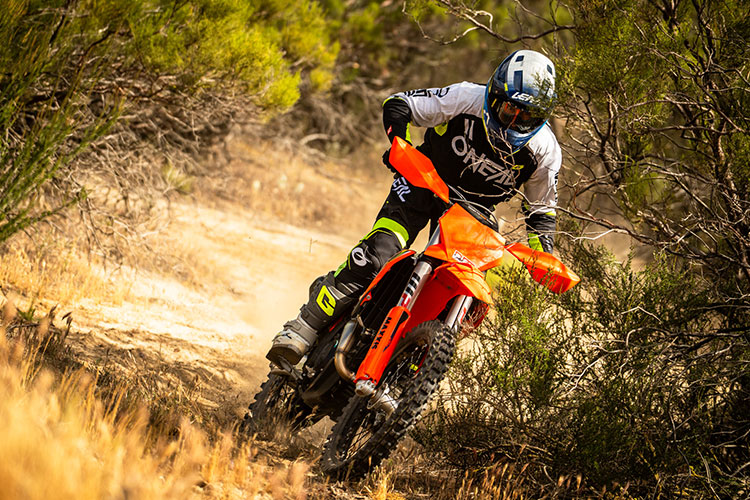
KTM: The KTM is the only steel-framed chassis in the group and no one had anything bad to say there. Paired with the softer suspension, it offers a lot of comfort to the rider. KTM’s typical light scale weight isn’t what it once was and the light weight isn’t felt on the trails, though that’s not necessarily a bad thing. The consequences of having a lightweight bike are deflection and instability but this bike is very planted and is good at finding traction when others can’t. Still, you reap some rewards when turning, flicking, and sliding this bike as it does it all well.
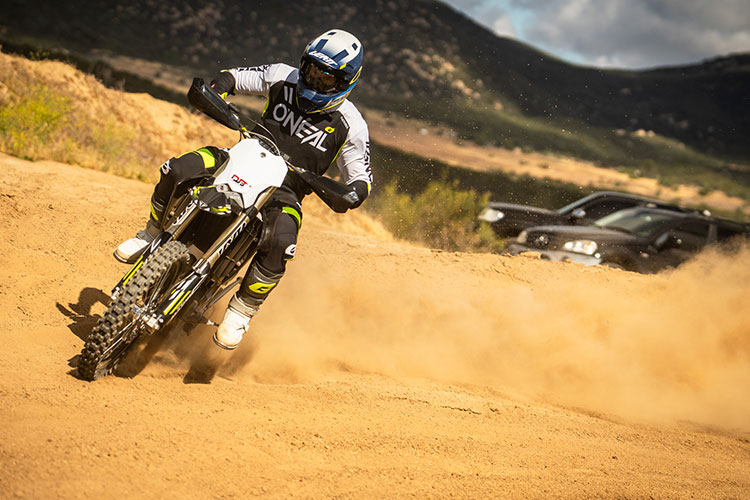
Triumph: Through the stiff suspension and high revving motor character, we feel this chassis is capable of a lot. Although we struggled with a vague front end feel and raising the forks in the clamps did assist this, we feel it’s largely due to the suspension setup and not necessarily due to the chassis. The bump comfort of the chassis is also hidden inside but the suspension settings didn’t allow it to shine through. However, the Triumph ergos are very easy to adapt to and the bike overall feels very light and nimble – some positives that really are tough to modify.
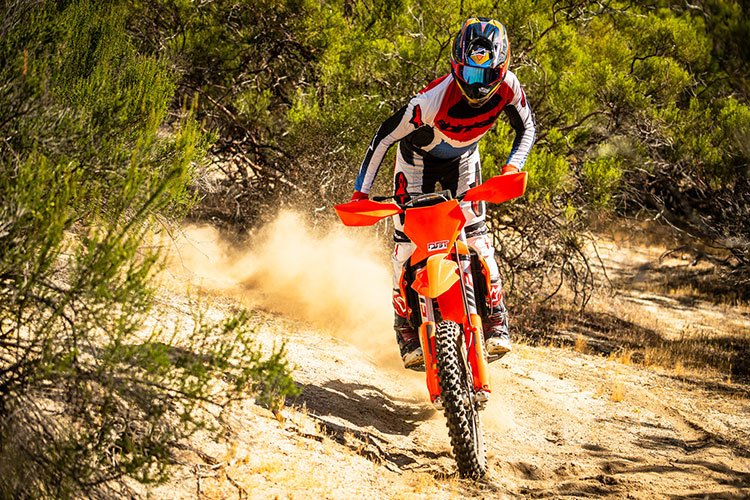
Notable Highlights
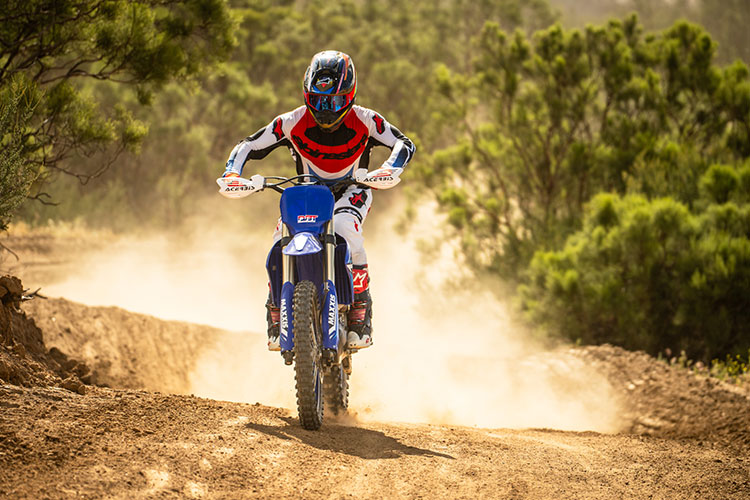
Yamaha: A few things stand out on the Yamaha, both good and bad. The 5-speed, semi-wide ratio transmission makes this bike the only one with a wide-ratio tranny. Since it has the power to pull it, this makes this bike very versatile in that you can go from high speed desert and GP racing/riding to tight woods and rocks and have a gear for everything without working the clutch or floating the valves. However, some did struggle with the larger gaps between gears and felt gearing and/or mapping might help find the sweet spot. In general, the rider cockpit on the Yamaha is disliked for still being slightly cramped and an awkward seat shape. The Yamaha skid plate is very good and the Yamaha air filter is somewhat easy to service, although we’re always vacuuming up dirt out of the air boot when we pull a dirty filter out.
To make this Yamaha good, it’s imperative that you find a good map that you like. The power delivery really affects how this bike works as a whole and should be the first thing you work on when setting up this bike for your liking.
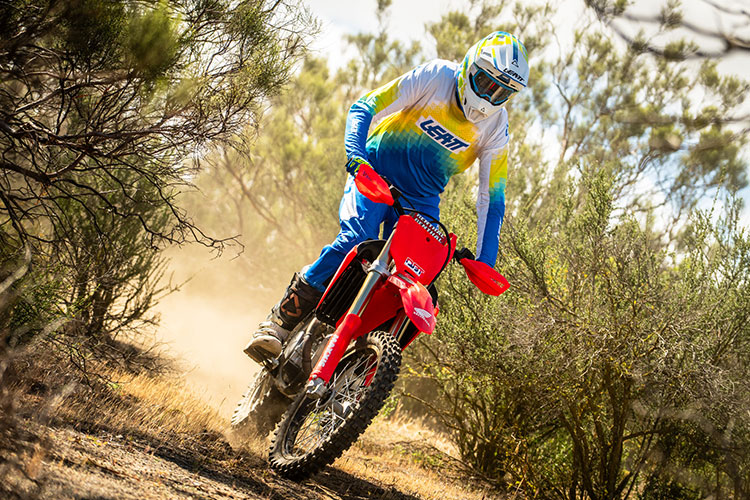
Honda: The Honda cockpit, aside from the bigger tank, is very easy to adjust to and is another favorite amongst these riders. The Honda front brake is very touchy and powerful, something riders either loved or liked. The back brake is also touchy and we found ourselves stalling the bike quite a bit more than expected due to this. The CRF comes stock with handguards but its skid plate is barely enough to deflect some roost off the front tire. The CRF air box is somewhat funky and isn’t tool-less, but is better with time as you learn it. The transmission is the biggest miss on the Honda as it’s only a 5-speed and the ratios are very tight, making gearing tough to accommodate for a wide range of terrain.
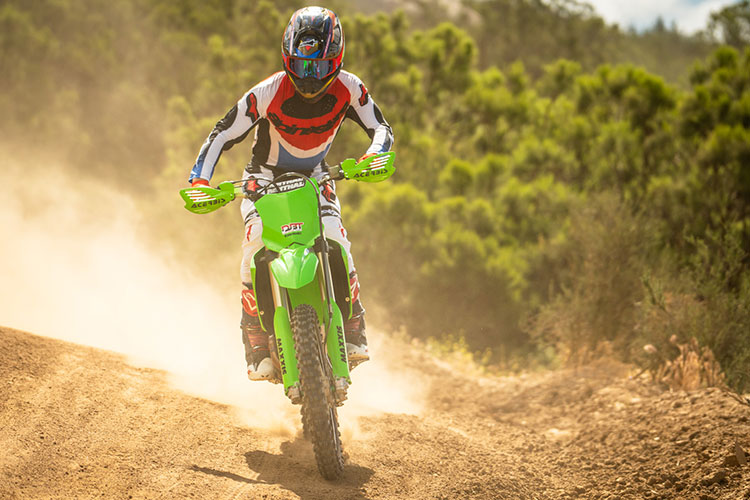
Kawasaki: The Kawasaki received a lot of praise for its ergonomics including seating position, handlebars, and rider triangle. Nearly every rider we’ve had to test this bike raves about how comfortable they feel immediately upon sitting on the bike. The KX doesn’t come with handguards, a skid plate, or a big tank which leaves our riders wanting more off the showroom floor. The stock kickstand is more than bulky and stood out to every rider in a bad way. Air filter maintenance is easier than previous years which is a positive and the overall build quality is acceptable, though it isn’t on the level of the best in class.
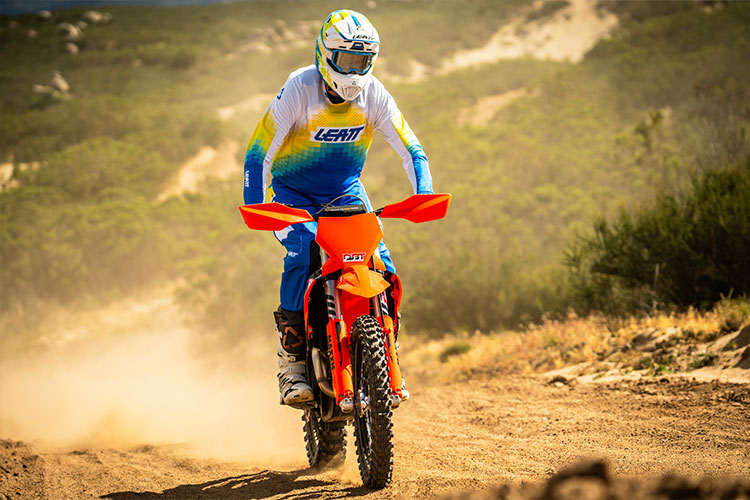
KTM: The KTM cockpit is very neutral – no one complained and it just gets the job done. The Brembo brakes are a standout and pieces like stainless steel brake lines are a nice touch. The 450 XC-F comes with a skid plate and handguards stock and offer great protection and fitment all the way around. The KTM air filter, and most maintenance in general, is just simpler and easier on the KTM which makes late nights in the garage not so late anymore. The build quality is as good as any and we know from experience how good the durability is.
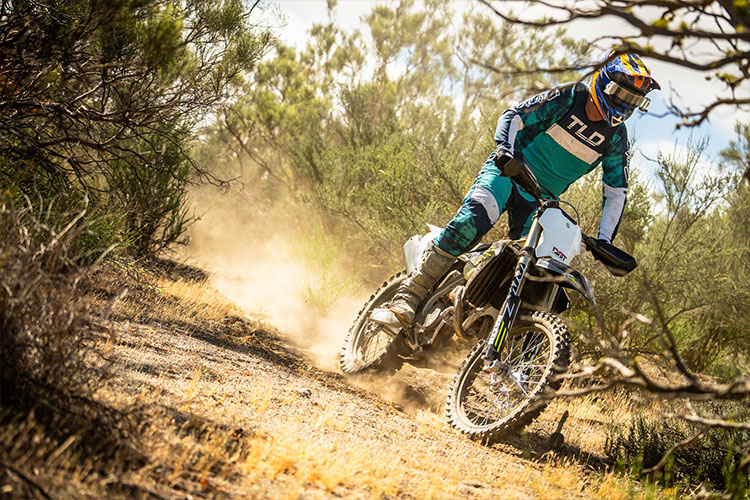
Triumph: The Triumph didn’t fare as well as we had hoped in the shootout and the suspension setup and power delivery is what really held this bike back. We have a lot of time on the 450-E and have nothing but great things to say about that bike so we know the Triumph is capable, it just needs some fine tuning to dial in the setup. Still, the components and build quality are nice, although we’d love to not have to rely on Torx bits only for maintenance.
Conclusion
In general, the Yamaha and the KTM are the most different from its MX counterpart. The biggest changes are the transmissions while also boasting off-road specific suspension settings, ECU settings, and the usual gas tank, kickstand, 18 inch rear wheel, etc. The Kawi is the least changed with really just an 18 inch rear wheel, kickstand, and slightly softer suspension making the change.
If there is anything we’d like to see on all these bikes moving forward, off-road ready skid plates on all the bikes and handguards on the Yamaha and Kawasaki would be welcomed additions. Well designed larger capacity gas tanks and six-speed transmissions would be wins across the board, but these are costly additions for sure. We’d even settle for 5-speed wide-ratio transmissions but many riders do not like the gaps that appear in some designs.
Do You Like DBT Bringing You Fresh Content? Search and Shop Through the Links Below:
While these bikes are all advertised as “off-road” bikes, they are all more than capable on a motocross track. And in some instances, they are better for consumers than the dedicated motocross model. Vet and novice riders alike can find the value of slightly softer suspension and easier to ride power when riding on motocross tracks and frequenting off-road trails. Being that these are 450’s, even our higher level riders appreciate the mellow power on the motocross track and resort to personalizing the suspension setup to make it MX friendly.
The best bike for you is here, you just have to assert your priorities and preferences to determine what bike that is. At the end of the day, all four of these bikes are more than capable and there truly is no bad bike anymore. Over the next month or two, we’ll be taking all these bikes and modifying them with some of the basics like suspension, ECU remaps, etc and performing a second part to this comparison to see how they rank when setups are tweaked to remove the things we complained or struggled with.