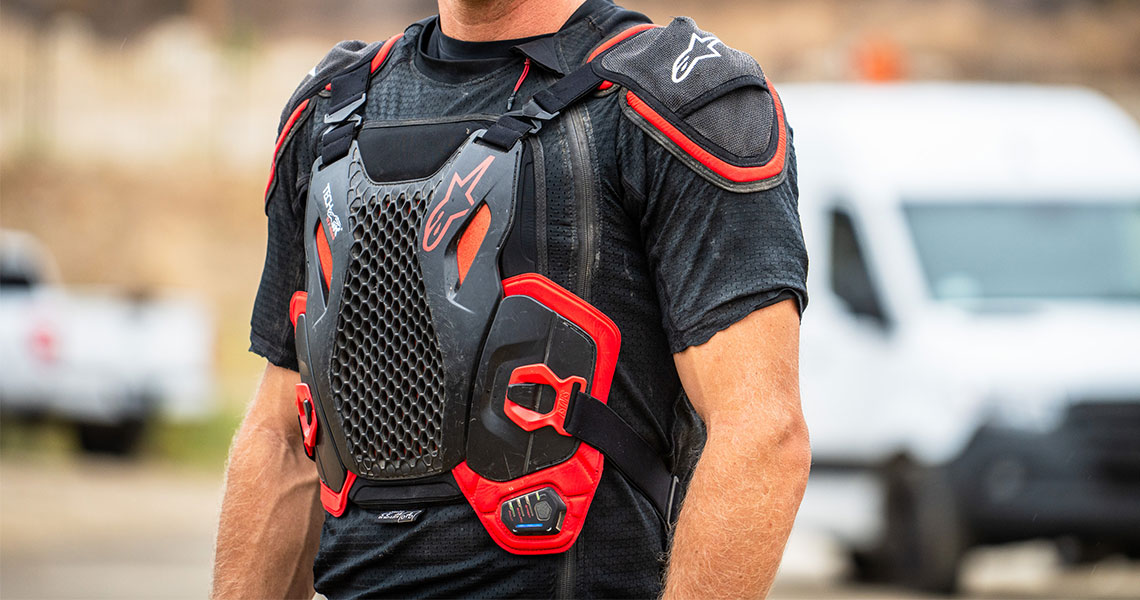
Alpinestars Tech-Air Off-Road
Company: Alpinestars
Price: $1,099.95
- Next level protection when crashing.
- Doesn't hinder your mobility on the bike like most full body suits.
- You can't put a price tag on your health.
- Pricepoint is hard to accept for some.
- Bigger and bulkier than your standard chest protector.
- Maintenance and air canisters are pricey.
What it is
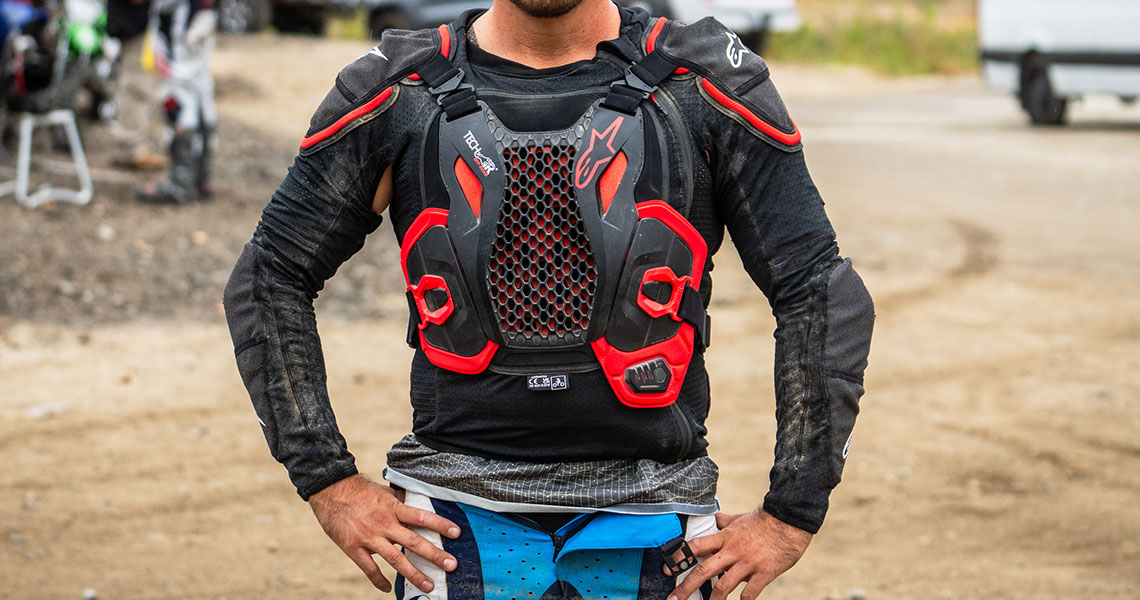
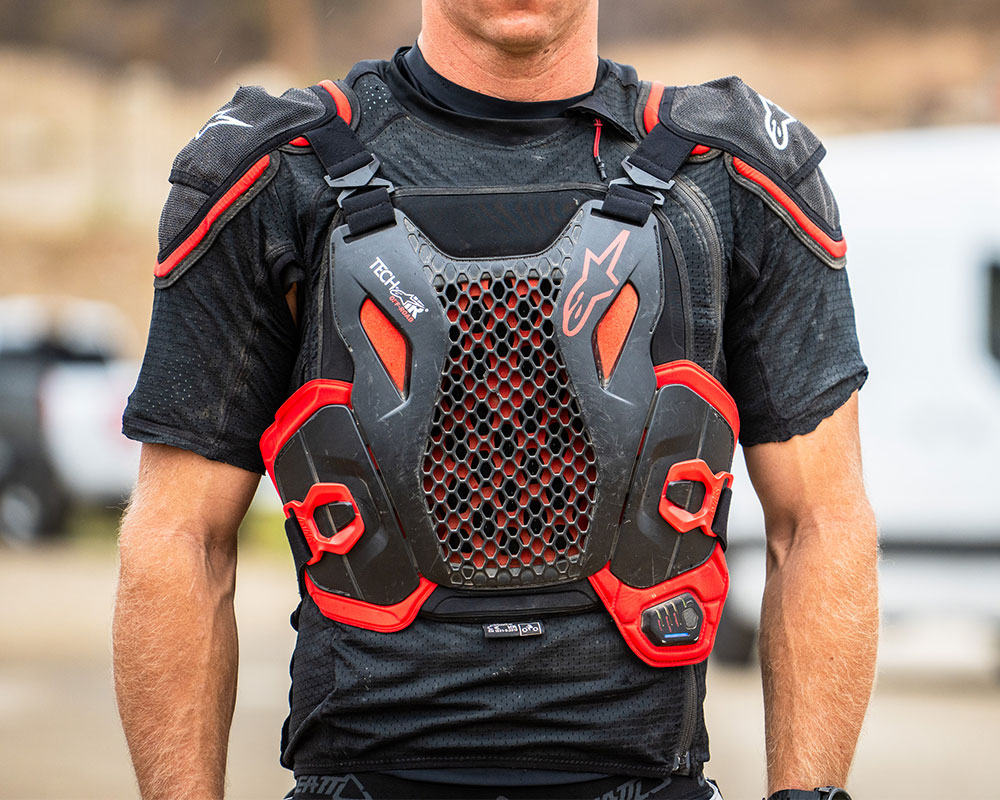
- Airbag off-road chect protector.
- Designed for desert/rally riding and racing.
The Tech-Air project started with MotoGP in 2001 with Alpinestars riders formally wearing it in MotoGP competition starting in 2009. In 2017, MotoGP’s promoting group, Dorna, made it a requirement for all riders to wear an airbag starting in 2017 based on how effective the technology had become in mitigating/minimizing/or altogether preventing injury. Being the pioneers of this technology, the majority of the racers were wearing Alpinestars’ Tech-Air systems.
In 2016, Alpinestars started development to FIM spec for rally racing purposes – their first endeavor in off-road racing with the Tech-Air system. Prototypes started to be used in 2018 during the Dakar Rally and have been used every year since. A version of the system came out to professional rally riders in 2021, which also marked the mandatory use of airbags in FIM-sanctioned Rally racing. In 2024, it publicly became available for sale to the general public with the Tech-Air Off-Road system.
The jacket is made in Italy and the air canisters are made in China. The way the airbag goes off is the same as a car airbag – there is essentially a controlled explosion with the argon gas canister which causes the bag to deploy, NOT a C02 canister. When the bag deploys, it reduces UP TO 95% of the impact energy transferred to the body. REMEMBER FOR LATER
It’s important to say “up to” because it’s all relative. Testing (and certification for that matter) is conducted using a certain impact force/threshold to establish a consistent baseline to which these protectors are tested. Now obviously you can crash at 80mph or 20mph. The impact force you feel is obviously different depending on the speed and surface you crash on, and that 95% number is relative to passive protection. So you’re getting a TON more protection compared to what you’re already used to wearing. And if we’re comparing the protection you get relative to not wearing any chest protection at all, the number is off the charts.
Retailing for $1099.95, several of our test riders bought ours for full-price at Cycle Gear dealers. We would recommend trying one on before purchasing– Tucker Hopkins is 6’0, 185 lbs and went with an XL, versus the Large where he fell on the sizing chart. Trevor Hunter is 5’7 and 165 lbs and went with the M which is where he fell on the sizing chart.
"When the bag deploys, it reduces UP TO 95% of the impact energy transferred to the body."
How it works
- Heavier and warmer than your standard chest protector.
- Very minimal to no limitations on body movement/mobility when riding.
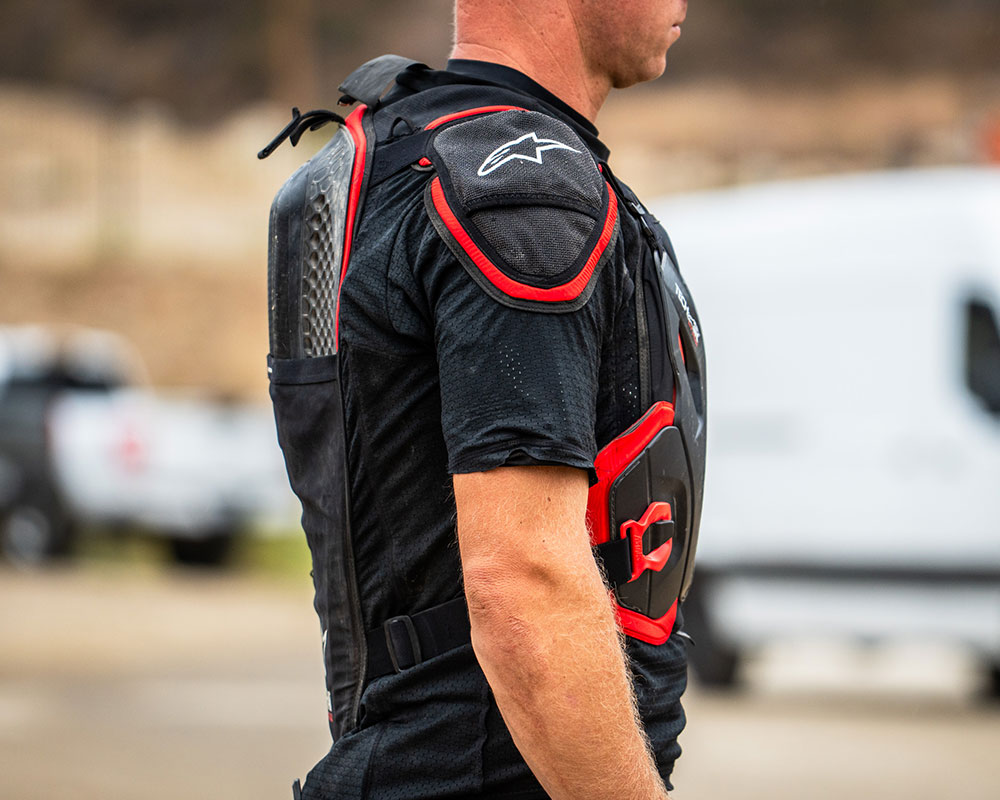
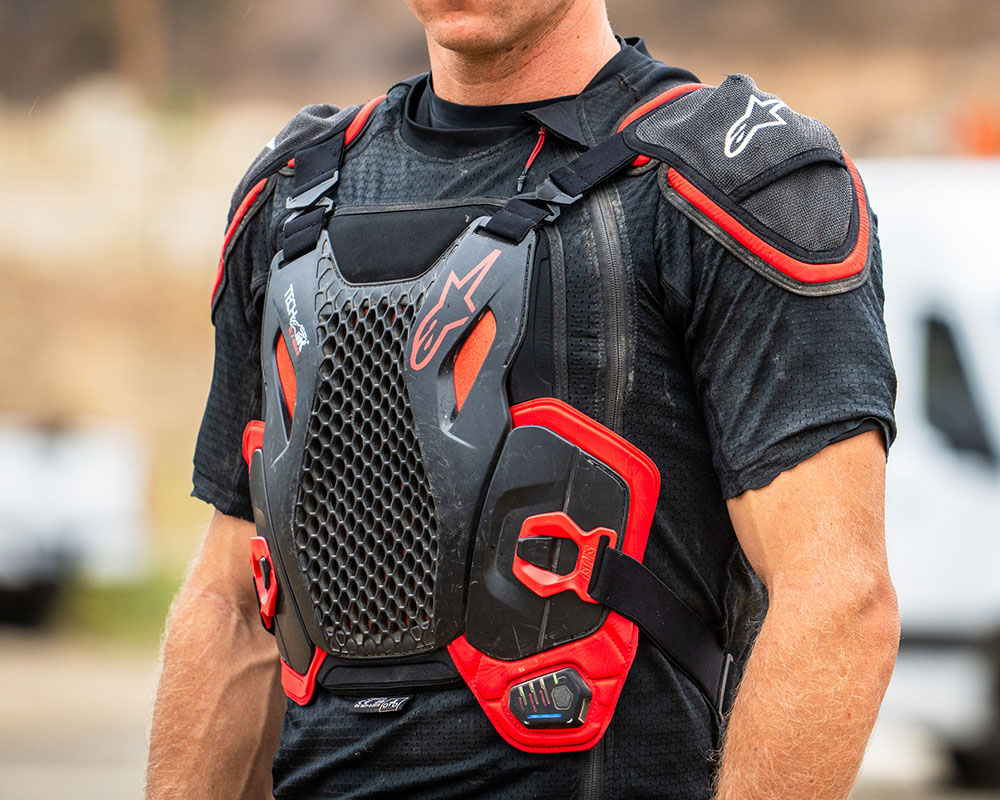
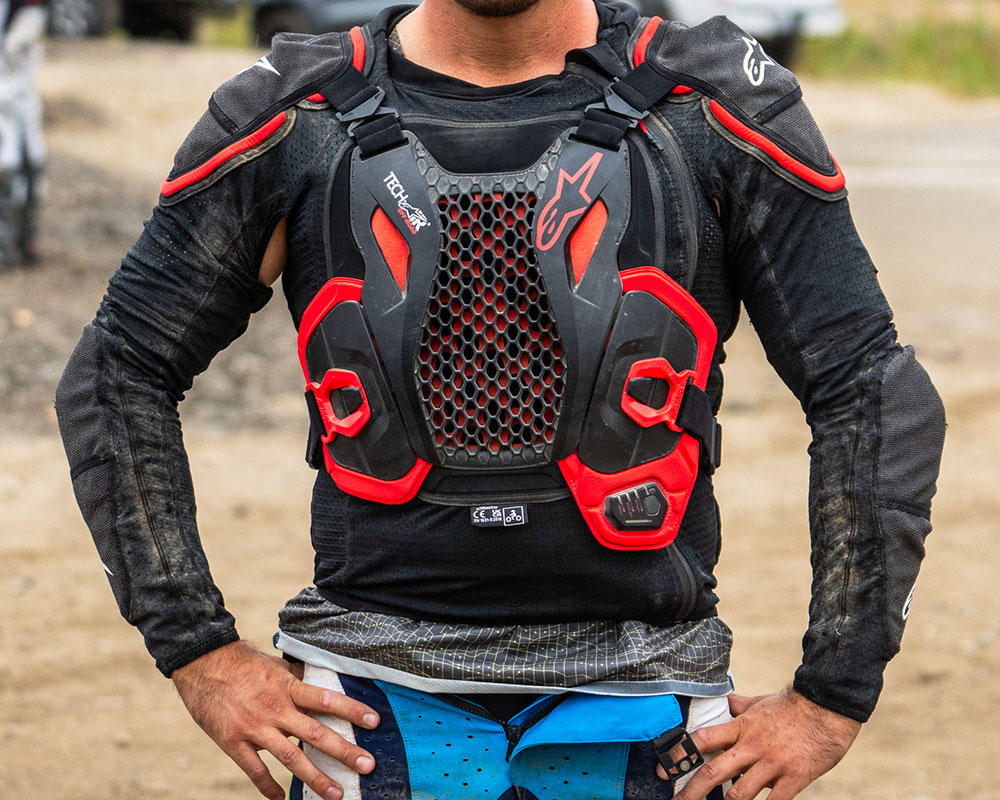
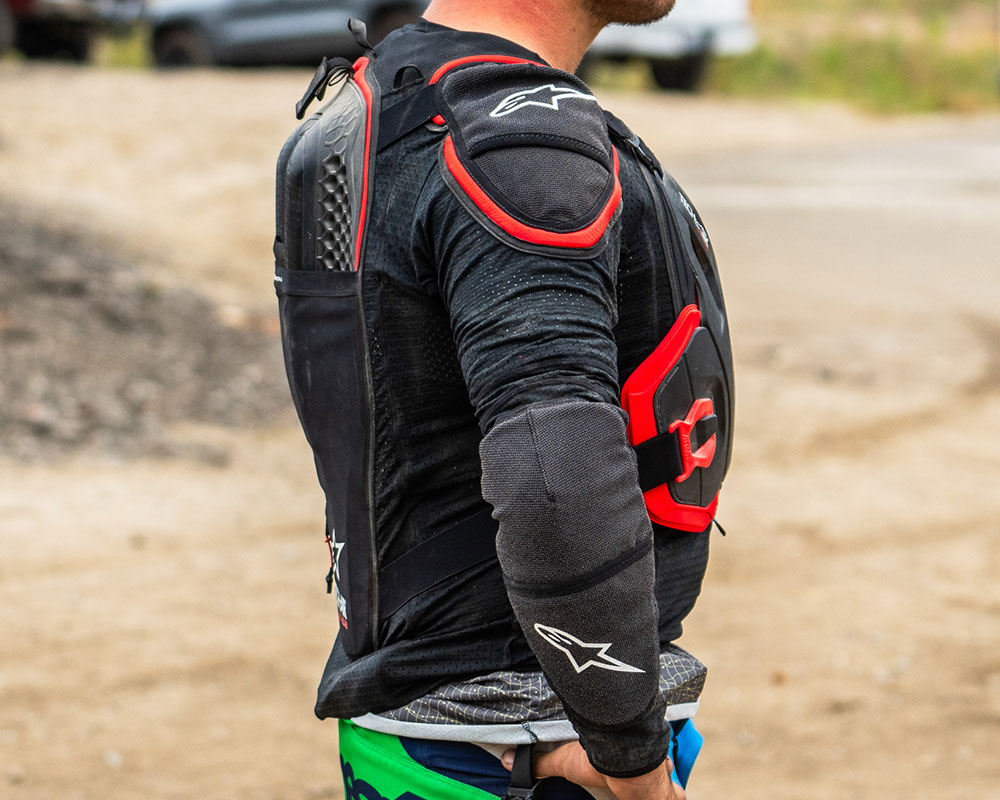
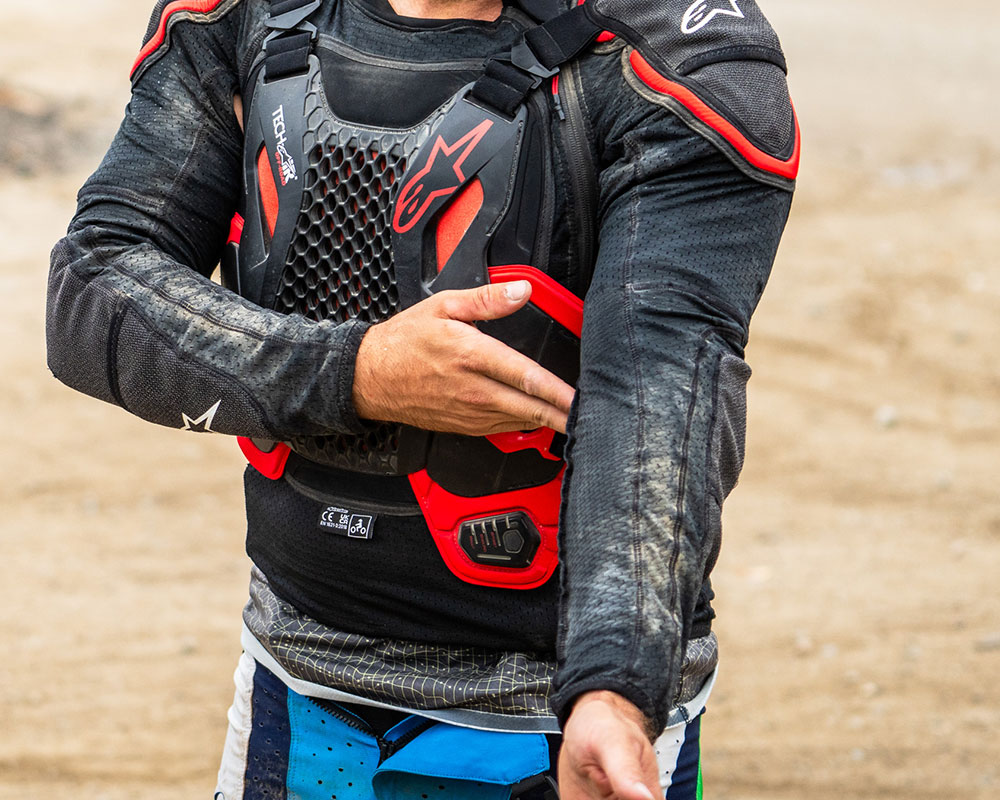
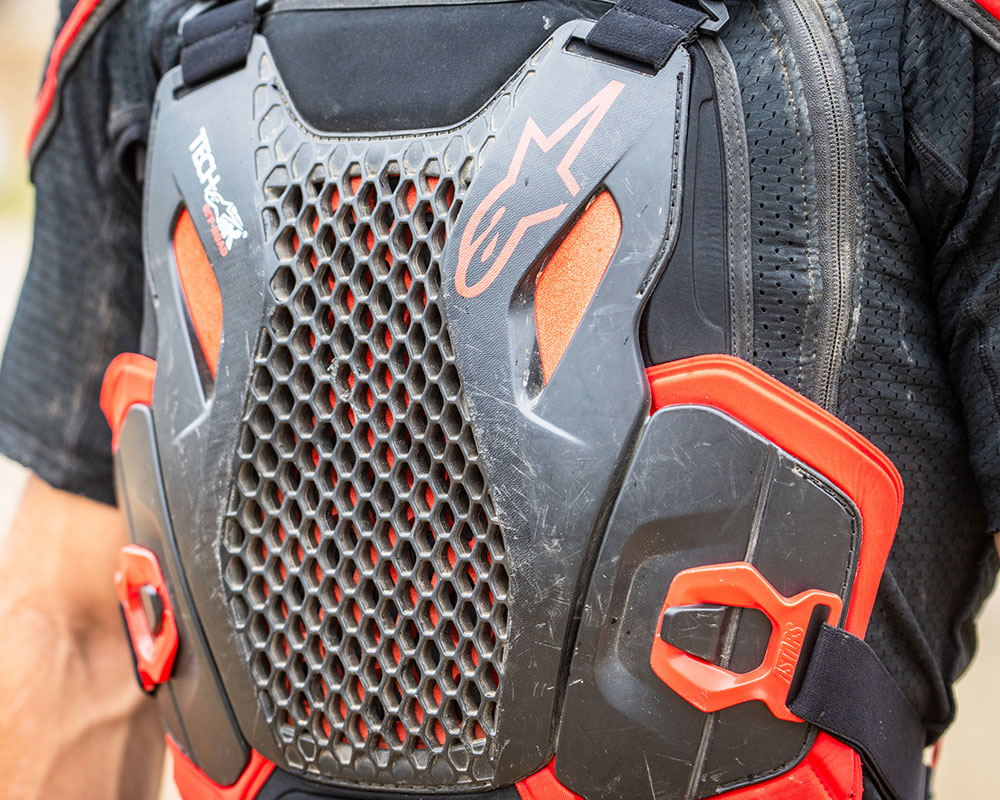
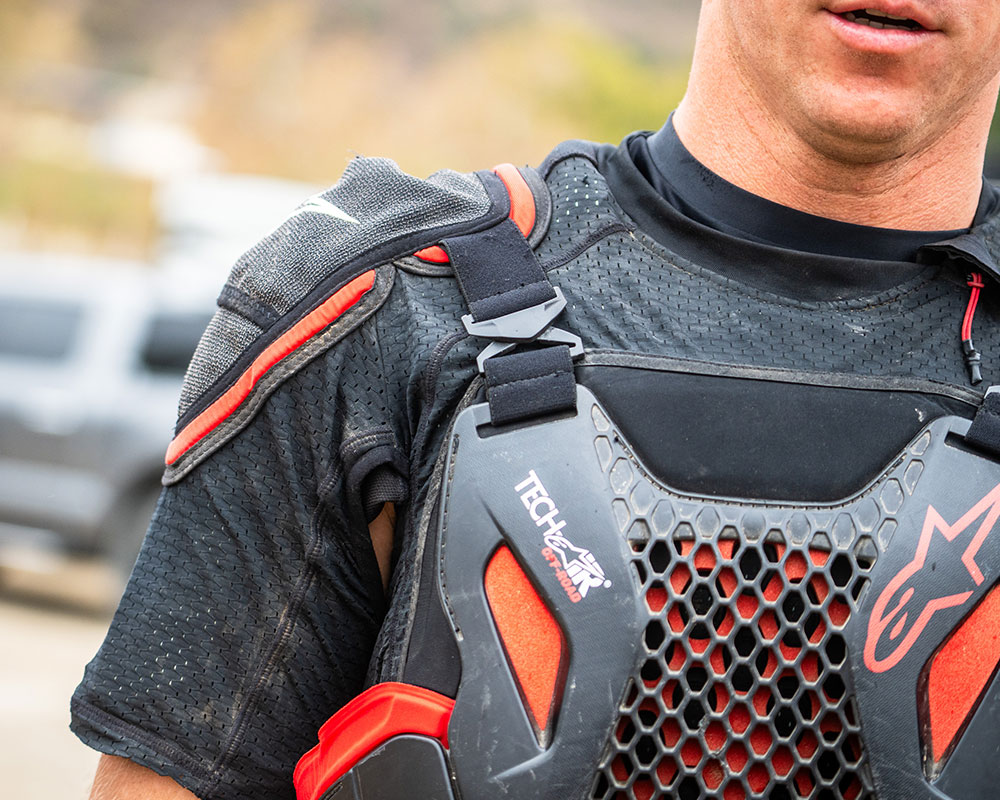
No question about it. The vest is heavy and bulky. Some of our testers immediately took out the shoulder and elbow pads and it was more comfortable. Others did this over time after spending time in the full suit and it makes a tremendous difference in the size/weight/movement of the vest. The best part is it takes mere seconds to remove OR install the pads in the shoulders/elbows. Like many things, the vest becomes a bit of second nature when riding, especially if the extra pads are removed. However, when you’re stopped or walking around with it on and a full camelback bladder, the extra weight and heat becomes very noticeable.
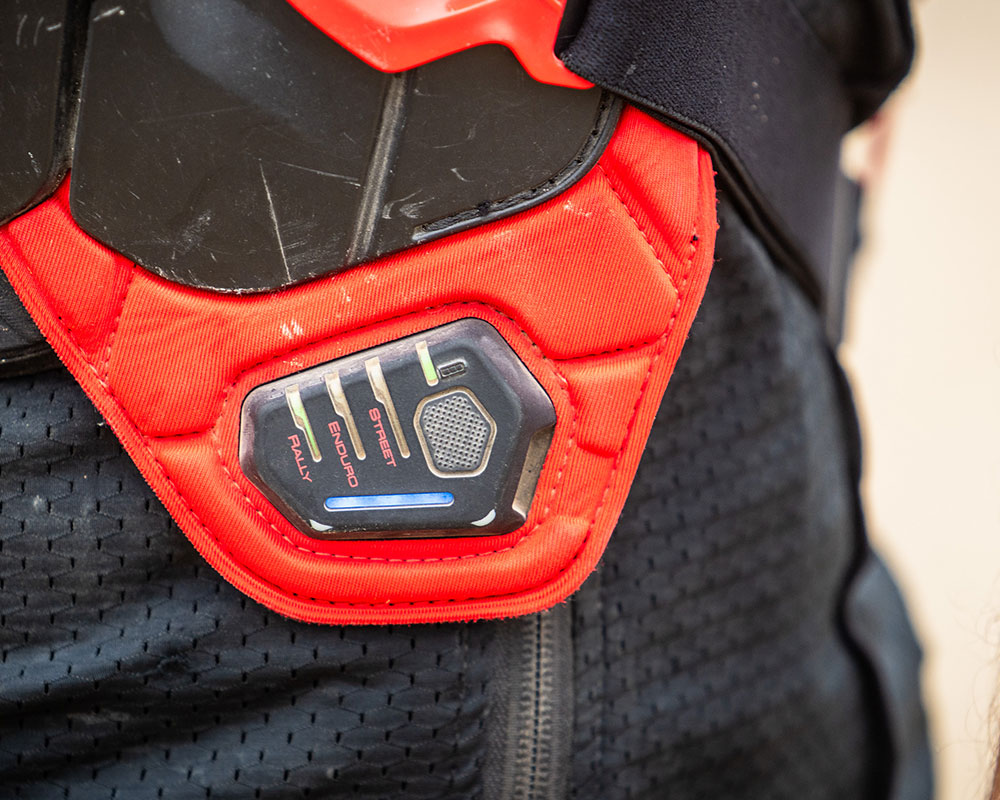
There are three settings on the airbag -
Rally: To be worn when you’re riding average speed above 50 MPH. The vest will be less sensitive to smaller crashes.
Enduro: To be worn while average speed is below 50MPH. More sensitive to smaller crashes, but will be updated by the end of the year to be less sensitive to small tip-overs.
Street: Any street-use paved road riding.
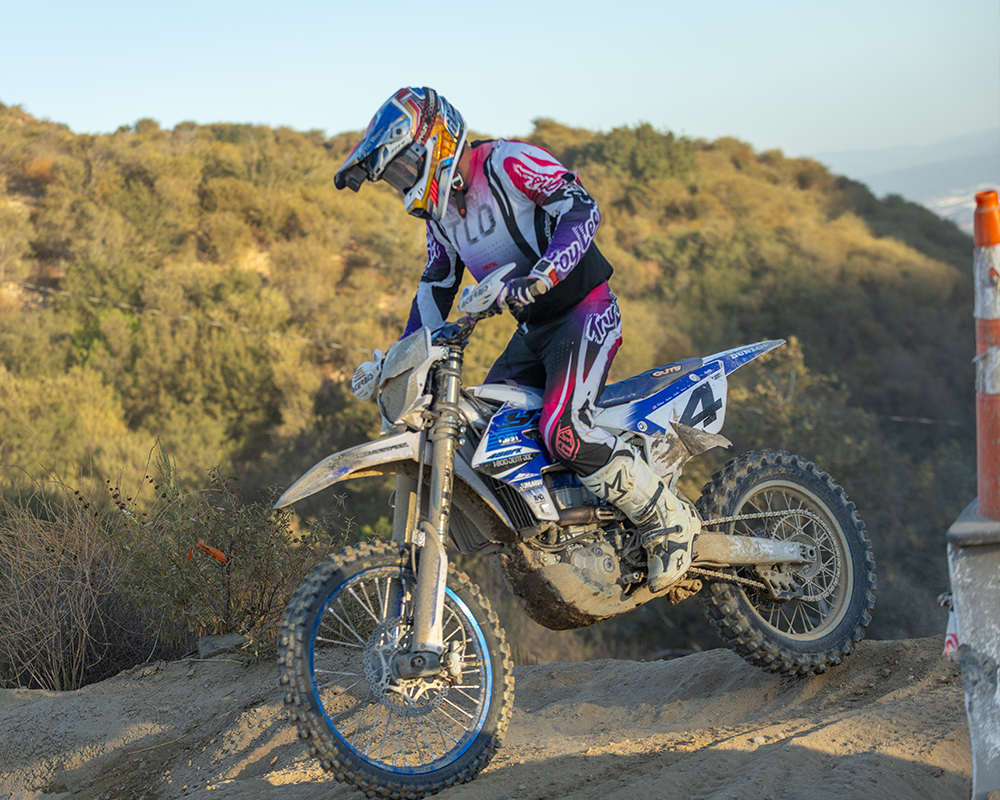
We primarly use the Rally setting when racing/riding in the desert and have had good luck with the algorithm for it. When riding in a more MX/GP/hare scramble style setting, we use the Enduro mode to adjust to the slower speeds.
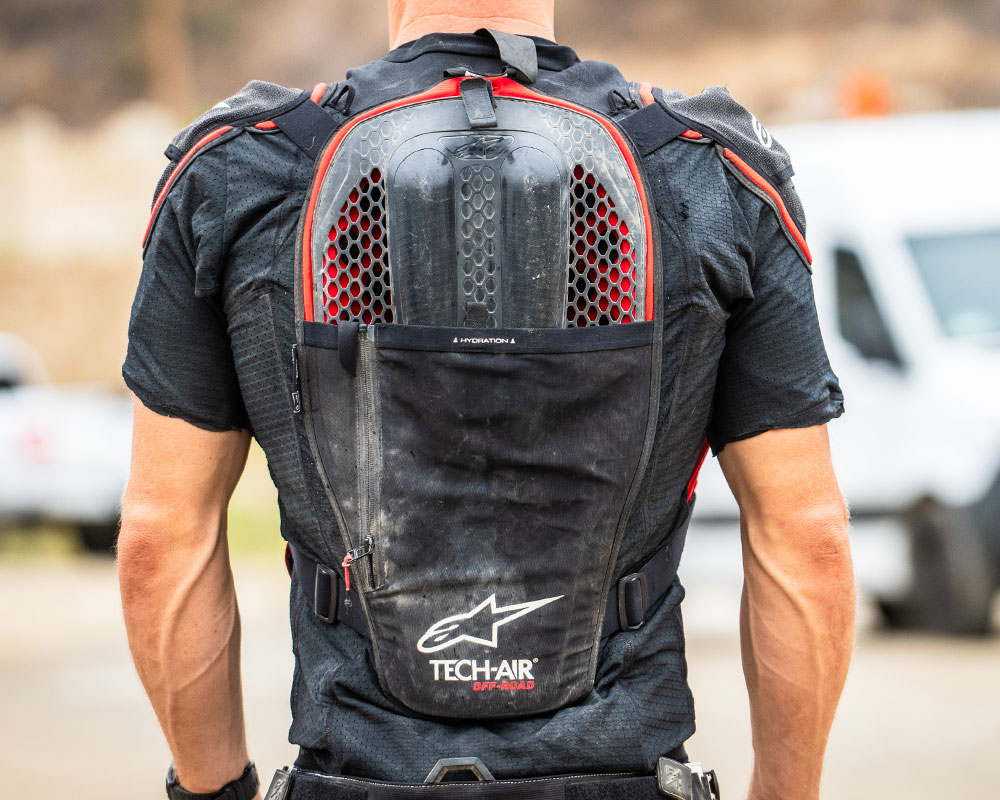
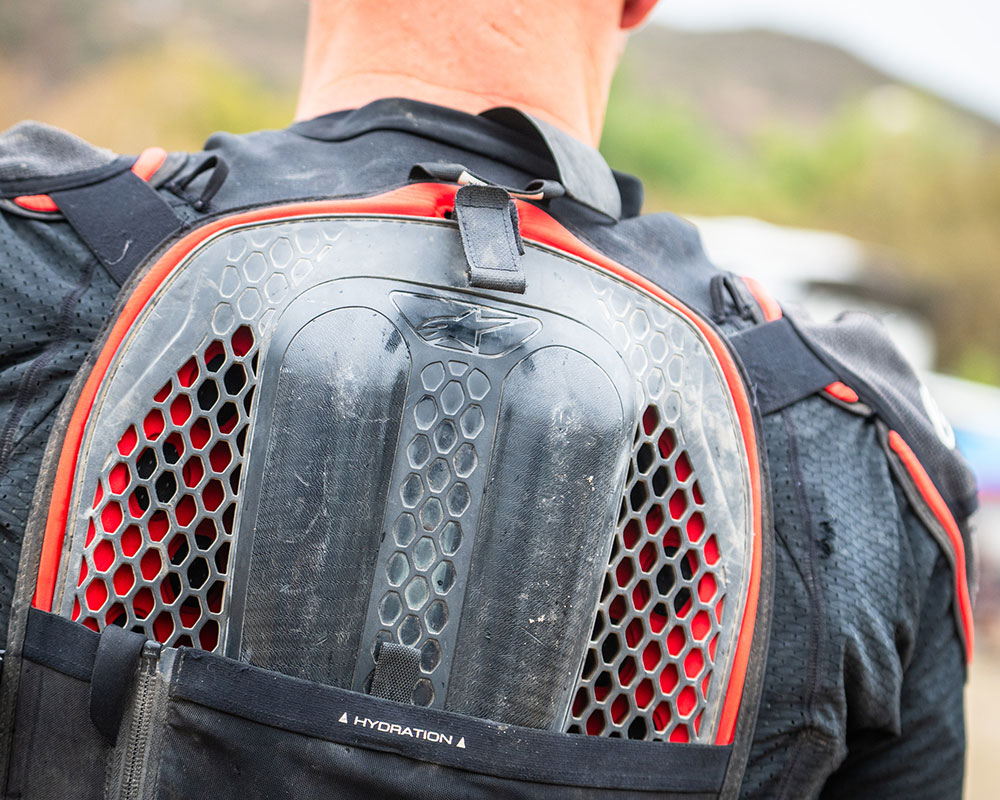
Some wish that the hydration pack bladder “zipper” or retention system for the hydration bladder went further up the jacket. There have been a couple times that the bladder moved around and pulled our jersey or got caught and made it uncomfortable.
The airbag has gone off five times for Tucker Hopkins - three where it should’ve and it helped me, and twice where it shouldn’t have. However, he would rather it go off than not go off. Trevor Hunter and Hayden Hintz have both had it go off once on them - Trevor’s in a slow motion OTB into a small pile of rocks and Hayden’s while tucking the front in a medium speed corner.
There are some people who have cut the sleeves off of their jackets, we haven’t yet. With the amount of cactus in Baja, we like the full sleeve protection to help ward off maybe a few less choya or cactus to have to dig out of our arms. Also, for $1,000, it’s nice to be able to use the full shoulder and elbow protection when wanted.
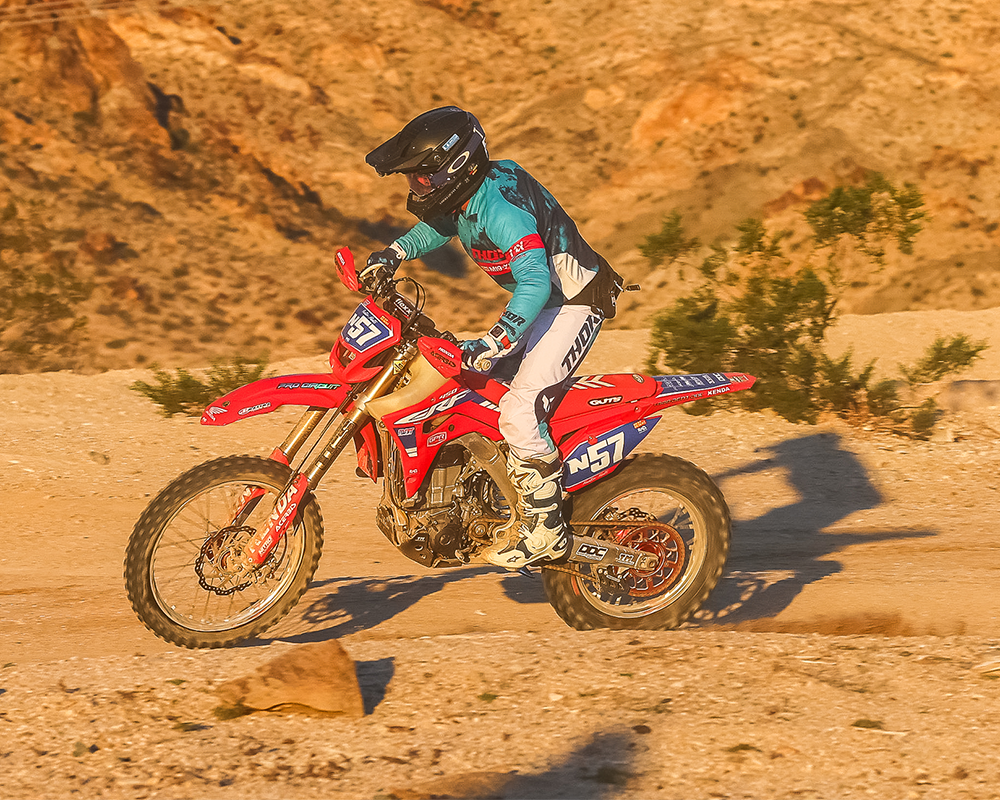
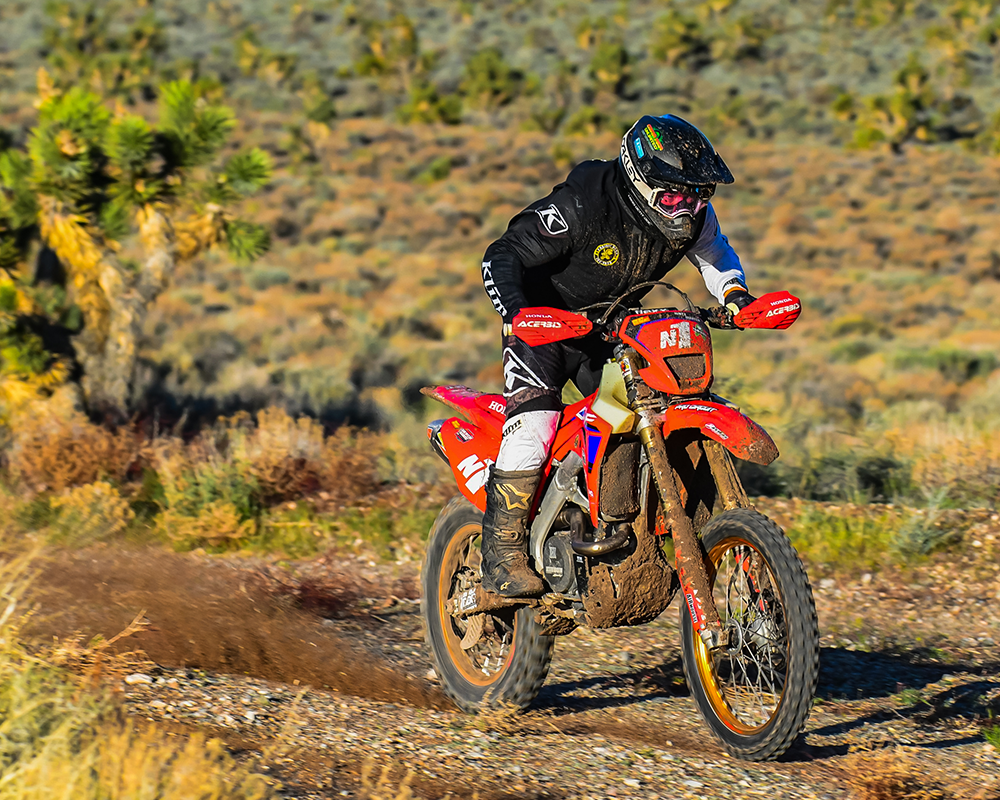
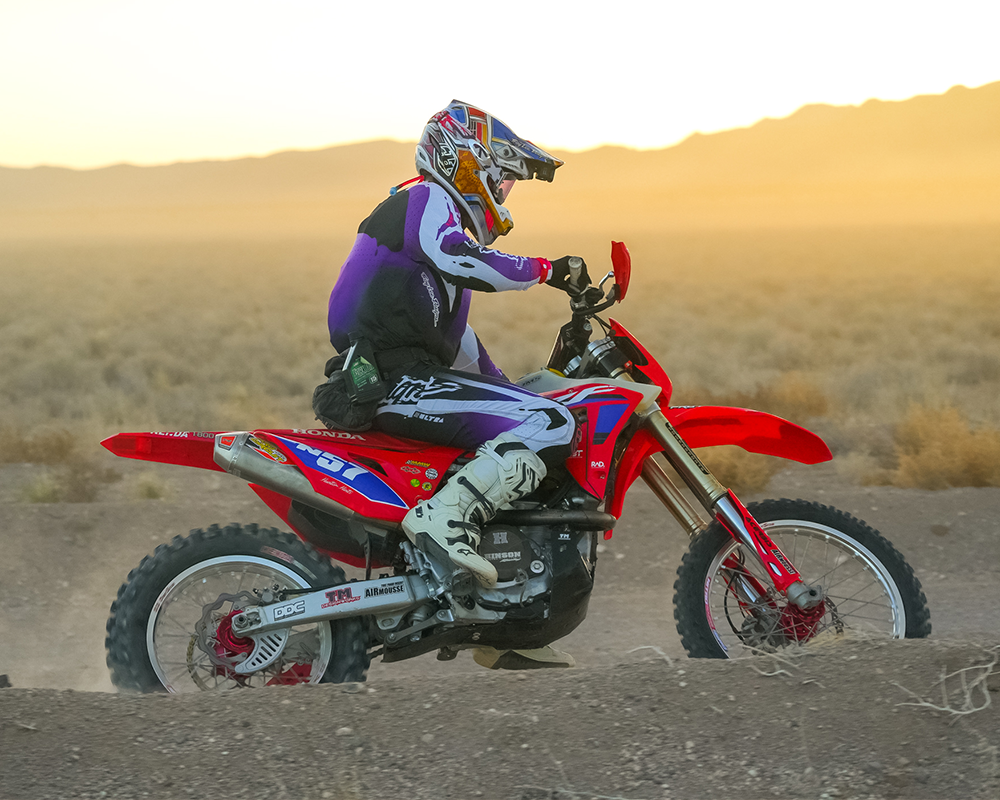
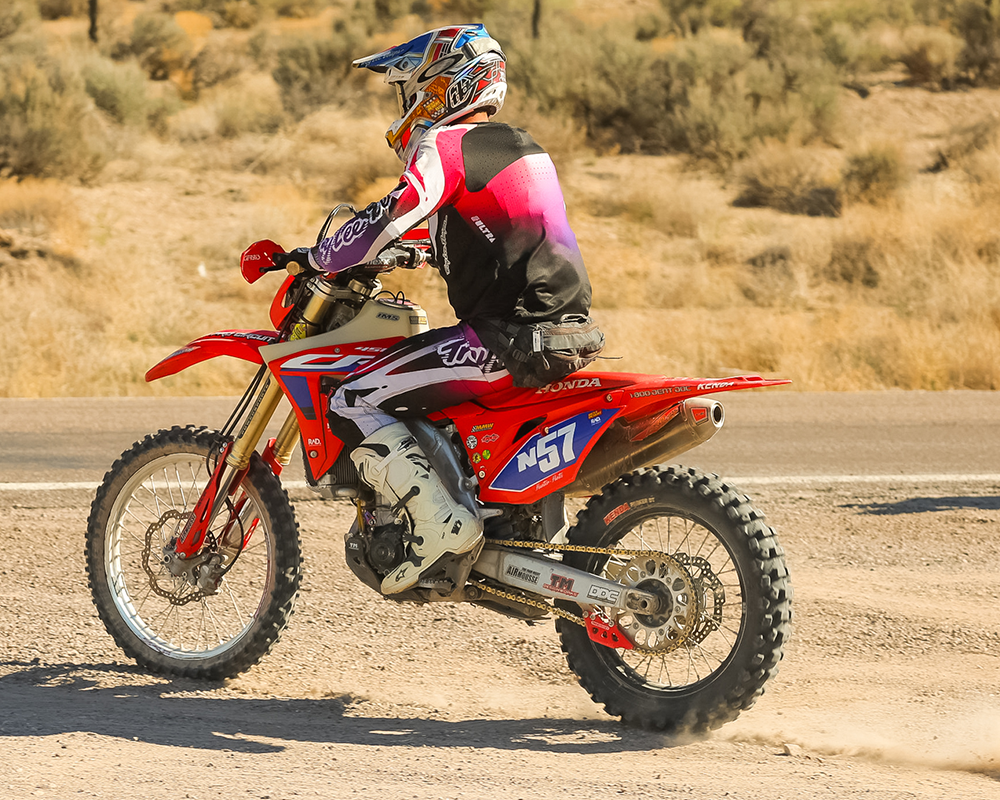
After having used the vests substantially over the past two seasons of racing, we won’t race or ride down in Baja, BITD, or any high speed desert race without it. And for some of our testers, they won’t line up in any race at this point without it. Two testers did race with it at last year’s 24 Hours of Glen Helen and despite the warm temperatures, wearing the vest with the sleeves was completely manageable in the tight singletrack and mid-80’s temps. We thought we would feel restricted in a more motocross style setting, but removing the shoulder/elbow pads made a world of difference and felt like a slightly oversized chest protector, not a Michelin man suit.
Of course, Alpinestars recently released the Tech-Air MX and having spent time in that, that will be the new go-to for anything less than high speed desert racing. It’s nice to have a lighter, less bulky version to wear at hare and hounds, GP’s, the motocross track etc.
Several other Pro racers like Ciaran Naran, Arturo Salas, and Shane Logan are all racing with the airbag down in Baja. Colton Udall has one and wears it, and Justin Morgan raced for two years during his time at the Baja 1000. Preston Campbell has been wearing his vest religiously for years now, and then all of the Rally competitors have to wear some sort of airbag system. There are a few of them out there but many will say, even when sponsored by a competitor, that the Tech-Air Off-Road system is the most refined one so far.
When the bag deploys, it stays inflated for 5 seconds and starts to deflate. The “system” will reset after 30 seconds and if you’re wearing the off-road version, you will have a second canister/airbag ready to deploy. In my experience, it takes about 2 minutes for the airbag to fully deflate. There is a deflate valve on the back of the airbag that will help deflate the bag even faster.
The jacket can be worn through 6 deployments. After the 6th deployment, the jacket is to be sent back to Alpinestars, it will be inspected, the airbag bladder will be swapped, the system will be cleaned and the algorithm updated. The jacket will also get two new airbag canisters installed. The cost for this is in the $300 range with return shipping, and the turnaround time is 3-10 days. Replacement canisters are $200 for two canisters.
The Tech-Air Offroad was built to meet FIM Rally spec. Which meant it had to be able to carry at least 3L of water, have “passive” Level 2 CE protection on the chest, along with passive Level 1 CE protection on the arms, shoulder and back.
A neck brace is not compatible with the airbag. When the airbag deploys the thought is that it will provide a similar level of protection that a neck brace will. The bag deployed will limit head movement 40 degree forwards front and back, and 30 degree of movements side to side (from the vertical head position). It will prevent the helmet from augering into the collarbone. The mesh/structure material on the back of the jacket helps support the weight of the water, vest, batteries and gyroscopes/accelerometers.
The system is fully integrated. All of the systems and tech are integrated into the vest. Technically there are three gyroscopes and three accelerometers. There is an accelerometer and gyroscope for the X, Y, and Z axis’, or up, down and sideways if you’re like me and don’t remember your high school math lessons. All of those accelerometers work in conjunction with each other, and they track at 1000 times a second.
The bag takes 25-50 milliseconds to deploy. For normal people terms, the blink of an eye is 190 milliseconds. Another way to think about it is 50 milliseconds is 1/20th of a second. The best way that it was explained to me about how the system processes, is that the airbag could essentially go off 20 times in one second.
CE Protection
Passive vs Active: Passive is your normal chest protectors. Plastic, soft shell, D30, etc.
CE Level 1- Must transfer no more than 18KN to the rider. 1Kn is 225 lbs of force, or about 4000 lbs of force to the rider.
CE Level 2- Must transfer no more than 9Kn to the rider, or about 2000 lbs of force.
CE Level 1 Airbag- Must transfer no more than 4.5 Kn to the rider or 1000 lbs of force.
CE Level 2 Airbag- Must transfer no more than 2.5 Kn to the rider, or 500 lbs of force.
The system as a whole transfers less than 1Kn of force to the body, which is where the “up to 95% comes from. (BOOYAH!)
In short, it’s very hard to put a price on your health and in our opinion, the Tech-Air Off-Road vest is priceless. Whether you’re fast or slow, young or old, hitting the deck doesn’t discriminate and can leave you seriously injured. Likewise, the airbag vest doesn’t discriminate and will help to protect you no matter who you are. It’s saved us on several occasions in our short time with it and will continue to do so. Unlike a lot of other body suits out there, we feel this one really doesn’t limit your mobility and ability on the bike because of its nature to deploy the airbag when needed. Many times dressing for the crash will cause you to crash, but the Tech-Air system dresses you for the crash when the time is right.
As mentioned previously, the Tech-Air MX is now out and it retails for $680. After a few more months of racing and riding in it, we’ll have a review on that system and how it translates to more typical riding conditions that the majority of racers and riders see daily.
"After having used the vests substantially over the past two seasons of racing, we won’t race or ride down in Baja, BITD, or any high speed desert race without it. And for some of our testers, they won’t line up in any race at this point without it."
DBT Retail Partners
Support this site by purchasing from one of our retail partners through the links below.