Tried-And-True vs All New
Story by Trevor Hunter, Photos by Trevor Hunter, Simon Cudby

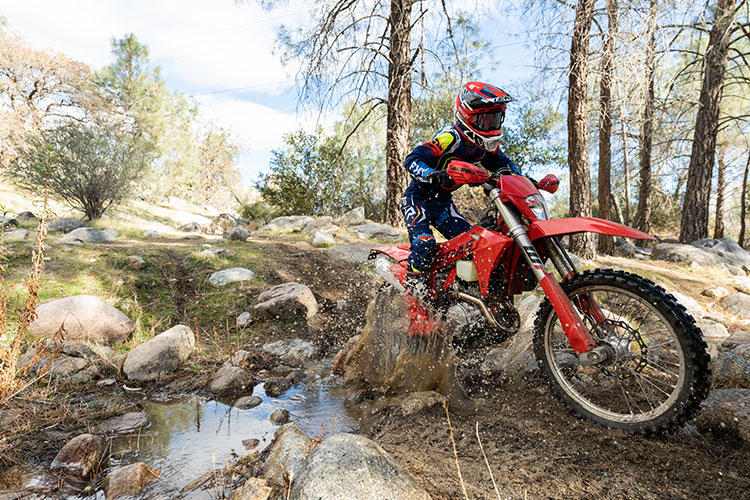
For years, the Austrian group has been nailing the “competition enduro” segment of dirt bikes with bikes that could be street legal in the right states but can also be raced as seen in the EnduroGP segment overseas. Well for 2026, a new player has entered the chat in the form of the new Triumph enduro model. Diving head first into the off-road segment, Triumph is making a massive push with multiple MX, Off-Road Race, and Enduro models for 2026. After an impressive first ride impression a few months back, we decided to take our 2026 Triumph TF 450-E and stack it up against our 2025 GasGas EC450F.
One of the most significant differences is found in the engine performance, as the Triumph is much more lively, exciting, and race-inspired in stock trim, pulling harder and revving further than the GasGas. The Triumph’s engine is a standout feature, offering a good happy medium between a full motocross engine and a mellower one, making it manageable in technical trails and suitable for riders of all levels. Conversely, the GasGas engine is characterized as very smooth, linear, and torquey, making good power down low and into the mid-range but not revving out much. This easy-to-ride characteristic is ideal for novice and intermediate riders, but more experienced riders might seek more excitement from the stock unit. While both bikes utilize a six-speed transmission, the GasGas has very even spacing across all gears; however, the Triumph has a notable jump into a very tall sixth gear that acts like an overdrive for high-speed cruising and fire roads, which is great for mellow riding but potentially too large a gap for aggressive racing.
Moving to the chassis, the Triumph feels longer, more planted, and stable, better suited for high-speed riding, giving the rider the feeling of sitting in the bike. In contrast, the GasGas chassis feels much more compact, agile, and nimble, is easier to maneuver and corner, and gives the rider the sensation of riding on top of the bike. Finally, the suspension settings also contrast: the Triumph fork is noted to be slightly soft, “divy,” and “pitchy,” typical of an enduro setting that may dive on hard braking in faster terrain. The GasGas suspension, which still uses the XPLOR fork, has slightly less movement and better hold up, though it may not be as immediately supple and plush through rocks as the Triumph. Ultimately, the GasGas is better suited for tighter single track, while the Triumph is better geared for faster, more open terrain, though both are highly competitive off the showroom floor.
Power:
The Triumph engine is much more lively, exciting, and race-inspired, pulling harder and revving further. It bridges the gap well between a full-fledged motocross engine and a mellower enduro engine, providing enough excitement while still being manageable in technical and single track trails. The engine is the biggest standout feature, suiting riders of all types, from pros to beginners. It is characterized as a free-revving, quicker revving, and more spool up power than the Gasser.

The GasGas engine is very refined and feels as you’d expect coming out of the Austrian factory: smooth, linear, and torquey. The 450cc powerplant makes good usable power down low and builds into the mid-range with a slower revving, linear, tractable pull. It doesn’t rev out much and lacks the “fear factor” of a typical 450, making it very easy for novice and intermediate riders to feel comfortable and very rider friendly in technical terrain. More experienced riders who want more excitement might feel the GasGas leaves them hanging a little bit in stock trim, but putting a more open XC-F muffler on the GasGas wakes up the engine, especially in open desert riding, though the power style remains different from the Triumph. It revs much further on top and pulls significantly harder, but still has a more chunky power character to it. Additionally, we found that putting the open muffler on without any ECU mapping made it difficult to ride in technical trails with flameouts and a dirty feeling down low off idle.
Both bikes have six-speed transmissions with the GasGas transmission having very even and good spacing between all gears. On top end, the GasGas cruised in 6th gear in the mid-upper 60’s at a reasonable RPM and got up into the 90’s on fast fire roads. The Triumph’s six-speed tranny has an overdrive like sixth gear. Gears one through five have good spacing, but the sixth gear is a very tall jump. This tall sixth gear acts almost like an overdrive, making it great for trail riding, fire roads, and going fast at low RPMs without stressing the motor. We were able to cruise at a reasonable RPM at 75+ mph and reached 101mph in stock trim on the Triumph. In race situations or if you’re under heavy loads in sand, uphills, etc, the sixth gear can be a tough pull but in a trail ride situation, it’s very beneficial and more so if you’re trying to turn the bike into a dual sport. Speaking of transmissions, the TF isn’t as smooth shifting as the GasGas and when in the desert, some of our riders preferred to use the Triumph’s QuickShift option to help ease shifting duties.
Chassis
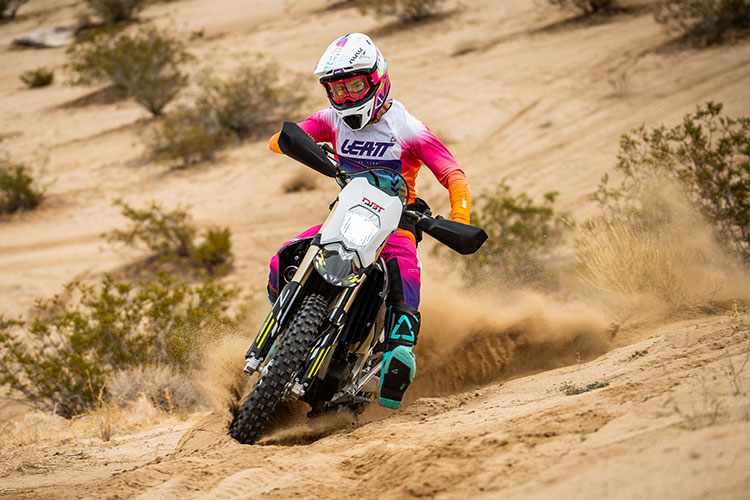
The Triumph chassis feels longer, more open, and is better suited for high-speed stability. It feels more planted and stable, and the rider feels like they are sitting in it, with the bike wanting to go straight and fast. It feels slightly heavier compared to the GasGas.
The GasGas chassis feels more compact, agile, and nimble. It feels lighter on the trail and is easier to corner and maneuver, with the rider feeling like they are riding on top of the bike. All of our testers raved about how light and flickable the chassis is and is a standout feature on this bike, especially for those of you looking at more of a woods/dual sport application or just something a little more forgiving and less tiring on the trail.

Suspension
Both bikes offer good bump comfort and are very competitive off the showroom floor. For this test specifically, the GasGas had stock springs but aftermarket valving so we won’t dwell too much on the suspension, but we had enough time on it previously to give a general understanding of the two bikes.
The GasGas still uses the XPLOR fork stock (unlike KTM/Husky) and has a linkage out back. The suspension overall feels like it has a little less movement, offers better hold up, but might not be as supple and plush through rocks. The GasGas suspension feels more race-inspired and firm throughout the stroke.
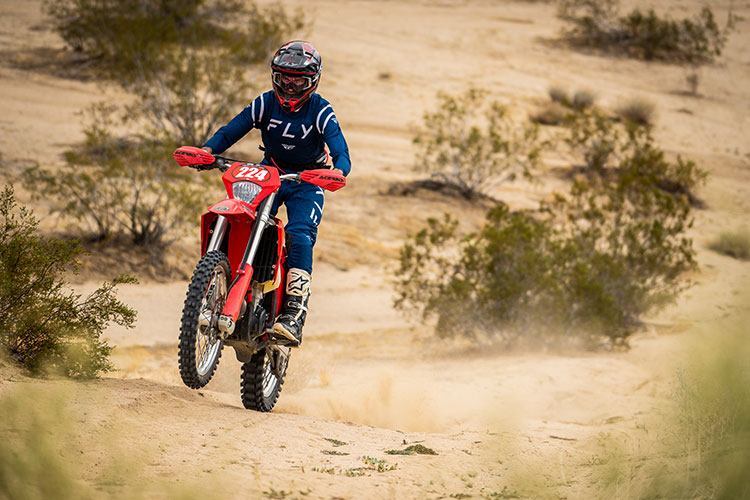
The Triumph fork, in particular, gets a little soft, divy, and pitchy. This is more of an enduro style setting with a lower overall front end feel and more supple performance. The front end was found to get low and dive on hard braking or speeding across whoops in faster desert terrain. As speeds slowed, the fork performance found its sweet spot and drove through rocks without deflection. Similar to the fork, the shock can wallow and hang low under heavy loads, but is more than capable of carrying a high rate of speed.
Both bikes are very capable and have been ridden/raced at speed in stock trim and are both confidence inspiring and safe. These “competition enduro” bikes have come a long way from the ultra cush, marshmallow suspension that was tough to get out of third gear on. Now, they’ve bridged the gap to a soft and comfortable yet safe “off-road race” setting that can go a long way in stock trim.
For stability and handling reasons, we did end up running both bikes with flush fork heights as it improved stability and more importantly with the softer Triumph suspension, helped “stiffen” the front fork up and reduced diving under heavy loads.
Some of the off-road necessities on the Triumph are nice to have like the Mapping switch, a sturdy skid plate, and handguards. The GasGas is the only of the three Austrian bikes that doesn’t come with any of those, but the KTM and Husky models have all of it. The Brembo brakes on the Triumph are significantly better (once we adjusted how much play is in the Triumph rear brake) with better power and feel in the Brembo vs Braktec components. The Triumph headlight is very very good for a stock light with good throw and width in it. The LED GasGas light is a step up from the old halogen lights, but the Triumph is far and away better if you’re doing any night riding.
We say this all the time but bikes these days truly are so good. Both of these bikes are very capable and we have no problem riding them at any time. The GasGas shines in tighter confines and single track riding with a user-friendly power delivery and agile chassis that simplifies movements between the trees. With a lively engine and a stable chassis, the Triumph shines in faster, more open terrain and has a lot of potential as a desert bike to be ridden or raced. However, both bikes are versatile enough to transfer over to any type of riding and feel comfortable.