First Ride On Honda’s ALL NEW CRF450R
Story by Jimmy Lewis, Photos by Simon Cudby
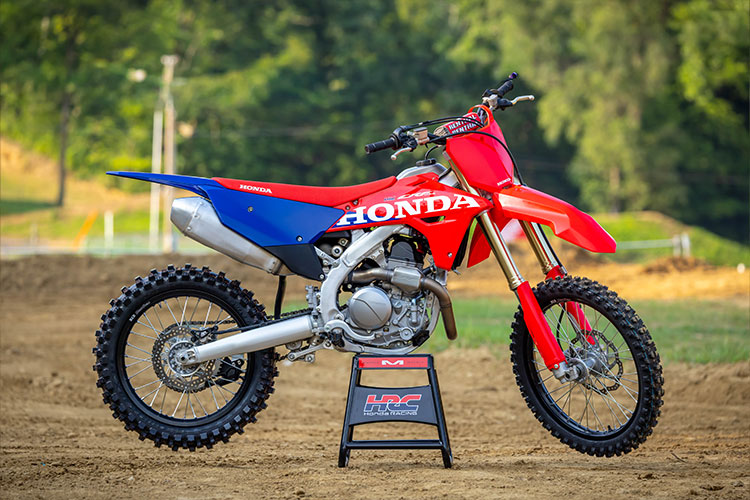
Normally, when we hear a manufacturer say they’ve made a 450 lighter and more powerful, we immediately brace ourselves for a machine that is a recipe for disaster for anyone without a pro license. Building a bike specifically for what a factory pro thinks they want is a classic mistake. But on the 2027 Honda CRF450R, what the factory guys asked for actually turned out to be a good thing for the regular Joe MX rider.
Here is our unfiltered, real-world riding impression of how the new red machine actually works in the dirt.
The Power: Sneaky Fast and Linear
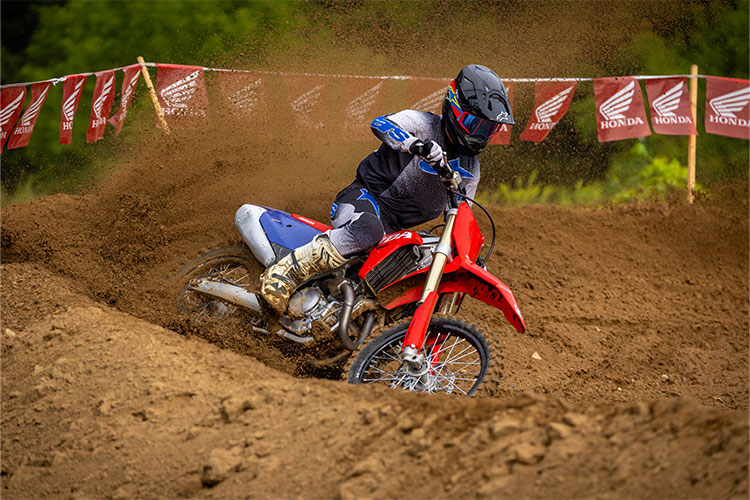
This engine is sneaky fast. If you are looking for an aggressive, arm-wrenching hit that rips the bars out of your hands, you aren’t going to find it here. Instead, you get a long, incredibly smooth power delivery with absolutely no steps. The wrist-to-wheel connection is completely seamless, with zero “snappy” behavior when you crack the throttle.
There is no single standout zone in the powerband—no distinct low-end surge, mid-range kick, or top-end rush—just an abundance of usable power exactly when and where you need it, at any throttle position. In fact, the bike is so quiet that riders who equate a loud exhaust with high power might actually get misled. On top, the engine holds onto a very long duration of peak spread, making the power feel flatter than what we are typically accustomed to. It does not encourage you to bounce off the rev limiter, and honestly, hitting the limiter is actually quite difficult to do.
Clutch, Gearing, and Deceleration
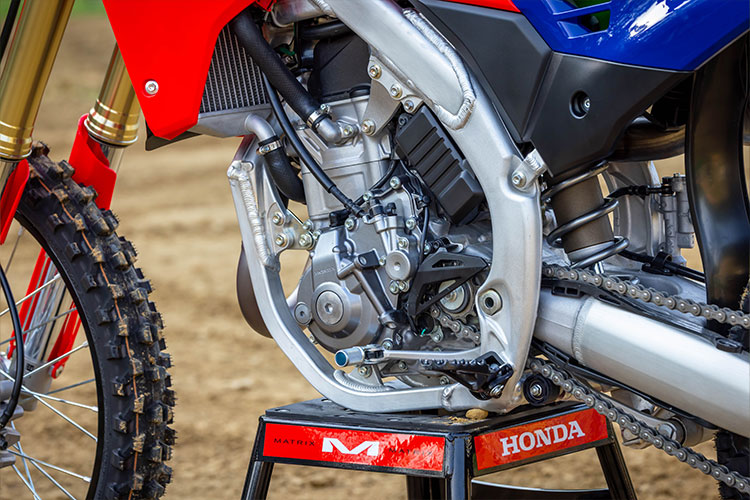
Honda has fitted the clutch with an ingenious slipper feature integrated directly into the damping system. Combined with the new ignition mapping, the CRF450R now has very little compression braking. On the track, this gives you a vastly improved, freewheeling feel on corner entrance and keeps the chassis much more settled when you are charging across breaking bumps. Best of all, the slipper mechanism does not introduce any weird or adverse feel through the lever—which is rare—making this the absolute best hydraulic clutch feel we have ever experienced on a red bike. Shifting remains classically smooth and solid, and the slightly increased distance between the footpeg and the shift lever was immediately noticeable and approved by our two riders on hand.
As for the five-speed gearbox, the ratios feel perfectly optimized for the engine’s linear character, featuring an overall taller gearing ratio and a slightly wider spread between the gears. It makes everything work tighter, even if it requires a small learning curve. For instance, in the tight, rutted corners at Millville, habit had us trying to carry third gear, but we found second gear more usable and the bike responded and worked well at higher RPMs. That said, if you have the speed to carry third, the bike is more than willing to do it—I actually had to ask myself if I really wanted to go around the corners that fast, because the bike certainly did. Even with the wider gear spread, the engine pulls it easily, meaning you almost always have two (and sometimes three) viable gear choices for any given obstacle. Timing jumps is incredibly easy because the smooth, consistent pull makes your takeoff highly predictable; we were successfully clearing rhythm sections in second, third, or fourth gear.
Suspension: Closing the Showa vs. KYB Gap
Showa has taken a beating from KYB in the production suspension shootout for a while now, but they have been working diligently to close the gap, particularly when it comes to plushness. The 2027 setup is another massive step closer. Showa is finally finding excellent hold-up without that typical mid-stroke harshness. Interestingly, in a market where everyone thinks super-slippery coatings and zero friction are the only path to success, Showa is actually using a controlled amount of friction to help their design. Some new internal systems—like a refined bladder design in the shock and a new blow-off system in the forks—are doing wonders for the ride quality.
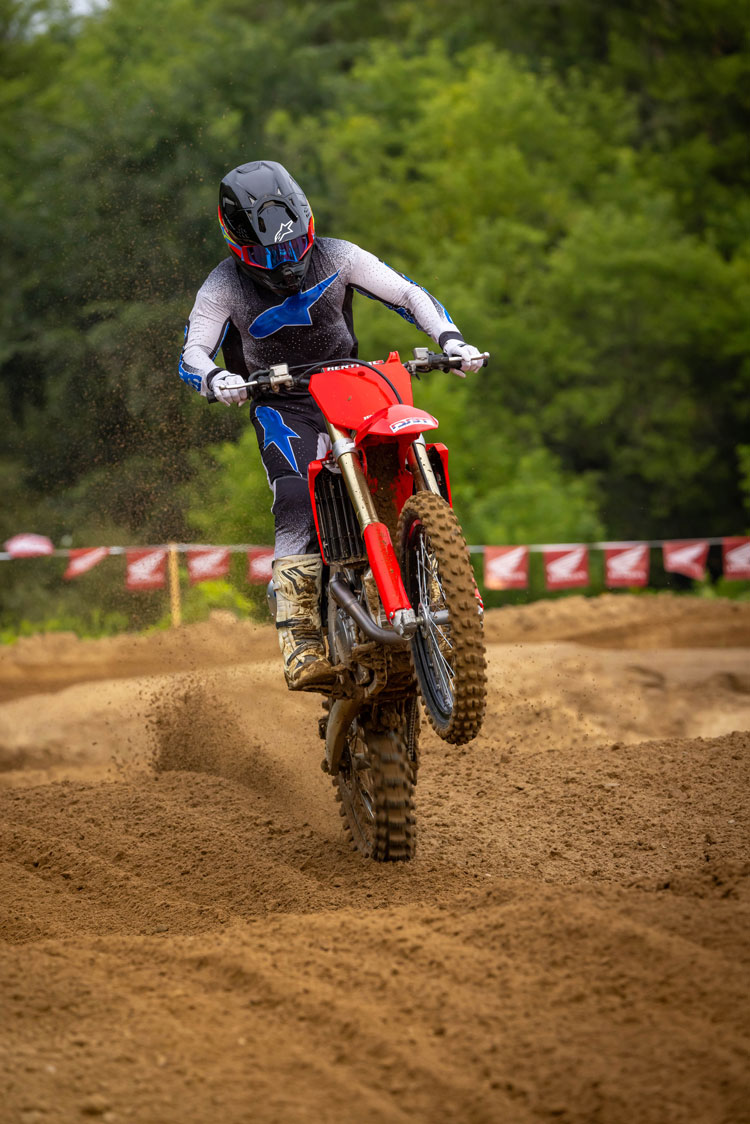
This is easily one of the most plush-feeling Hondas we have ridden. Granted, our test track featured loamy, soft conditions, so we will still need to find some baked-out, dry California dirt before delivering a final verdict.
We started out happy with the stock clickers and a ride height of roughly 102mm. However, we unlocked a massive step forward in comfort and steering precision by making a few quick adjustments at Spring Creek:
- Slide the forks down to 2.5mm in the triple clamps.
- Vets go softer on fork and shock compression damping by one click.
- Aggressive riders go stiffer on fork and shock compression damping by one click
- Add one click of rebound damping to the fork.
- Soften the high-speed shock compression by 1/4-turn to level the bike.
This small tuning recipe leveled the chassis, delivering even better stability and giving us a much better, more settled steer into and through the ruts, along with added comfort. One of Honda’s primary goals with this suspension was to reduce the pitching action of the bike, and they absolutely achieved it. Even with Jimmy on board at 200 lbs. without gear, bottoming was never an issue – except when he framed the Chadapult in front of every media member and Honda tech on-site. It’s called 2.5ing a triple, most kids are scared.
Handling: Calm, Stable, and Planted
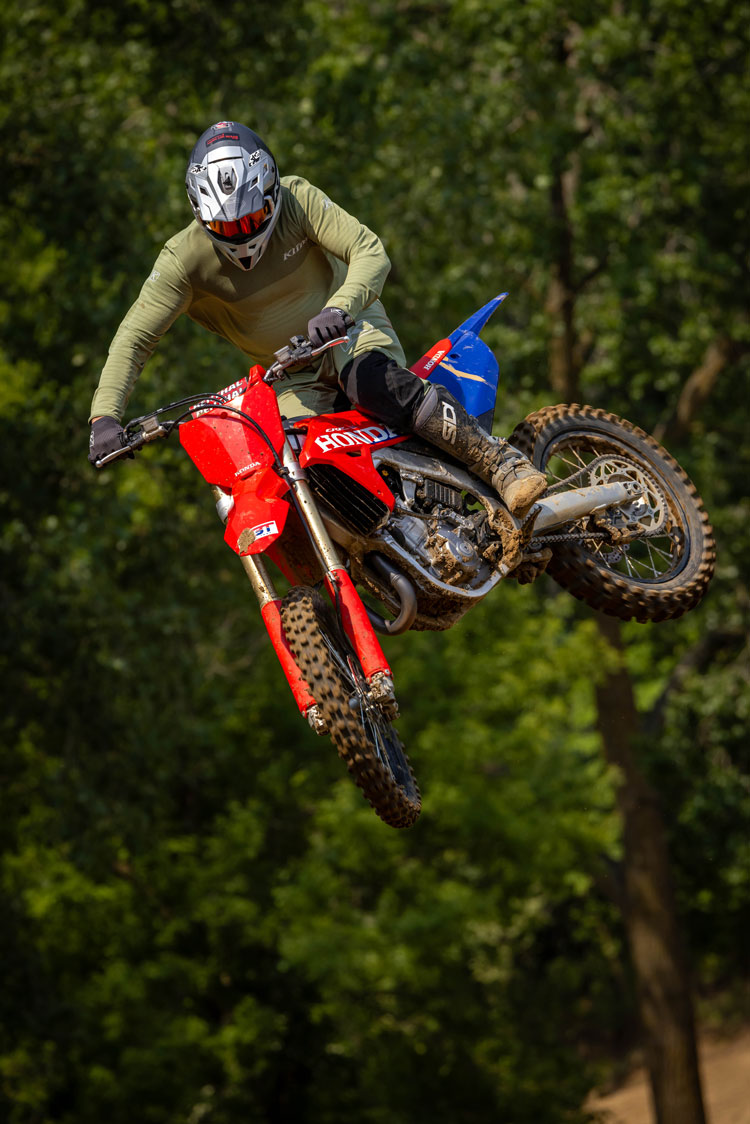
The chassis geometry changes are highly noticeable. The front tire feels like it is positioned further out from under the bike, behaving much more like other brands on the market. The cockpit ergonomics allow you to move around easily and grip the bike when necessary, aided by a highly comfortable, though not overly grippy, seat.
That nervous, “twitchy” sensation that bothered many riders on previous CRF generations has been significantly dialed back. Honda accomplished this by taking the sharp edge off the ultra-precise steering character that used to cause oversteer and chase the front end. While the steering and initial turn-in feel slightly heavier through the handlebars, it is a very welcome trade-off for the vast majority of riders because it brings added stability. The front end remains planted where the old bike used to kick, twitch, and deflect. Yet, don’t think it has turned into a tank—the CRF is still plenty nimble and maneuvers beautifully when you steer it through the footpegs. If anything, we feel it corners better as it flows through the corners without any corrections or added body movements needed to keep the bike in line.
Is The Bike Perfect?
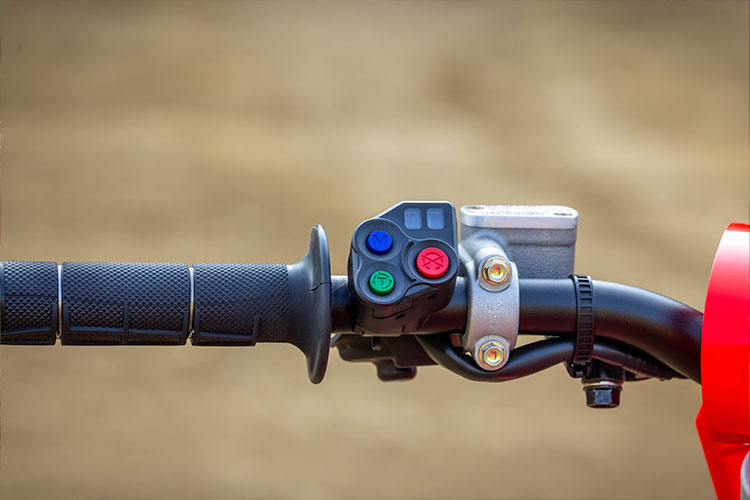
While we really couldn’t come up with anything that we liked on the previous generation bike more than we like on the 2027 model, we still feel this bike isn’t quite perfect – no bike is! The biggest change we’d love to see but is difficult to get around due to Honda specific corporate and legal issues is a simplified mapping button. It’s quite difficult to change maps and impossible to do on the fly. Yamaha and KTM have this down where a quick push of a button is all that’s needed to switch maps, but the Honda requiring you to hold the button for so many seconds while the engine is basically at idle makes it impossible to quickly and easily change maps on the fly. Some other small items that we personally don’t find perfect are the grips are bulky and hard on the hands and the seat cover is slippery. We appreciate the new shape of the seat and the foam is improved in terms of comfort and shape, but the cover itself lacks grip under acceleration.
Overall, the 2027 Honda CRF450R is greatly improved. We will get more time at our familiar tracks and do comparisons as necessary. But for most we would describe the bike as a marked step forward in all categories and having a wider appeal for riders of all ability levels. Who would’ve guessed that more power and less weight would equate to a more stable, better turning, easier-to-ride CRF450R? Honda did…